niqab
yamnulke
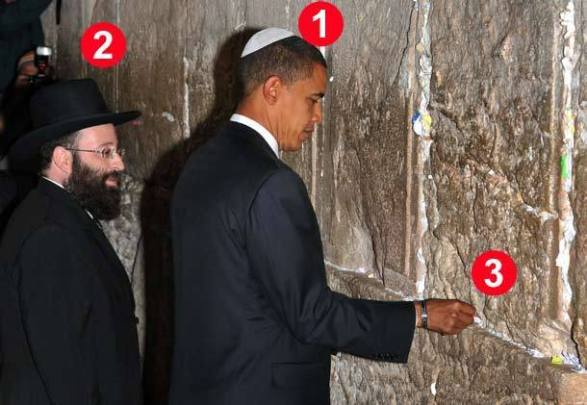
A kippah or kipa (pronounced /kɪˈpɑː/ ki-PAH, Hebrew: כִּפָּה or כִּיפָּה, plural: kippot כִּפוֹת or כִּיפּוֹת), also known as a yarmulke (pronounced /ˈjɑrməlkə/ ( listen) (YAR-məl-kə) or /ˈjɑməkə/ (YAH-mə-kə)), or hech cap (U.S. only), is a hemispherical or platter-shaped skullcap, usually of cloth, often worn by Orthodox Jewish men to fulfill the customary requirement that their head be covered at all times, and sometimes worn by both men and, less frequently, women in Conservative and Reform communities at times of prayer.
Contents
* 1 In Jewish law
* 2 Types and variation
* 3 Head coverings in ancient Israelite culture
o 3.1 Possible modern analogues
* 4 Kippot in secular law
In Jewish law
A Jewish man from Chişinău wearing a kippah (1900)
The Talmud states, “Cover your head in order that the fear of heaven may be upon you.”[1] “Rabbi Hunah ben Joshua never walked 4 cubits (2 meters) with his head uncovered. He explained: ‘Because the Divine Presence is always over my head.”[2] Jewish Law dictates that a man is required to cover his head during prayer.[3] Originally, a head covering at other times for Orthodox males was a custom, but it has since taken on “the force of law” because it is an act of Kiddush Hashem.[4] The 17th-century authority David HaLevi Segal suggested that the reason was to distinguish Jews from their non-Jewish counterparts, especially while at prayer.
According to the Shulchan Arukh, Jewish men are strongly recommended to cover their heads, and doing so, should not walk more than four cubits bareheaded.[5] Covering one’s head, such as by wearing a kippah, is described as “honoring God”.[6] The Mishnah Berurah modifies this ruling, adding that the Achronim established it as a requirement to wear a head covering even when traversing less than four cubits,[7] and even when one is standing still, indoors and outside.[8] Kitzur Shulchan Aruch cites a story from the Talmud (Shabbat 156b) about Rav Nachman bar Yitzchok who might have become a thief had his mother not saved him from this fate by insisting that he cover his head, which instilled in him the fear of God.[9] In many communities, boys are encouraged to wear a kippah from a young age in order to ingrain the habit.[10]
More lenient opinions also exist, and many great rabbis did not wear a head covering. The GRA or Vilna Gaon says one can make a berakhah without a kippah) and other poskim, and wearing a kippah is only a midos chassidus (exemplary attribute). Recently, there seems to have been an effort to suppress earlier sources that practiced this leniency, including erasing lenient responsa from newly published books.[11]
According to Rabbi Isaac Klein’s Guide to Jewish Religious Practice, a Conservative Jew ought to cover his head when in the synagogue, at prayer or sacred study, when engaging in a ritual act, and when eating.[12] In the mid-19th century, Reformers led by Rabbi Isaac Wise stopped wearing kippot altogether.
[edit] Types and variation
In the Middle Ages in Europe, the distinctive Jewish headgear was the Jewish hat, a full hat with a brim and a central point or stalk. Originally used by choice among Jews to distinguish themselves, it was later made compulsory in some places by Christian governments as a discriminatory measure. In the early 19th century in the United States, rabbis often wore a scholar’s cap (large saucer-shaped caps of cloth, like a beret) or a Chinese skullcap. Other Jews of this era wore black pillbox-shaped kippot.
Children’s crocheted kippot
Often the color and fabric of the kippah can be a sign of adherence to a specific religious movement. Knitted or crocheted kippot, known as kippot serugot, tend to be worn by Religious Zionists and the Modern Orthodox,[13] who also wear suede or leather kippot. The hit Israeli TV series, Srugim, which has been compared to the U.S. TV series Friends, takes its name from the knitted kippot worn by the main male characters.
Members of most Haredi groups usually wear black velvet or cloth kippot. In general, the larger the kippah, the more observant the wearer.[14] By contrast, the smaller the kippah, the more modern and liberal the person is.[15]
More recently, kippot have been observed made in the colors of sports teams, especially football. In the United States, children’s kippot with cartoon characters or themes such as Star Wars are popular. (In response to this trend, some Jewish schools have banned kippot with characters that do not conform to traditional Jewish values.[16]) Kippot have been inscribed on the inside as a souvenir for a celebration (bar/bat mitzvah or wedding). Kippot for women are being made and worn.[14][17][18] A special baby kippah has two strings on each side to fasten it and is often used in a brit milah ceremony.[19]
Samaritan Jews once wore distinctive blue head coverings to separate them from Jews who wore white ones, but today they more commonly wear fezes with turbans similar to that of Sephardi Jews from the Middle East and North Africa. Today, Samaritans do not usually wear head coverings except during prayer, Sabbath, and religious festivals.


 Akashma Online News