Archive
Water Management, Not Carbon Tax: Earth’s Silent Cry for Balance
By Marivel Guzman | Akashma News
Originally published on June 27, 2017
Updated on May 03, 2025
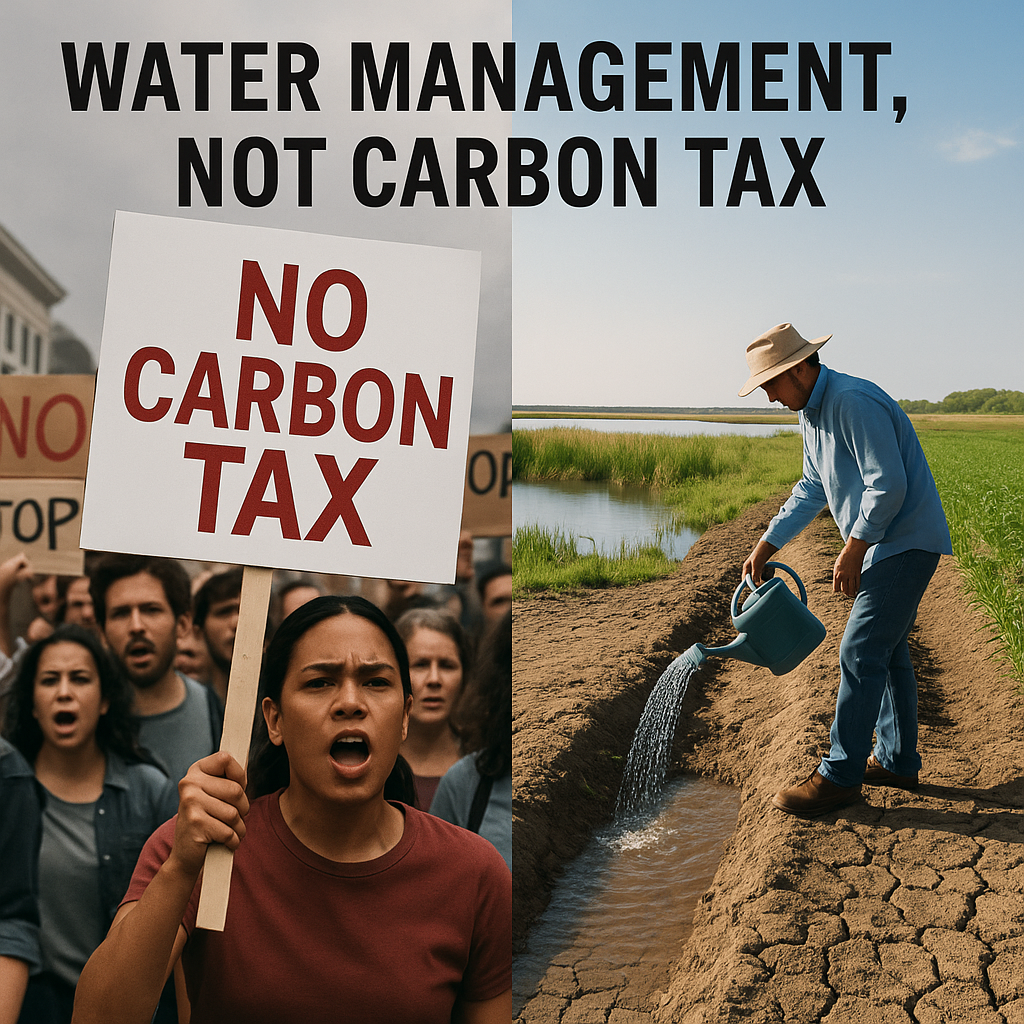
In the global effort to combat climate change, carbon taxes have emerged as a popular policy tool. Proponents argue that putting a price on carbon emissions incentivizes industries and individuals to reduce their carbon footprint. However, this approach often overlooks a more immediate and tangible crisis: water mismanagement.
I’m not a scientist. But my common sense, my emotional intelligence, and my deep symbiotic bond with Mother Earth compel me to question the climate change narrative being pushed by policymakers, financiers, and lobbyist-backed scientists. The climate is indeed changing—but it’s not just because of carbon emissions. It’s because Earth is thirsty.
I coined the term “dry surface syndrome” to describe this condition—one caused not by abstract greenhouse gases, but by the damming of rivers, the clear-cutting of forests, the overuse of groundwater, and the destruction of Earth’s natural hydrological systems. When Earth is parched, it does what every living organism does: it adapts. It melts its glaciers. It shifts its winds. It tries to rebalance itself.
Let me be clear: I believe lobbying companies have manipulated have the scientific discourse around climate. Some of the data pushed over the last 25 years, especially by the proponents behind “An Inconvenient Truth,” was crafted not to empower the planet—but to sell the carbon tax agenda. We’ve been sold a smokescreen, while the real damage continues in our rivers, forests, and oceans.
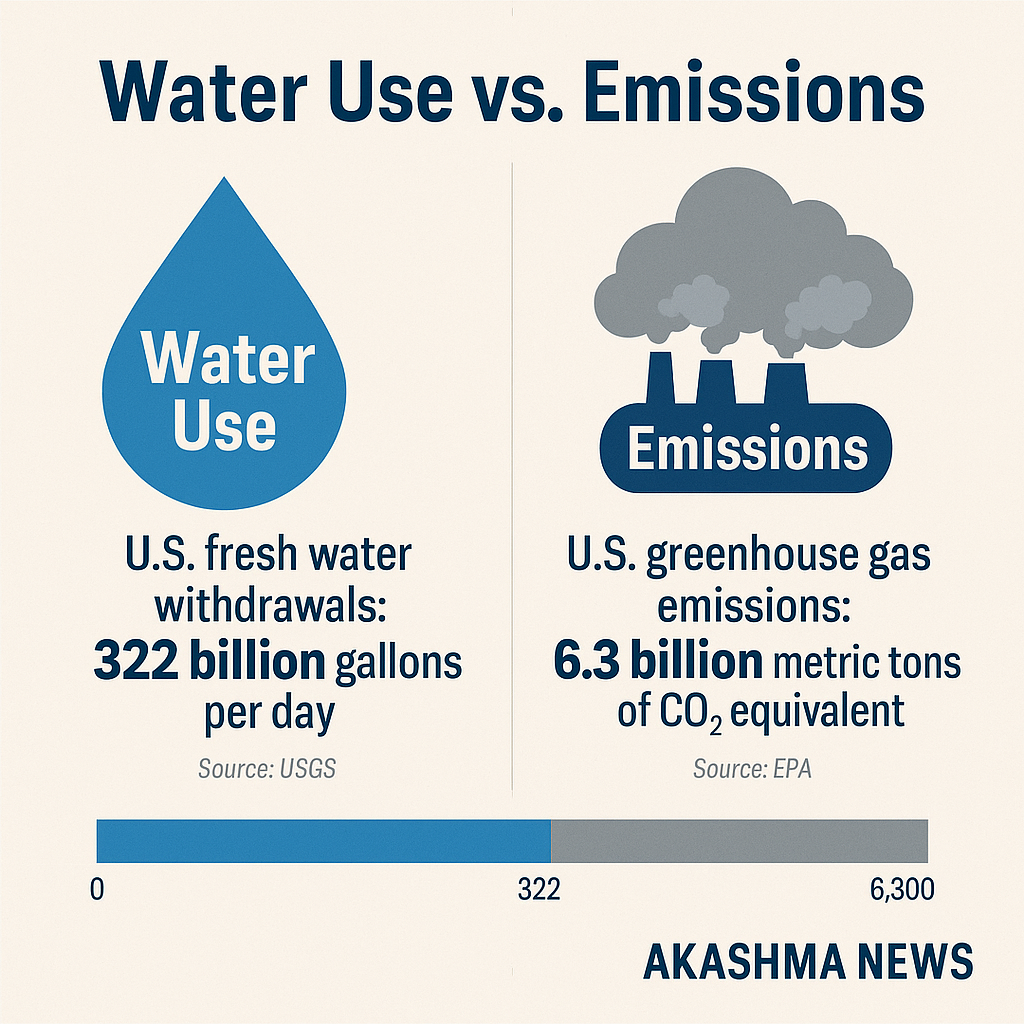
This infographic reveals the stark contrast between the U.S.’s massive daily freshwater use (322 billion gallons) and its CO₂ emissions (6.3 billion metric tons). As Marivel Guzman writes, “Earth is not just warming—she is thirsty.”
Water, the Forgotten Crisis
According to American Rivers, the U.S. alone diverts and manages its water through more than 241 dams in California—part of a global network of over 57,000 dams disrupting natural ecosystems. Dams fragment rivers, kill fisheries, and stop sediment from replenishing coasts. The Guardian reported extensively on this issue, which remains largely ignored in global climate talks.
Even worse, freshwater from melting glaciers is described by some scientists as “wasted water” because it mixes with the oceans. But water doesn’t die—it transforms. As sunlight causes evaporation, that moisture joins the rain cycle, replenishing rivers, aquifers, and life. To call glacier melt “waste” is to deny the sacred role water plays in Earth’s renewal.
Lungs of the Planet: Forests and Oceans
BBC once called the Amazon the “lungs of the planet,” covering over 5.5 million square kilometers. But it isn’t just forests. According to the Earth Journalism Network, oceans also act as Earth’s lungs—producing between 50% to 80% of the world’s oxygen and absorbing over 25% of its CO₂. WWF’s Yolanda Kakabadse put it best: “We should call it Planet Ocean.”
And yet, we are suffocating these lungs. If you trap the water responsible for ocean currents and cut down all the trees, what do you expect will happen to the climate?
Pollution vs. Responsibility
Pollution is real and deadly—particularly in the developing world. The World Health Organization states that over 3 billion people, mostly women and children, still inhale toxic smoke daily from polluting stoves. But not all pollution comes from oil or cars. We ignore the role of fast fashion, agriculture, and consumer habits in water waste and environmental degradation.
Take cotton: India, the world’s largest producer, uses 22,500 liters of water to produce just one kilogram of cotton.According to The Guardian, in 2013 alone, India’s cotton exports consumed enough water to supply 85% of its 1.24 billion people with 100 liters per day for a year. Yet 100 million people in India lack safe water access.
Since 1991, the World Bank has been deeply involved in multiple phases of India’s water infrastructure development—channeling billions in loans toward rural water supply, dam rehabilitation, and urban water management. Yet despite these investments, India now has significantly less water per person than it did in 1951.
According to India Today, per capita water availability dropped from 5,177 cubic meters in 1951 to just 1,545 cubic meters by 2011, with current estimates nearing 1,000 cubic meters in several regions
Toward a Real Climate Agenda
If climate change is a fact—and it is—then the preservation, distribution, and restoration of water systems must be central to every climate summit and sustainability agenda. Instead of investing billions in carbon markets and surveillance, we must dismantle destructive dams, reforest ecosystems, and return rivers to their natural paths.
We must acknowledge Earth as a sentient, self-regulating being—not just a resource to be taxed, but a life force to be nurtured. Earth is not just warming. She is bleeding through her glacier tears. And she is asking us to listen.
Further reading:
When Earth Thirsts: Glacial Tears and the Wisdom of a Living Planet

 Akashma Online News