Archive
The Tesla Illusion: How Elon Musk Rebranded a Visionary’s Name to Sell Us a Dream We Already Owned
By Akashma News
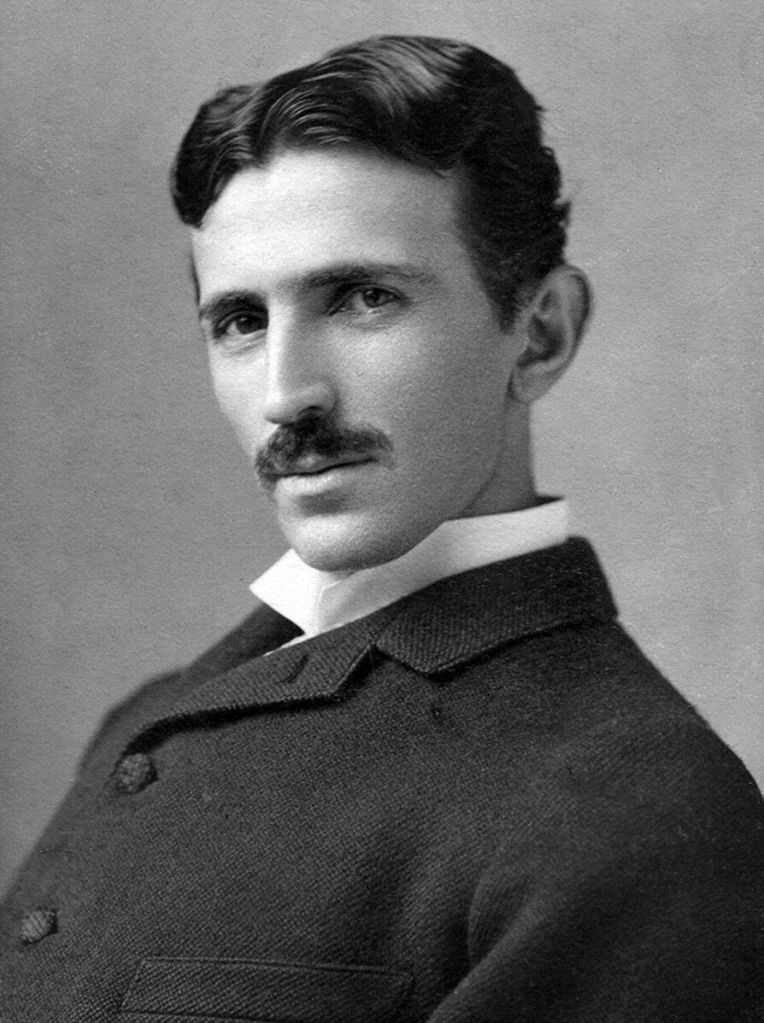
Elon Musk may be the poster child of modern innovation, but his electric car empire stands on a borrowed legacy. The name “Tesla” evokes images of genius, invention, and the possibility of boundless energy. Yet the man behind today’s billion-dollar electric vehicle company is not Nikola Tesla—the Serbian-American inventor who dreamed of free energy for all—but a tech mogul who commodified that dream.
What Musk sells under the Tesla banner is not the fulfillment of Tesla’s vision but the rebranded, paywalled version of it, funded largely by public subsidies and monopolized by utility companies.
Nikola Tesla’s Electric Car: Myth, Mystery, or Suppressed Innovation?
The stories surrounding Nikola Tesla’s electric car sound like science fiction—or conspiracy theory. According to third-party accounts, particularly those of Arthur Matthews (a claimed assistant to Tesla) and Peter Savo (allegedly Tesla’s nephew), Tesla designed and drove an electric vehicle in the 1930s powered not by conventional batteries but by wireless energy drawn from the atmosphere—a natural extension of his work on radio transmission and wireless power.
Tesla never used the term “cosmic energy” as some folklore suggests; his ambition was to use the Earth’s natural resonances and electromagnetic field to wirelessly transmit power—a field he pioneered through inventions like the Tesla coil and the Wardenclyffe Tower project.
While no blueprints of the vehicle exist, the fact remains: Tesla repeatedly demonstrated a capacity to build what he envisioned, often without drafts—creating and testing inventions entirely from the models formed in his mind. He was a refugee, a genius inventor, and a man whose ideas challenged monopolies and changed the world. After his death, the U.S. government seized his papers under the Office of Alien Property, keeping many documents classified for decades.
The Founders Before Musk
Tesla Motors was founded in 2003 by Martin Eberhard and Marc Tarpenning, two Silicon Valley engineers who were inspired by Nikola Tesla’s vision and chose to name the company in his honor. Eberhard, the original CEO, imagined a sleek, high-performance electric vehicle that would shatter the myth that EVs were slow and boring. Tarpenning brought the technical and financial backbone to the startup.
Their choice of the name “Tesla” was not just branding—it was homage. They aimed to revive Tesla’s principles of electrification, innovation, and disruption.
Elon Musk’s Entry and Rebranding of the Vision
Elon Musk joined Tesla Motors in 2004 as the lead investor in the company’s Series A funding round. He didn’t name the company. He didn’t invent the first Tesla Roadster. But he did bring capital, media magnetism, and governmental influence—ultimately shaping Tesla into a global brand.
While Musk’s role in scaling the company is undeniable, his leadership transformed Tesla from a tribute to a titan. Over time, Eberhard and Tarpenning left, and Musk became the uncontested face of the company. In a 2009 legal dispute, Eberhard sued Musk for defamation and misrepresenting himself as a founder. The case was settled with both acknowledged as co-founders, but the foundational contributions of Eberhard and Tarpenning remain largely overshadowed.
Tesla Motors uses the name “Tesla” as a symbol, not as a source of real technological lineage.
It’s branding, not homage.
Musk’s Tesla is corporate, closed-source, and profit-driven. Although his “open source 2014 announcement,” is nothing but a strategic PR move that: Helps Tesla frame itself as a climate-focused collaborator.
“While Tesla Motors pledged not to enforce its electric vehicle patents in 2014, this move falls short of a true open-source model. The company retains ownership of its intellectual property, defines the vague boundaries of ‘good faith’ usage, and has not released technical documentation. In practice, Tesla remains a proprietary, top-down corporation—not the open collaborative Tesla might have envisioned.”
Nikola Tesla’s vision was anti-monopoly, anti-greed, and pro-humanity.
If Nikola Tesla were alive today, he might be amazed at EV progress—but deeply disappointed that his name is now tied to the monetization of energy, not its liberation.
While Tesla’s early models used a variation of Tesla’s motor, current models use permanent magnet motors that owe more to modern material science than to Tesla’s original inventions. Still, Musk kept the name—knowing that “Tesla” carries cultural, scientific, and even mythical weight.
Musk leveraged that legacy to build a global EV empire—heavily funded by American taxpayers. By 2022, Tesla Inc. had received over $2.8 billion in direct subsidies and nearly $4.9 billion in indirect support through energy credits and federal programs.
Yet today, we, the taxpayers, see little return. Charging costs have tripled, solar credits have plummeted, and our utility bills have soared. Elon Musk’s company—named after a man who wanted to give energy away—sells it back to us under premium subscription models.
The Greenwashed Reality
Tesla’s electric vehicles may have zero tailpipe emissions, but the system that powers them is anything but free or clean. The electricity comes from an aging grid burdened with utility monopolies, rising costs, and state-level clean energy mandates that often mask financial exploitation with feel-good rhetoric.
Even worse, policies like California’s NEM 3.0—heavily influenced by utility lobbyists—cripple independent solar users, making it harder for everyday people to generate their own power. Nikola Tesla would have called this theft. And perhaps, so should we.
Nikola Tesla’s Legacy: Inventor of the Electrical Age
Inventor of the AC Induction Motor (US381968A)
Pioneer of wireless power transmission
Builder of the Tesla Coil
Developer of the radio-controlled boat (1898)
Visionary who imagined a world of free, accessible energy
Tesla died poor, alone, and largely erased by the very system he tried to liberate humanity from. His materials were seized by the U.S. government, his death beam research scrutinized, and his reputation buried under Edison’s corporate legacy.
Elon Musk’s Legacy: Borrowed Brilliance for Billionaire Ambition
Let’s give credit where it’s due: Musk helped revive interest in electric vehicles, disrupted the auto industry, and introduced ambitious tech like self-driving and reusable rockets. But let’s not confuse branding with origin.
Musk’s Tesla is a closed-source, for-profit machine built on government subsidies, consumer lock-in, and a narrative that capitalized on one of history’s most exploited geniuses.
The wealthiest man in the world owes his image to a man who died penniless.
Conclusion: A Legacy Used, A Dream Deferred
Tesla, the man, dreamed of a world where energy flowed freely—without bills, without war, without profit. Musk, the mogul, used that dream to build an empire.
We don’t need to villainize Elon Musk to speak the truth: his success was funded by us, the public, and his company rides on a name that deserves more than marketing.
It’s time we ask for more than promises. It’s time we demand the return on our investment—not just in dollars, but in ideals.
Sources and References:
US Patent US381968A – AC Induction Motor
Brooklyn Eagle, July 10, 1932 – Tesla’s Quote on Wireless Power
Tesla Inc. Government Subsidies – Good Jobs First
CPUC NEM 3.0 Decision D.22-12-056
PBS.org – U.S. Government Seizure of Tesla’s Papers

 Akashma Online News