Archive
Children as Currency: The Monsters Behind the Laughter
Marivel Guzman | Akashma News
Introduction: When Innocence Becomes Commodity
Behind the playful screams and polished animation of Monsters, Inc. lies a disturbing metaphor that continues to gnaw at the subconscious. Marketed as a whimsical tale about monsters harvesting laughter, the film subtly confesses an inverted reality: a world powered not by innocence, but by its extraction—through fear, control, and silence. What begins as entertainment ends as allegory. This is not a child’s story. It is a blueprint.
The Hidden Blueprint: Fear as Energy, Screams as Currency
In the film, the screams of frightened children are harvested by corporate entities and converted into energy. The monsters access children’s bedrooms through dimensional doorways—high-tech portals mimicking covert access to secured innocence. The more terrified the child, the more powerful the energy yield. Later in the narrative, laughter becomes a higher form of power—an inversion that seems to cleanse the initial truth: that trauma powers a system built on exploitation.
What Monsters, Inc. casually presents as fiction closely mirrors patterns seen in:
Whistleblower reports on child trafficking and emotional energy rituals
Psychological warfare projects involving trauma-based conditioning
Advanced neurotechnology and the mapping of youthful emotional states
These themes are not accidental. They reflect a culture where even entertainment is a soft echo of darker realities.
Biological Harvest: Real-World Parallels
Numerous investigative threads point to the commodification of the child body and mind. Blood enriched with youthful properties (notably plasma from minors) has been researched for anti-aging applications in elite medical circles. DNA and tissue from young donors are highly prized in gene-editing experiments and neurological mapping. Some reports, although still speculative, point to large-scale disappearances coinciding with black-budget biomedical and behavioral research.
Is it coincidence that the film’s central metaphor is the industrial-scale harvesting of childhood essence?
Even more disturbing: Monsters, Inc. sanitizes the transaction, making it palatable, amusing, and harmless—perhaps training the audience, especially young minds, to laugh at what should evoke horror.
The Neuralink Connection: Circuits of Control
While the film sticks to scream energy, in the real world, our technology has evolved to a point where emotional responses can be recorded, triggered, and replicated. With DARPA’s brain-machine interfaces and private ventures like Neuralink, the brain itself is no longer private territory. Researchers have begun to study affective states in children—especially those with heightened sensitivities—for potential cognitive templates. In a twisted sense, children become the prototype—not just the victim.

More than science fiction, DARPA’s BMI programs aim to create seamless communication between the human brain and machines—without speaking, typing, or moving. These projects decode neural signals to control drones, prosthetics, or even digital avatars in real-time. With military-grade precision, DARPA is building technologies that can read intentions, monitor thoughts, and reshape how humans interface with weapons, AI, and data.
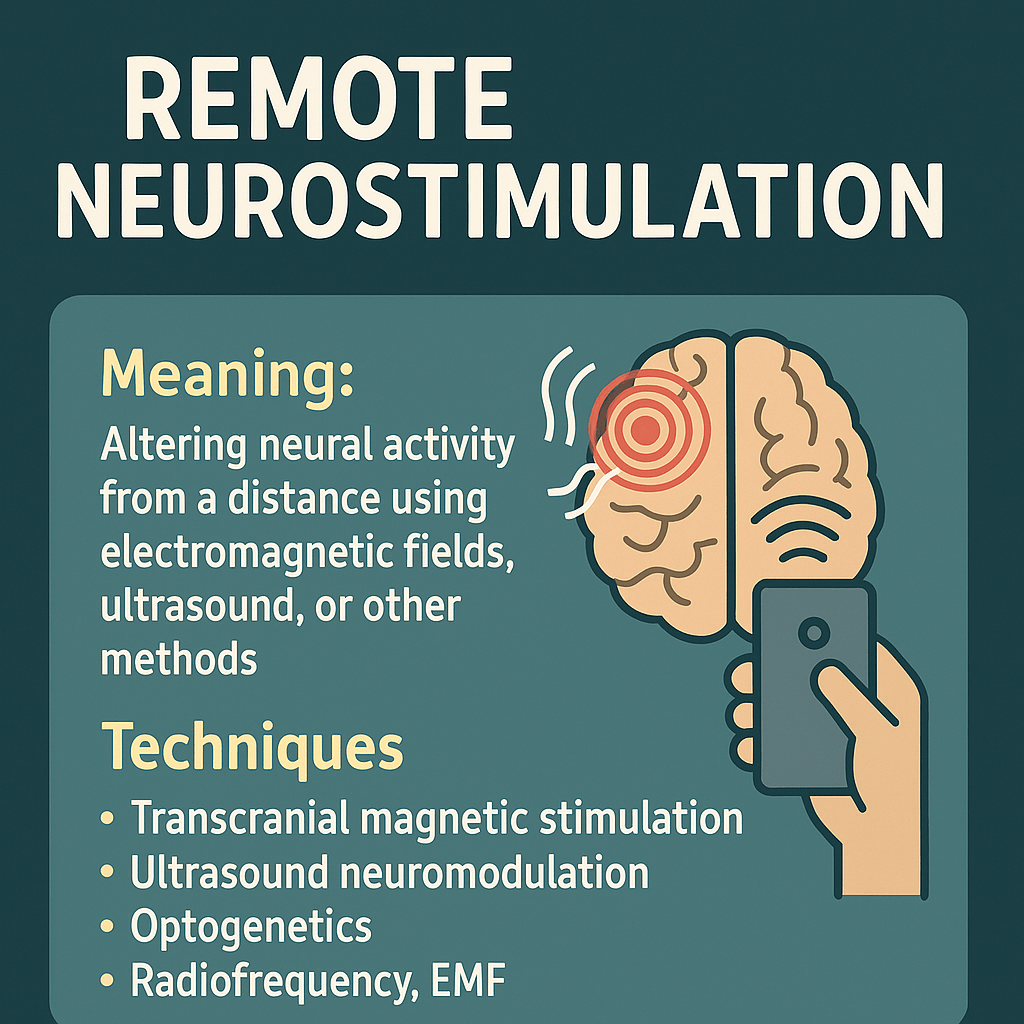
Combine this with known interests in remote neurostimulation, synthetic empathy modeling, and predictive behavioral algorithms, and the veil lifts further. The extraction is no longer metaphorical. It becomes measurable, profitable, scalable.
Monsters Are Real—But They Wear Badges, Not Horns
The predators are not furry or fanged. They wear lab coats, badges, and corporate logos. They craft plausible deniability, secure funding through health-tech grants, and protect their research with national security seals. Fiction tells us they’re after screams. Reality suggests they’re after blood, biochemistry, neural maps, and emotional imprinting.
And yet, the film still airs—selling toys, lunchboxes, and sequels.
This is not just a children’s movie. It is the animated whisper of a system that mocks us with truth disguised as play.
Conclusion: Behind the Door
Monsters, Inc. opens with a door. It’s not just a child’s closet. It is the gateway to an industrialized economy of innocence, framed as fiction. But behind that door is something more brutal—a real world where children vanish, their screams unheard, their laughter repurposed. And the monsters? They’re smiling, well-funded, and hiding in plain sight.
We owe it to those without voices to open the door—and keep it open.
Final Reflection: A Warning to Parents
Beneath the surface of animated wonder lies a metaphor too disturbing to ignore. Monsters, Inc. doesn’t just entertain—it subtly conditions children to associate fear with energy, pain with power, and captivity with laughter.
Parents, beware.
The media your children consume isn’t neutral. Stories told through adorable monsters or whimsical worlds may carry veiled symbols of exploitation, control, and emotional harvesting. Whether intentional or subconscious, the narrative architecture echoes the same psychological mechanisms studied in trauma-based conditioning programs like MKUltra—where innocence becomes currency.
This isn’t a call to paranoia. It’s a call to vigilance.
We must raise children who aren’t just emotionally safe—but spiritually aware.
Because in a world where fear fuels systems, the purest protection is conscious parenting.
Be vigilant, not silent.
The veils are thin, and monsters rarely hide under the bed anymore—they may now sit behind screens, boardrooms, and billion-dollar narratives.
Further Reading
Through the Silver Screen: When Sci-Fi Speaks Truth
Citations / Sourcing:
1. Declassified CIA Documents
MKUltra Files – The Black Vault
2. Monsters, Inc. Film Metadata
Pixar Studios, Directed by Pete Docter, Released 2001
3. Project Monarch & Trauma-Based Programming
Springmeier, Fritz. The Illuminati Formula to Create an Undetectable Total Mind Control Slave
Cathy O’Brien. Trance: Formation of America
4. University Research Partnerships in MKUltra
Harvard University (experiments on Timothy Leary and others)
McGill University (Dr. Ewen Cameron’s “Psychic Driving”)
Stanford Research Institute (now SRI International)
5. Psychological Warfare & Predictive Programming
Media Literacy and MKUltra Symbolism – Vigilant Citizen
DARPA Mind Control Research – Wired
6. Further Information Josh Hawley tells 23AndMe children DNA
Through the Silver Screen: When Sci-Fi Speaks Truth
By Marivel Guzman | Akashma News
Introduction: Fiction as Soft Disclosure
From sanitized studios to Hollywood’s silver screen, speculative fiction has often served as more than escapism. Some call it predictive programming. Others call it symbolic confession. We call it a mirror held up to a shadowed world—a portal through which we can glimpse deeper truths veiled in metaphor, coded narrative, and cinematic spectacle. In this companion analysis to our ongoing investigation of HAARP, Antarctica, and classified scientific frontiers, we turn our attention to the subconscious whispers embedded in popular films.
Repo Men (2010): Organs on Credit
In this dystopian thriller, organs are sold on credit by a biotech corporation, and when debtors default, they’re hunted down and repossessed—literally. The film offers a thinly veiled commentary on biomedical capitalism, the commodification of the body, and class-based access to longevity. It also eerily mirrors the logic of real-world healthcare systems where debt and biology are deeply entangled.
Themes reflected in reality:
Organ trafficking markets
Privatized health and debt-based medicine
Bio-ownership and patents over lifeforms
The Island (2005): The Clone Dilemma
Michael Bay’s The Island presents a chilling concept: human clones created to serve as involuntary donors for the elite. Raised in ignorance, they await “The Lottery” to go to the so-called paradise—unaware it’s their execution. The film critiques eugenics, hidden biolabs, and the cold utilitarianism that underlies extreme bioengineering ventures.
Themes reflected in reality:
Secret cloning programs
Biotech firms researching artificial wombs and tissue culture
Ethical debates over synthetic consciousness and life ownership
Guardians of the Galaxy (MCU): Mind Control, Faith Energy, and Genetic Slavery
While more colorful and cosmic, the Guardians franchise dips into deep metaphysical questions. The Universal Church of Truth converts citizens into energy sources through faith harvesting. Rocket Raccoon is a product of cybernetic experimentation. These threads echo DARPA’s real-life brain-interface projects, EMF influence studies, and mind-control experiments.
Themes reflected in reality:
Neural implants and AI-enhanced cognition
Psychotronic weapon research
Religious or ideological mass programming
Monsters, Inc. (2001): Children as Currency
This seemingly innocent Pixar animation hides perhaps the darkest metaphor. Monsters power their world by scaring children and extracting their screams—energy converted into electricity. It’s a disturbing model: children’s fear commodified for systemic consumption. The more frightened the child, the more powerful the energy.
Children as Currency: The Monsters Behind the Laughter
Beneath the soft glow of Pixar’s palette and the soundtrack of giggles lies one of the most disturbing metaphors to ever slip past the cultural radar. Monsters enter bedrooms through dimensional doorways, scare children to extract screams, and convert fear into energy. But read symbolically, this mirrors reports from whistleblowers and survivors of an underground economy where the emotional, physical, and biochemical essence of children is harvested.
Whispers and warnings include:
Alleged trafficking of children’s blood and DNA
Biomedical corporations researching young plasma for anti-aging
Neuroimaging and cognitive replication from child brains
And here lies the veiled reference: emerging brain-machine interfaces, DARPA’s neurostimulation research, and private-sector cognitive mapping projects all intersect in a landscape where innocence becomes data.
Is this fiction preparing us—or mocking us? Are the monsters just pixels, or are they symbols for a deeper truth?
Conclusion: Truth Rendered in CGI
Each of these films offers more than storytelling. They offer warnings, disclosures, or psychological groundwork. Whether we consider them conspiratorial mirrors or unconscious cultural confessions, they deserve to be treated with the seriousness of journalism. The screen may be silver, but the message bleeds red.
This is Part I. The next installment will explore films like Snowpiercer, The Tomorrow War, Interstellar, and Elysium—mapping environmental weaponization, class apartheid, and genetic colonization through narrative fiction.
Further reading

 Akashma Online News