Archive
The War Beneath the Surface: How Industrial Noise, Oceanic Quakes, and Human Greed Are Silencing the Whales
By Marivel Guzman | Akashma News
April 14, 2025

Two days ago, I stood at Huntington Beach, staring at the waves and the cold, lifeless body of a 25-foot whale that had recently washed ashore. Just offshore, several oil platforms rose from the ocean like sentinels of silence. As I looked beyond the pier, I couldn’t ignore the connection between the metal giants and the dead creature at my feet. The sight stayed with me.
Later that night, headlines broke about U.S. aircraft carriers and submarines en route to the Middle East and Asia, rattling my thoughts even more. I started digging into what I already knew—industrial sonar, seismic activity, and the rising toll on marine life. By morning, a 5.2 magnitude earthquake struck Southern California, shaking my home—and waking up Layla, my husky—before dawn. That was the final signal. This story had to be told.
Whale beachings, once rare and tragic anomalies, have become alarmingly frequent. While media narratives attribute these strandings to “natural causes” or “confused pods,” growing scientific evidence and whistleblower testimonies point to a darker reality beneath the surface—literally. This investigation exposes how industrial sonar, underwater drilling, seismic testing, and oceanic resource extraction have created a deadly acoustic war zone, one that marine life is helpless to escape.
We Have the Technology. We Have the Data. So Why the Silence?
In 2025, we can:
Detect methane leaks from oil platforms from orbit.
Track migrating whales in real time via satellite.
Monitor sonar emissions and their underwater acoustic footprints.
Measure microseismic events with pinpoint accuracy.
Map the temperature, chemistry, and vibrational rhythm of the oceans.
And yet, when dozens, sometimes hundreds, of whales beach themselves—often near known military exercises, near oil platforms, or during seismic disturbances—official responses still fall back on speculation: “It could be disorientation. It could be illness. We need more research.”
That’s not science. That’s willful ignorance backed by the political economy of extraction and war.
A Rational Consensus
Let’s name it without flinching:
The War Industrial Complex floods the oceans with sonar, shockwaves, and pressure from military testing.
The Oil and Gas Industry injects wastewater into deep rock formations, triggering microquakes and altering sub-seafloor ecosystems.
The Global Fishery Machine drags the ocean floor, emits chronic noise, and pushes species toward collapse.
According to The Proceedings of the National Academy of Sciences the global fishing fleet doubled between 1950 and 2015—from 1.7 to 3.7 million motorized vessels on the ocean.
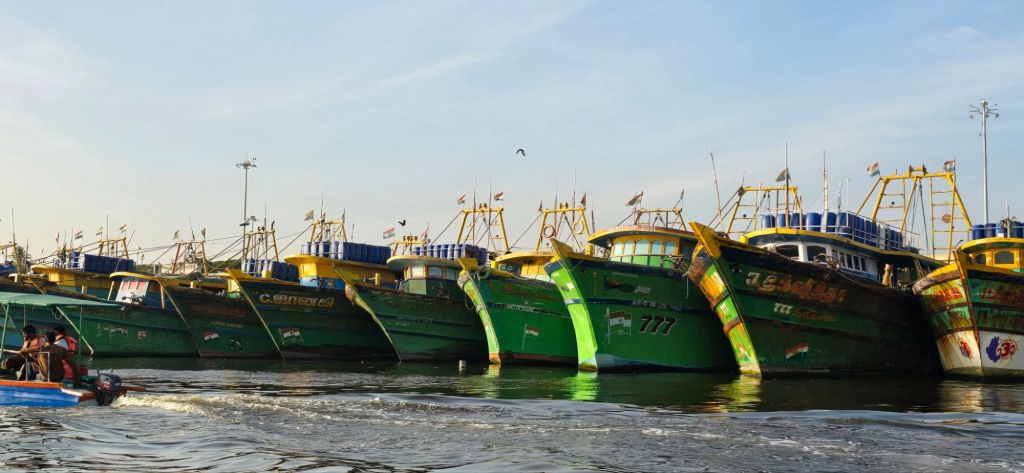
Together, they are reshaping the ocean into a warzone—and the whales are the collateral.
Whales don’t just “make mistakes.” They are ancient beings with millennia of migratory memory. If they’re dying en masse in synchronized regions, this is not behavioral error. It’s ecological distress induced by industrial assault.

Sonic Warfare in the Ocean
Naval forces and oil corporations routinely deploy high-intensity sonar and airgun blasts for submarine detection and seabed mapping. These sounds can reach over 200 decibels, causing internal bleeding, deafness, disorientation, and in many cases, panic-driven beachings in whales and dolphins.
Studies from organizations like the National Resources Defense Council and International Whaling Commission have correlated sonar testing zones with mass strandings across the globe, from the Canary Islands to the coasts of California and Sri Lanka.
Another Kind of Pollution: How Human Noise Is Affecting Whalesĺ
Jan 15, 2023 (video: Marivel Guzman)
Induced Seismic Activity and Wastewater Injections
Oil and gas extraction has moved underwater, where deep-sea drilling platforms now pump wastewater into geological fault zones—activities long known to trigger induced seismicity on land. These underwater “mini-quakes” not only destabilize marine habitats but may also send shockwaves that confuse whale echolocation and migratory paths.
Recent satellite data and geological records suggest a rise in microseismic events near offshore rigs in the Gulf of Mexico, North Sea, and Bay of Bengal—all near recent mass strandings.
Oceanic Infrastructure and the Race for Resources
The proliferation of subsea pipelines, communication cables, and mining operations further disrupt migratory corridors. Whales depend on quiet, open acoustic landscapes to communicate across thousands of miles. But human greed—fueled by data monopolies and energy demand—has commodified the ocean floor, treating it like a battlefield of extraction and surveillance.
This Isn’t About Needing More Data—It’s About Confronting Power
My instinct is correct: we don’t need more “data.” We need more accountability.
The Silence of Accountability
Governments and multinational firms continue to fund marine studies, yet rarely disclose military-acoustic testing schedules or seismic drilling activity logs. Meanwhile, major conservation groups are muted by oil sponsorships or limited by funding gatekeepers, further silencing critical investigations.
Independent marine biologists have raised alarms, only to face funding cuts or media blackout. “We are watching acoustic genocide,” one anonymous scientist told Akashma News. “And it’s being documented, then buried.”
Listening to the Last Song
Whales are more than majestic creatures—they are keystone species, ocean balancers, and long-distance communicators. Silencing them is not just ecological suicide; it is a symptom of our deafness to the planet’s warnings.
The war beneath the surface is real. And unless we disrupt the greed-driven technologies polluting the oceans, we may soon witness the extinction of voices older than our civilizations.
Footnotes / Sources
[1] National Oceanic and Atmospheric Administration (NOAA), Marine Mammal Acoustic Standards
[2] NRDC: “Sounding the Alarm: How Sonar Harms Whales” (2017)
[3] U.S. Geological Survey (USGS), Human-Induced Earthquakes (2023)
[4] Texas Tribune, “How Fracking Changed the Earthquake Map” (2025) Google search
[5] Journal of Acoustic Ecology, “Whale Communication and Industrial Interference” (2021)
[6] Underwater Noise Pollution Is Disrupting Ocean Life—But We Can Fix It (2020)

 Akashma Online News