Archive
Keratin Serums — Beauty, Risk, and the Truth Behind “Silky” Promises
By Akashma News
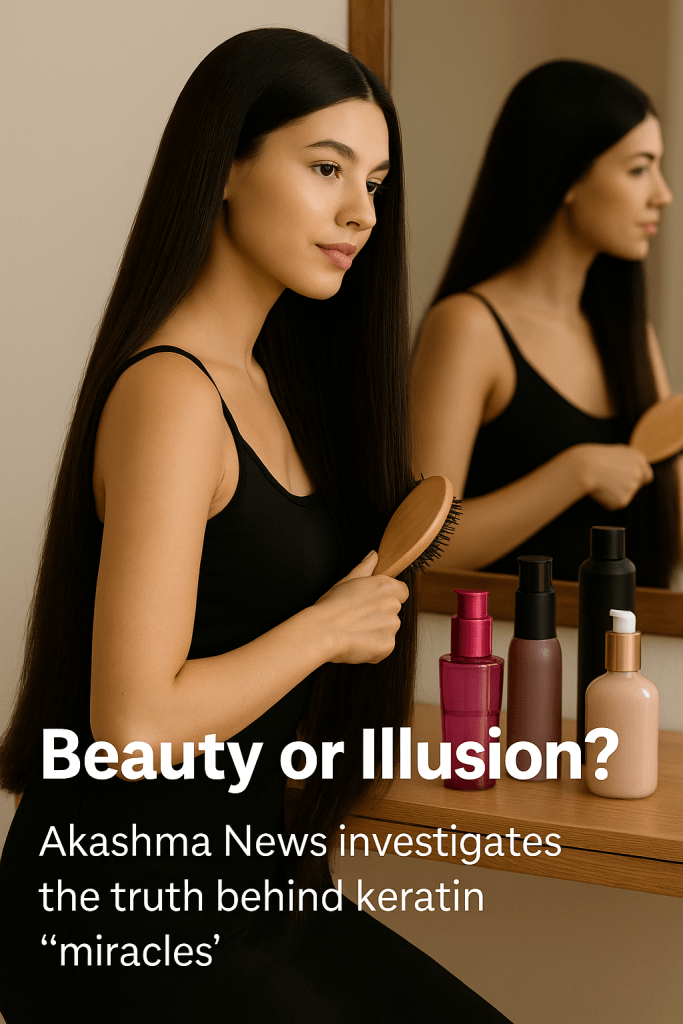
🧠 Introduction
The global “keratin serum” market is booming, promising salon-smooth hair, heat protection, and “reconstruction” in a bottle.
Yet most formulas simply coat the hair rather than repair it — using silicones, film-formers, and synthetic polymers.
Some are harmless; others contain irritants or even trace formaldehyde, raising concerns for long-term users and professionals.
This investigation compares four best-selling products on Amazon Mexico, rating ingredient safety from 1 (risky) to 10 (safe), focusing on health impact, scalp absorption, and environmental persistence.
🩰 1. Alfaparf Milano – Keratin Therapy Lisse Design
Claim: “-93% hair breakage, silky texture, protection from heat.”
Key ingredients:
Water, Amodimethicone, Dimethicone, Cyclopentasiloxane, Cyclohexasiloxane, Hydrolyzed Keratin, Collagen Amino Acids, Propylene Glycol, Panthenol, Tocopherol, Argan Oil, Fragrance.
Safety Ratings (1–10)
Category Ingredient Score Notes
Silicones Amodimethicone / Dimethicone 7 Non-toxic; buildup possible.
Volatile Silicones Cyclopentasiloxane (D5), Cyclohexasiloxane (D6) 6 Low human risk, but persistent in environment.
Proteins Hydrolyzed Keratin, Collagen Amino Acids 9 Surface-binding; safe.
Moisturizers Panthenol, Tocopherol, Argan Oil 9 Nourishing, antioxidant.
Solvent Propylene Glycol 7 Mild irritant to sensitive scalps.
Fragrance Parfum 5 Common sensitizer.
Verdict:
✨ Cosmetically effective, minimal risk when applied mid-length to ends.
Avoid direct scalp application to reduce buildup or irritation.
🌸 2. L’Oréal Professionnel – Liss Unlimited Serum
Claim: “Professional smoothing serum, anti-frizz, humidity protection.”
Key ingredients: Cyclopentasiloxane, Dimethiconol, C12-15 Alkyl Benzoate, Evening Primrose Oil, Kukui Oil, Alcohol Denat., Tocopherol, Ascorbyl Palmitate, Hexyl Cinnamal, Citronellol, Linalool.
Safety Ratings (1–10)
Category Ingredient Score Notes
Silicones Cyclopentasiloxane, Dimethiconol 7 Smooths hair; low absorption.
Emollients C12-15 Alkyl Benzoate 8 Soothes hair shaft; safe.
Natural Oils Evening Primrose & Kukui Oil 9 Omega-rich; safe.
Alcohol Alcohol Denat. 6 May dry scalp/hair if overused.
Vitamins Vitamin E & C Derivatives 9 Antioxidant protection.
Fragrance Components Hexyl Cinnamal, Linalool, Citronellol 4 High allergen potential for sensitive users.
Verdict:
🌿 Polishing serum with good-quality oils and vitamins.
⚠️ Avoid on scalp if sensitive to alcohol or fragrance.
Eco-impact moderate (volatile silicones).
☕3. INOAR – Moroccan Keratin Treatment (1 L)
Claim: “Deep repair and straightening with keratin and cocoa oil.”
Key ingredients: Hydrolyzed Keratin, Cocoa Butter, Cocoa Oil, Wheat Protein, Glyoxylic Acid, Citric Acid, Glycerin, Formaldehyde (0.2 %), Fragrance, Water.
Safety Ratings (1–10)
Category Ingredient Score Notes
Proteins Hydrolyzed Keratin & Wheat Protein 9 Replenish surface; safe.
Conditioners Cocoa Oil / Butter 9 Moisturizing, emollient.
Straightener Glyoxylic Acid 4 Alters keratin bonds; inhalation risk during heat application.
Preservative Formaldehyde (0.2%) 1 Known carcinogen, inhalation hazard, especially in heat treatments.
Fragrance Parfum 5 Sensitizer potential.
Humectant Glycerin 9 Safe.
Verdict:
⚠️ High-risk formula if heat-activated — formaldehyde vapors can irritate eyes, lungs, and skin.
Use only in ventilated professional settings; not safe for home use.
Score: 🚫 Overall 3/10 for health safety.
💫 4. TRESemmé – Keratin Smooth Smoothing Serum
Claim: “Eliminates frizz, adds shine, keratin-infused.”
Key ingredients: Cyclopentasiloxane, Cyclohexasiloxane, Dimethicone, Phenyl Trimethicone, Hydrolyzed Keratin, Aminopropyl Dimethicone, Fragrance.
Safety Ratings (1–10)
Category Ingredient Score Notes
Silicones Cyclopentasiloxane, Dimethicone 7 Surface coat; safe, non-absorbable.
Heavy Silicones Phenyl Trimethicone / Aminopropyl Dimethicone 6 Adds gloss; buildup risk.
Protein Hydrolyzed Keratin 9 Surface repair; safe.
Fragrance Parfum 5 Allergen potential.
Verdict:
⭐ Budget-friendly, silicone-heavy shine serum.
Low systemic risk but causes buildup if used daily without clarifying shampoo.
Score: Overall 7/10.
⚖️ Summary Table — Health & Environmental Safety
Brand / Product Key Concern Human Safety Eco Impact Overall Rating
Alfaparf Milano Fragrance buildup ✅ Safe ⚠️ Moderate (silicones) 8/10
L’Oréal Liss Unlimited Fragrance allergens, alcohol ✅ Safe ⚠️ Moderate 8/10
INOAR Moroccan Formaldehyde vapor hazard ❌ Unsafe for home use 🚫 Poor 3/10
TRESemmé Keratin Smooth Silicone buildup ✅ Safe ⚠️ Moderate
🌿 Consumer Guidance
💧 Avoid heat-activated “keratin straighteners” that contain formaldehyde or glyoxylic acid. These chemically alter hair and release irritant fumes.
✨ Choose leave-in serums with hydrolyzed proteins, vitamins, and plant oils — preferably silicone-free or low-silicone.
🌀 Clarify once weekly to prevent buildup if using silicones.
🌬️ Ventilate or use outdoors if any product instructs blow-drying or flat-ironing after application.
👃 Fragrance-sensitive users: opt for unscented or natural oil–based formulas.
🔍 Conclusion
Most “keratin serums” are safe surface treatments, not real reconstruction therapies.
Their results are optical — a smooth cuticle reflection, not molecular repair.
For true hair health, hydration and nutrition matter more than synthetic coating.
⚖️ Disclaimer – Fair Use and Educational Purpose
> Disclaimer:
This article is an independent consumer-awareness publication created for informational, educational, and journalistic purposes. Product names, trademarks, and images are used under the principles of nominative fair use and fair dealing for critique, commentary, and comparative analysis. Akashma News does not claim ownership of third-party trademarks or brand assets. All evaluations are based on publicly available information, product labels, and independent research. Readers are encouraged to consult professional stylists or dermatologists before using any cosmetic products mentioned herein.
—
🪶 Non-Affiliation Statement
Non-Affiliation Statement:
Akashma News and its contributors are not affiliated, endorsed, or sponsored by Alfaparf Milano, L’Oréal Paris, L’Oréal Professionnel, TRESemmé, INOAR, or any other brand mentioned in this report. All product references are made solely for identification and comparison within the context of public interest journalism.
Fine Ingredients or Fine Print?
🍜 What Instant Noodles Really Contain—And How You Can Make Them Safer
By Akashma News – Consumer Awareness Series

Instant noodles are sold as a quick, comforting meal—“fine ingredients, authentic taste” as the package says. But behind the glossy image of beef slices and fresh herbs lies a different story: a trio of sachets filled with palm oil, flavor enhancers, and colorants that have more to do with chemistry than nutrition.
📦 Anatomy of the Packet
🟡 Sauce Pack
- What it contains: Refined palm oil (with TBHQ preservative), caramel color, soy sauce concentrate, and artificial flavors.
- Role: The taste-maker—the heart of the broth.
- Health cost: Palm oil raises LDL cholesterol and promotes arterial plaque (Fattore & Fanelli, 2013). TBHQ is linked to oxidative stress in lab studies (EFSA, 2015). Caramel coloring (Class III/IV) may contain 4-MEI, a compound flagged as carcinogenic in California (NTP, 2007; FDA, 2014).
🔵 Seasoning Pack
- What it contains: Monosodium glutamate (MSG), disodium inosinate/guanylate (umami boosters), salt, sugar, chili powder.
- Role: Delivers the umami punch that keeps you coming back.
- Health cost: One pack = 2,631 mg sodium, more than the daily allowance (He & MacGregor, 2010). MSG is generally regarded as safe, but in synergy with inosinate/guanylate it creates an addictive taste loop (EFSA, 2017).
🟢 Vegetable Pack
- What it contains: Dehydrated carrot, cabbage, scallion, coriander.
- Role: Cosmetic—makes the bowl look healthier.
- Reality check: The amounts are tiny, vitamins mostly degraded by drying, with negligible nutritional impact.

🧪 The Health Risks
- Palm Oil (fried noodle cake & oil sachet): Raises LDL cholesterol → heart & artery risk (Fattore & Fanelli, 2013).
- TBHQ (synthetic preservative): Within “legal safe” limits but with cytotoxic/genotoxic signals in lab studies (EFSA, 2015).
- Caramel Color (4-MEI): Carcinogen risk flagged by California Prop 65; long-term exposure is the concern (NTP, 2007; FDA, 2014).
- Phosphate Additives: Overload bone-mineral metabolism (↑FGF23, ↑osteocalcin) and tied to vascular calcification (Ritz et al., 2012; Vervloet & Massy, 2019).
- Sodium (2,600+ mg): Exceeds daily safe intake; contributes to hypertension, kidney strain (He & MacGregor, 2010).
- MSG + Umami Boosters: Safe at moderate intake, but synergistic effect encourages overeating (EFSA, 2017).
👉 These ingredients don’t simply “pass through.” They place long-term burdens on the liver, kidneys, arteries, lymph nodes, and fat stores.

Instant Noodle soup enriched with, onion, garlic, bay leaves, cloves, fresh chaya leaves and variety of madhroom.
🌱 Kitchen Medicine: What You Added
While the packet is built for taste, your additions rebuild it for health:
- Enoki, Shiitake, Shimeji, King Oyster Mushrooms: Rich in β-glucans, ergothioneine, eritadenine → immune support, antioxidant protection, cholesterol-lowering (Heleno et al., 2012; Guillamón et al., 2010; Kabir et al., 1981; Jayakumar et al., 2011).
- Chaya Leaves (cooked): High in protein, calcium, iron, vit. A & C; supports anemia recovery and bone strength (Ross-Ibarra et al., 2002). Must be boiled to remove cyanide compounds.
- Cloves: Eugenol-rich—antimicrobial, anti-inflammatory, digestive (Cortés-Rojas et al., 2014).
- Bay Leaves: Cineole & linalool—digestive aid, antimicrobial, mild glucose-regulating effect (Marino et al., 2001).
- Onions: Quercetin & prebiotic fibers—heart protective, gut supportive.
👉 These additions don’t erase sodium or chemical preservatives, but they buffer oxidative stress, add minerals and fiber, and supply real phytonutrients.
⚖️ Consumer Advice: If You Must Eat Instant Noodles
- Limit frequency: Treat as an occasional food (once a week or less) (He & MacGregor, 2010).
- Skip or halve the sauce pack: Cuts palm oil, TBHQ, caramel color, and sodium (Fattore & Fanelli, 2013).
- Drain first boil: Reduces surface sodium and phosphates (Ritz et al., 2012).
- Rebuild broth naturally: Onion, garlic, mushrooms, herbs give umami without chemical overload (Heleno et al., 2012).
- Add nutrient density: Greens, cooked chaya, mushrooms, cloves, bay leaves (Ross-Ibarra et al., 2002; Cortés-Rojas et al., 2014; Marino et al., 2001).
- Balance your day: Avoid other phosphate- or sodium-heavy foods (colas, processed meats, cheese slices) (Ritz et al., 2012; Vervloet & Massy, 2019).
📝 Bottom Line
Instant noodles are engineered for addiction, not nutrition. The sauce pack carries the most harm, the seasoning pack the sodium spike, and the vegetable pack little real benefit.
But with consumer awareness and kitchen medicine, you can reclaim some health from a convenience food—without illusions about its risks.
⚖️ Disclaimer
The information in this article is provided for educational and consumer awareness purposes only.
Akashma News is not sponsored or paid by any company mentioned.
Our intention is not to cause harm to businesses, but to inform readers about what they consume — the good and the bad — so they can make healthier, more conscious choices.
Always consult with qualified health professionals before making dietary changes or medical decisions.
📚 References – Annotated Bibliography
(Insert the annotated bibliography section here as plain text or HTML list)
📚 References – Annotated Bibliography
🍄 Mushrooms
- Heleno, S. A., Barros, L., Sousa, M. J., et al. (2012). Nutritional value, bioactive compounds, antimicrobial activity and antioxidant properties of mushrooms: A review. Food and Chemical Toxicology, 50(2), 191–197.
– Comprehensive review of Asian mushrooms (shiitake, enoki, shimeji, Pleurotus), highlighting β-glucans, ergothioneine, and immune/antioxidant properties. - Guillamón, E., Linde, G. A., Barros, L., et al. (2010). Mushrooms as a source of ergothioneine, a unique antioxidant. Food Chemistry, 119(4), 1443–1449.
– Shows mushrooms, especially enoki and oyster, as dietary sources of ergothioneine with potential protective effects against oxidative stress. - Kabir, Y., Kimura, S., & Tamura, T. (1981). Dietary effect of eritadenine on plasma lipids, liver microsomal phospholipid, and cholesterol in rats. The Journal of Nutrition, 111(4), 541–548.
– Documents the cholesterol-lowering effect of eritadenine, a compound isolated from shiitake mushrooms. - Jayakumar, T., Thomas, P. A., & Geraldine, P. (2011). Pleurotus ostreatus: An oyster mushroom with nutritional and medicinal properties. Journal of Biomedicine and Biotechnology, 2011, 852–853.
– Human and animal studies showing oyster and king oyster mushrooms reduce inflammation, oxidative stress, and improve metabolic markers.
🌿 Bay Leaves, Clove, Chaya
- Marino, M., Bersani, C., & Comi, G. (2001). Impedance measurements to study the antimicrobial activity of essential oils from Lamiaceae and Lauraceae. International Journal of Food Microbiology, 67(3), 187–195.
– Study of bay leaf essential oils (cineole, eugenol) showing antimicrobial activity in food systems. - Cortés-Rojas, D. F., de Souza, C. R. F., & Oliveira, W. P. (2014). Clove (Syzygium aromaticum): a precious spice. Asian Pacific Journal of Tropical Biomedicine, 4(2), 90–96.
– Overview of clove’s bioactive compounds (eugenol) and their medicinal applications: anti-inflammatory, antimicrobial, analgesic. - Ross-Ibarra, J., Molina-Cruz, A., & Ponce de León, D. (2002). Cnidoscolus aconitifolius (Chaya), a Mayan leafy green and its nutritional and toxicological characteristics. Economic Botany, 56(4), 350–365.
– Classic reference on chaya: high protein, calcium, iron, vitamins; warns of cyanogenic glycosides and need for cooking.
🧪 Additives & Processed Ingredients
- Fattore, E., & Fanelli, R. (2013). Palm oil and palmitic acid: a review on cardiovascular effects and carcinogenicity. International Journal of Food Sciences and Nutrition, 64(5), 648–659.
– Human and animal studies showing palm oil raises LDL cholesterol and cardiovascular risk compared to unsaturated oils. - EFSA Panel on Food Additives and Nutrient Sources Added to Food (ANS). (2015). Scientific Opinion on the re-evaluation of tert-butylhydroquinone (TBHQ) as a food additive. EFSA Journal, 13(11), 4319.
– EU risk assessment: sets ADI, notes TBHQ safe within limits but with concerning toxicological signals at higher exposures. - National Toxicology Program (NTP). (2007). Toxicology and carcinogenesis studies of 4-methylimidazole (4-MEI). Technical Report Series No. 535.
– Evidence of increased lung tumors in mice exposed to 4-MEI, the contaminant found in caramel coloring. - FDA. (2014). Questions and Answers on Caramel Coloring and 4-MEI.
– U.S. FDA statement: 4-MEI levels monitored; no immediate change to consumer advice, but acknowledges ongoing toxicology concerns. - Ritz, E., Hahn, K., Ketteler, M., Kuhlmann, M. K., & Mann, J. (2012). Phosphate additives in food—a health risk. Deutsches Ärzteblatt International, 109(4), 49–55.
– Clinical and epidemiological evidence: high dietary phosphate load (especially from additives) contributes to cardiovascular calcification and kidney strain. - Vervloet, M., & Massy, Z. A. (2019). Phosphate toxicity in chronic kidney disease: more than just vascular calcification? Nephrology Dialysis Transplantation, 34(4), 560–568.
– Highlights how phosphate load affects bone metabolism, FGF23 signaling, and long-term cardiovascular health. - He, F. J., & MacGregor, G. A. (2010). Reducing population salt intake worldwide: from evidence to implementation. Progress in Cardiovascular Diseases, 52(5), 363–382.
– Review on sodium and cardiovascular outcomes; one packet of noodles (2,600 mg sodium) exceeds daily intake guidelines. - EFSA Panel on Food Additives and Nutrient Sources added to Food (ANS). (2017). Re-evaluation of glutamic acid and glutamates (E 620–625) as food additives. EFSA Journal, 15(7), 4910.
– Sets ADI of 30 mg/kg/day for glutamates; highlights concern for population intakes exceeding this via processed foods.

 Akashma Online News