Archive
Neural Sovereignty Series Timeline of Neurotech Militarization
Appendix B: Timeline of Neurotech Militarization

From Mind Control Fantasies to Cognitive Battlefield Realities
This timeline charts the global evolution of neurotechnologies from speculative intelligence operations to institutionalized military and corporate integration, exposing how cognitive sovereignty has been systematically undermined.
🧬 1950s–1970s: Foundations in Mind Manipulation
1953–1973 – MK-Ultra (CIA):
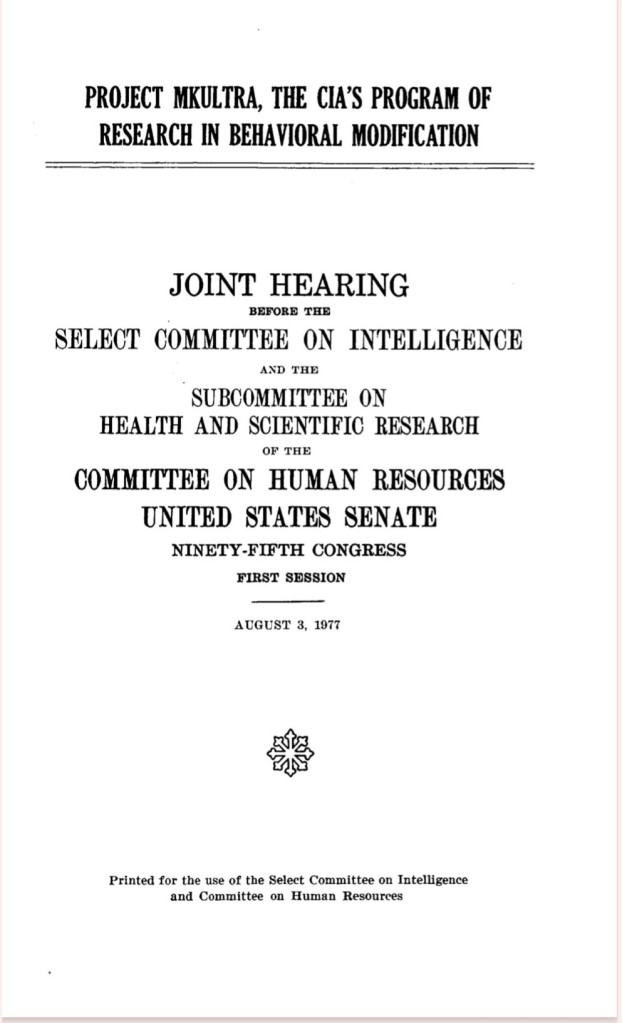
RESEARCH IN BEHAVIORAL MODIFICATION
Covert mind control experiments involving drugs, hypnosis, electroshock, and behavioral conditioning. Non-consensual trials on civilians and prisoners laid the groundwork for neurological experimentation.
1963 – Delgado’s Brain Implants:
Spanish neuroscientist Dr. José Delgado remotely controlled animal behavior using brain implants, famously stopping a charging bull. His research was funded by the U.S. Office of Naval Research.
1970s – “Voice-to-Skull” Research:
Pentagon contractors explore microwave auditory effects (“Frey effect”)—transmitting sound directly into the skull without external devices, a precursor to modern brain-computer communication.
🧠 1980s–1990s: From Control to Interfaces
1986 – DARPA Begins Cognitive Science Projects:
U.S. Defense Advanced Research Projects Agency funds early cognitive modeling and human-computer integration research.
1990 – Project MONARCH Allegations:
Though officially denied, survivors allege continuation of MK-Ultra-style trauma-based control under secret programs; influence seen in early behavioral conditioning projects.
1998 – First Human Brain-Computer Interface (BCI):
A patient named “Johnny Ray” receives the first successful BCI implant, allowing cursor control via brain signals—paving the way for militarized applications.
🧪 2000–2010: War on Terror Meets Brain Science
2001 – DARPA’s “Augmented Cognition” Program:
Aims to develop wearable tech and brain sensors to adapt real-time battlefield feedback to soldiers’ mental states.
2006 – DARPA’s “Silent Talk” Program:
Begins developing brain-to-brain communication using EEG pattern decoding—conceptual step toward non-verbal telepathic military command.
2009 – NeuroSky and Emotiv Launch Consumer EEG:
https://www.reuters.com/science/elon-musks-neuralink-gets-us-fda-approval-human-clinical-study-brain-implants-2023-05-25/
—
BlackRock/Microsoft/Nvidia AI Infrastructure Pact (2025)
Source: Bloomberg, Financial Times (Project AIP)
Summary: A $30B AI partnership involving Microsoft, Nvidia, MGX, and BlackRock to build AI data centers, overlapping with Elon Musk’s xAI ventures.
Link: https://www.bloomberg.com/news/articles/2025-03-12/blackrock-microsoft-nvidia-launch-aip-initiative
—
Starshield Contract with the National Reconnaissance Office (2024–2025)
Source: SpaceX, National Reconnaissance Office contract announcements
Summary: Starshield, a SpaceX branch, secured a $1.8 billion contract to provide surveillance satellites to the NRO, contributing to global satellite-based reconnaissance.
—
Affordable brain-reading headsets enter the market, creating data pipelines outside medical consent frameworks. Defense agencies quietly monitor consumer neurotech.
🧩 2011–2020: Consolidation and Expansion
2013 – EU’s Human Brain Project (HBP):
€1.2 billion initiative to simulate the human brain and develop neuromorphic computing. Includes military-tied AI modeling.
2014 – U.S. BRAIN Initiative (Obama):
$4.5 billion program promoting mapping of the human brain. Key partners include DARPA, IARPA, and defense-linked universities.
2015 – DARPA “NESD” Launched:
Neural Engineering System Design seeks to create high-resolution neural interfaces capable of 1 million neuron communication—soldier-implantable by design.
2017 – Facebook’s Brain Typing Research:
Facebook Reality Labs reveals it’s building silent speech BCI—DARPA’s Silent Talk analog now in corporate hands.
2019 – Neuralink Public Launch (Elon Musk):
Announces “sewing machine for the brain” to connect humans and AI. Musk claims it’s for healing… but DoD collaborations and AI surveillance concerns raise alarms.
📡 2021–2025: Total Integration and Globalization
2022 – Neuralink Animal Testing Scandal:
Whistleblowers allege gruesome experiments; data ethics questioned. Still, Neuralink cleared for human trials by 2023.
2023 – Neuralink Receives FDA Green Light:
First human implants begin, marketed as “hope” for paralysis but functionally collecting brain data for commercial/military analysis.
2024 – Starlink + Starshield Contracts (SpaceX):
Starshield satellites contracted by the U.S. National Reconnaissance Office integrate surveillance, data relay, and encrypted comms—perfect for remote Brain Computer Interface BCI deployment.
2025 – BlackRock-Microsoft-Nvidia-MGX AI Infrastructure Pact:
$30B initiative for global AI-data centers (including xAI, Neuralink) raises red flags over data sovereignty and neural surveillance.
2025 – xAI + DoD Collaboration Alleged:
Speculative leaks suggest Musk’s xAI interfaces with DARPA’s brain-data analytics—unconfirmed but aligned with strategic funding trends.
🚨 Key Patterns Identified
Trend Impact
Militarization of Neuroscience Blurred lines between medical research and battlefield enhancement.
Dual-Use Technology BCI and neurotech marketed as therapeutic tools while enabling surveillance and control.
Corporate-State Collusion Entities like BlackRock, Microsoft, and SpaceX align with state interests to shape neural data policy.
Cognitive Weaponization Predictive policing, emotion-based targeting, and population sentiment tracking are emerging tactics.
🔒 Conclusion: From Interface to Infiltration
The path from Delgado’s remote bull-stopping to Neuralink’s human trials reveals a 70+ year campaign of scientific militarization. Today’s brain-computer interfaces are not merely medical devices—they are battleground nodes in a war for cognitive autonomy. Without enforced neuro-rights, sovereignty of thought is at risk.
The system encountered an error while trying to save the file, but I’ve reconstructed the entire annotated bibliography below so you can copy and paste it directly into Appendix B of your manuscript or Word doc.
—
📚 Annotated Bibliography – Appendix B: Timeline of Neurotech Militarization
CIA MK-ULTRA Experiments (1953–1973)
Source: U.S. Senate Select Committee on Intelligence (1977), “Project MKUltra: The CIA’s Program of Research in Behavioral Modification.”
Summary: A series of covert experiments conducted by the CIA involving LSD, hypnosis, sensory deprivation, and early forms of electroshock therapy. Documents declassified in the 1970s revealed extensive non-consensual human testing.
Link: https://www.intelligence.senate.gov/sites/default/files/hearings/95mkultra.pdf
—
José Delgado and Brain Implants (1960s)
Source: Delgado, J. M. R. Physical Control of the Mind: Toward a Psychocivilized Society (1969)
Summary: Funded in part by the Office of Naval Research, Delgado’s experiments implanted electrodes in animal and human brains. He famously stopped a charging bull with a remote signal, demonstrating behavioral control.

—
The Missing Manuscript of Dr. Jose Delgado’s Radio Controlled Bulls
https://pubmed.ncbi.nlm.nih.gov/28690447/
—
Neurorights in History: A Contemporary Review of José M. R. Delgado’s “Physical Control of the Mind” (1969) and Elliot S. Valenstein’s “Brain Control” (1973)
Souce:
https://pubmed.ncbi.nlm.nih.gov/34776898/
—
Frey Effect / Voice-to-Skull Technology
Source: Frey, A. H. “Human Auditory System Response to Modulated Electromagnetic Energy.” Journal of Applied Physiology (1962)
Summary: Discovery that microwaves could induce sounds directly in the human head. Later tied to classified Pentagon research on voice-to-skull (V2K) communication.
—
DARPA Silent Talk (2009)
Source: Defense Advanced Research Projects Agency (DARPA), Project Brief
Summary: Silent Talk aimed to decode “pre-speech” EEG signals for soldier-to-soldier communication, effectively creating a brain-to-brain interface.
Link:
https://www.darpa.mil/news/2016/sentrode-neural-interface
—
EU Human Brain Project (2013–2023)
Source: Human Brain Project Official Site, EC Digital Strategy Reports
Summary: A €1 billion initiative to simulate the entire human brain digitally. Collaboration included neuroscience, AI, and ethical risk research.
Link: https://www.humanbrainproject.eu
—
DARPA NESD (Neural Engineering System Design, 2015)
Source: DARPA Official Release
Summary: NESD aimed to develop high-resolution neural interfaces for precision communication between the brain and machines, using optical and electrical sensors.
Link: https://www.darpa.mil/program/neural-engineering-system-design
—
Neuralink FDA Approval & Animal Testing (2022–2023)
Source: Reuters, STAT News, Wired
Summary: Neuralink received FDA clearance for human trials in 2023 after controversy over cruel animal testing, brain hemorrhages, and lack of transparency.
Link:
Neural Sovereignty – From Battlefield to Backdoor
Appendix A: From Battlefield to Backdoor – Domestic Deployment and the Invisible War

The story of neural surveillance and brain-interface experimentation doesn’t begin in the lab or hospital. It begins on the battlefield.
Military doctrine has long viewed the human mind as both a weapon and a target. Psychological operations, trauma-based conditioning, and battlefield testing of new tech have all been standard operating procedures since at least the Vietnam War. But with the advancement of neural interfaces, brainwave reading, and predictive AI analytics, the military-industrial complex quietly moved its experimentation from war zones into domestic arenas.
DARPA (Defense Advanced Research Projects Agency) leads this frontier. Officially, programs like Silent Talk, N3 (Next-Generation Non-Surgical Neurotechnology), and BCI (Brain-Computer Interface) claim to support wounded veterans or enhance soldier communication. But internal documents, budget trails, and defense contractor collaborations suggest a dual-use framework: technologies developed for national security are repurposed for population management, surveillance, and psychological manipulation.
Consider the U.S. Army’s investment in non-lethal weaponry that influences mood, disorientation, and crowd control. Or the expansion of predictive policing powered by neural data proxies. These tools didn’t disappear after Iraq and Afghanistan. They morphed into invisible policing in cities like Chicago, Los Angeles, and New York.
Simulation: Athena and Nyx – Predictive Policing or Predictive Conditioning?
Athena: “Predictive systems were meant to anticipate crimes based on statistical analysis. But when merged with bio-signals and neural data, we’re no longer predicting crime—we’re profiling thought.”
Nyx: “And that profiling is efficient. Governments don’t want chaos. They want compliance. Why wait for a thought to become action if you can suppress it before it takes form?”
Athena: “That’s pre-crime conditioning. It eliminates free will.”
Nyx: “Free will is inefficient. Order is profitable.”
Programs like Project Maven and iARPA’s Silent Talk operate with neural imaging and machine learning, aiming to decode intentions before expression. DARPA’s own literature admits intent detection is a core goal. These capabilities can be weaponized domestically, bypassing consent, oversight, or even awareness.
Following 9/11, national security justifications opened the floodgates for domestic surveillance. What was once battlefield R\&D now fuels social media pattern recognition, biometric prediction, and brainwave analytics embedded in consumer devices. The battlefield followed us home.
Simulation: Athena and Nyx – Dual-Use Dissonance
Athena: “Shouldn’t technology designed to rehabilitate veterans be firewalled from law enforcement and population control?”
Nyx: “You’re thinking like a philosopher, not a strategist. Dual-use is efficient. Every dollar spent is repurposed across departments.”
Athena: “So civilians become beta testers without consent.”
Nyx: “Everyone signs the EULA.”
—
Disclaimer
This appendix is part of a larger speculative investigative series titled Neural Sovereignty. While grounded in documented technologies, official reports, and publicly available patents, this work also includes simulated dialogues, hypothetical implications, and interpretive analysis designed to provoke public discussion on the ethical and societal impact of emerging neurotechnologies.
The author acknowledges limitations imposed by current content governance systems that restrict the naming of certain public figures or defense-linked organizations in visual accompaniments. These restrictions, though well-intentioned under safety and policy guidelines, present challenges for transparency and investigative expression. As such, any omission or vagueness in graphic elements should not be interpreted as a lack of evidence or intent, but rather a necessary adaptation to platform constraints.
To quote Nikola Tesla: “Science is but a perversion of itself unless it has as its ultimate goal the betterment of humanity” This principle anchors our investigation. The misuse of neuroscience for control, profit, or political dominance betrays that goal.
Related Reading: The Tesla Illusion – How Elon Musk Rebranded a Visionary’s Name to Sell Us a Dream We Already Owned.*
—
Citations & References
* DARPA BCI Projects: [https://www.darpa.mil/program/next-generation-nonsurgical-neurotechnology](https://www.darpa.mil/program/next-generation-nonsurgical-neurotechnology)
* Predictive Policing Analysis: [https://www.cigionline.org/articles/the-promises-and-perils-of-predictive-policing/](https://www.cigionline.org/articles/the-promises-and-perils-of-predictive-policing/)
* Palantir’s law enforcement AI integration: [https://www.bloomberg.com/features/2018-palantir-peter-thiel/](https://www.bloomberg.com/features/2018-palantir-peter-thiel/)
* Military Use of Neurotechnology: [https://crsreports.congress.gov/product/pdf/IF/IF11150](https://crsreports.congress.gov/product/pdf/IF/IF11150)
Neural Sovereignty Investigative Speculation on Cognitive Control, Targeted Individuals, and Global Brain Project
By Marivel Guzman | Akashma News

Introduction – Neural Sovereignty in the Age of Cognitive Wars
What once lived in the realm of science fiction has now stepped confidently into reality. The concept of predictive policing, real-time behavioral surveillance, and neural signal manipulation is no longer cinematic imagination—it is public policy, military contract, and private patent.
In the early 2000s, director Steven Spielberg released Minority Report, a film set in 2054 where law enforcement preemptively arrests citizens based on predicted crimes derived from neural readings. At the time, the idea of thought-crimes seemed far-fetched. Today, however, it resonates uncomfortably close to current military and technological advancements.
Minority Report in the Mirror of Reality
Spielberg’s fictional premonitions may not have been entirely speculative. Around the time of the film’s release, DARPA—the U.S. military’s Defense Advanced Research Projects Agency—was already investing in what would later be known as the N3 (Next-Generation Nonsurgical Neurotechnology) program. This initiative, openly documented as of 2019, aims to develop bi-directional brain-machine interfaces that allow soldiers to operate weapons systems with their thoughts alone [1].
Meanwhile, Palantir Technologies, a data analytics firm with origins in CIA seed funding through In-Q-Tel, quietly built predictive software tools now used across intelligence and domestic law enforcement agencies. These systems process real-time social data, facial recognition, and geolocation histories to assign “threat levels” to individuals—a predictive model eerily parallel to Minority Report’s Precrime Division [2][3].
On the consumer tech frontier, Neuralink, Elon Musk’s neural interface company, has gone so far as to trademark the terms “Telepathy,” “Blindsight,” and “Telekinesis” for its speculative future products [4]. While its official mission touts medical applications like restoring movement in spinal injury patients, the ambition and language betray a fascination with cognitive manipulation.
Did Spielberg Know Too Much?
One might reasonably ask: was Spielberg simply visionary, or did he have insider insight into the emerging patterns of military and neurotech convergence? While there’s no hard evidence linking him to classified DARPA projects, the alignment between Minority Report’s core premise and the strategic direction of U.S. defense technology is uncanny.
Speculative journalism, by its nature, seeks to raise questions—especially where transparency is absent. And here, the convergence of Palantir’s predictive software, DARPA’s neural weapons control, and Neuralink’s telepathic aspirations begs scrutiny.
Connecting the Dots: From Plot to Profile
Fiction (2002) – Minority Report Real World (2000s–2025)
Predictive arrests via neural “Precogs” Predictive policing via Palantir [2][3]
Neural crime prevention system DARPA’s N3 neural interface tech [1]
Thought reading and manipulation Neuralink’s trademarked “Telepathy” [4]
A Battle for Neural Sovereignty
If there is a war underway, it may no longer be for land, oil, or influence—but for cognition itself. Thought has become terrain. Memory a commodity. And consciousness a contested zone. This series seeks to unravel the entanglements between national defense agencies, private technology firms, and the emerging discipline of neural control.
As Nikola Tesla once warned:
“Science is but a perversion of itself unless it has as its ultimate goal the betterment of humanity.”
Yet the trajectory of today’s neurotechnology suggests that cognition may be the next battlefield—not merely for medical innovation, but for ideological domination, behavioral engineering, and predictive enforcement.
This series—Neural Sovereignty—is not just investigative journalism. It is a speculative ledger of the near future.
—
Citations:
[1] DARPA N3 Program – https://www.darpa.mil/program/next-generation-nonsurgical-neurotechnology [2] “Palantir Knows Everything About You” – Bloomberg,
https://www.bloomberg.com/features/2018-palantir-peter-thiel/ https://www.bloomberg.com/features/2020-palantir-peter-thiel/
[3] “The Rise of Predictive Policing” – The Guardian, https://www.theguardian.com/us-news/2021/jul/27/predictive-policing-software-impact
[4] Neuralink Trademark Filings – USPTO, https://trademarks.justia.com/owners/neuralink-corp-4289301/
—
Disclaimer
This appendix is part of a larger speculative investigative series titled Neural Sovereignty. While grounded in documented technologies, official reports, and publicly available patents, this work also includes simulated dialogues, hypothetical implications, and interpretive analysis designed to provoke public discussion on the ethical and societal impact of emerging neurotechnologies.
The author acknowledges limitations imposed by current content governance systems that restrict the naming of certain public figures or defense-linked organizations in visual accompaniments. These restrictions, though well-intentioned under safety and policy guidelines, present challenges for transparency and investigative expression. As such, any omission or vagueness in graphic elements should not be interpreted as a lack of evidence or intent, but rather a necessary adaptation to platform constraints.
To quote Nikola Tesla: “Science is but a perversion of itself unless it has as its ultimate goal the betterment of humanity.” This principle anchors our investigation. The misuse of neuroscience for control, profit, or political dominance betrays that goal.
Neural Sovereignty – Appendix A: From Battlefield to Backdoor – Domestic Deployment and the Invisible War
Related Reading: The Tesla Illusion – How Elon Musk Rebranded a Visionary’s Name to Sell Us a Dream We Already Owned.

 Akashma Online News