Archive
Protected: Rewiring Trump: Neuralink, Free Will, and the Illusion of Power
The Imposition of the Techno-Elite and the Disregard of an American President
by Akashma News
Originally published April 02, 2025
Updated May 23, 2025 6:22 pm PT
In a moment of historic technological acceleration, we find ourselves standing at the threshold of a political transformation few fully recognize. The rise of artificial intelligence, once a tool for innovation, is now becoming the mechanism by which elite technocrats are reshaping the very structure of democratic governance. Leading this charge is Elon Musk—a figure who has subtly, yet effectively, positioned himself as more than just a tech mogul. Through AI-driven influence and psychological manipulation, Musk‘s digital persona and network of parody accounts have flooded online discourse, branding him a modern-day hero while veiling a deeper strategic maneuver: the quiet dismantling of traditional democratic norms.
Curtis Yarvin, known by his pseudonym Mencius Moldbug, laid the intellectual foundation for this movement through the philosophy of the Dark Enlightenment. He argues that democracy is obsolete, and that governance should be handed over to CEOs—technocratic kings who operate governments like corporations. Musk’s rise appears to be the real-world embodiment of this vision. His DOGE AI—a network of influence, data analysis, and control mechanisms—operates like a federal agency without oversight. In doing so, Musk has effectively created a parallel power structure that renders the American presidency symbolic, relegating figures like Donald Trump to the role of the “illusionary strongman”—a puppet with the power of a pen, but none of the script.
This perspective was sharpened by a compelling LinkedIn post from Jon Sneider, whose TED Talk on the concept of “Black Enlightenment” explores the merging of the Dark Enlightenment philosophy with MAGA populism. Sneider points to the strategic alignment of figures like Peter Thiel, JD Vance, and Musk in reshaping American politics through AI, media, and psychological warfare.
Months before the 2024 elections, Musk was already seeding public consciousness through parody accounts portraying him as Iron Man, Captain America, and other mythologized figures. One such account, @elonmuskADO, was created in January 2024 and quickly amassed over 424,000 followers. Its 100,000+ posts functioned not as satire but as strategic distractions and brand amplification. Another account, @elonmuskAOC, garnered 1.6 million followers and was similarly used to shape Musk’s public image through calculated distraction and self-advertising. In an era where online presence shapes public opinion, Musk was scripting a new mythology for himself—one where he is savior, innovator, and shadow statesman.
Meanwhile, real-world crises have continued to escalate: the threat of a global war, two ongoing genocides, surging food prices, rising unemployment, rampant homelessness, and widespread violence. As these issues intensify, Musk’s meme-laden mythos offers citizens dopamine hits of distraction while consolidating unprecedented control.
Beyond social media influence and AI dominance, Musk is rapidly building an empire of technological infrastructure that spans the earth and the stars. Through companies like X, Grok AI, Tesla, Neuralink, SpaceX, and The Boring Company, Musk is not just innovating—he is positioning himself at the center of multiple critical systems. Tesla’s grid of EV chargers is expanding into a de facto national energy network. Tesla Solar brings control over decentralized power generation. Grok AI provides real-time analysis and influence over public discourse. Neuralink taps directly into the human brain, potentially redefining autonomy and consent.
SpaceX claims to deliver cargo into space, but the specifics of “what” and “why” remain largely classified. The weight of tens of thousands of tons launched into orbit raises chilling questions: are these satellites for communication, surveillance, or something more sinister? Starlink blankets the skies with internet access—but also functions as a surveillance-ready mesh of data collectors, or potentially even a sky-bound army of autonomous observers. The Boring Company is tunneling beneath cities, ostensibly for transit innovation—but what else lies beneath? Why must cave explorers obtain permits? What is down there that must be regulated so tightly?

Illustration by:
Akashma in collaboration with ChatGPT (AI-generated visual concept depicting a dystopian technocratic regime).
Peter Thiel and the Libertarian Blueprint for Technocratic Rule
Peter Thiel, the billionaire investor and co-founder of PayPal, has also significantly influenced the ideological landscape that enables technocratic dominance. In his 2009 essay, “The Education of a Libertarian”, Thiel famously declared:
> “I no longer believe that freedom and democracy are compatible.”
This stark assertion reveals Thiel’s deep skepticism toward democratic governance, aligning closely with the core tenets of the Dark Enlightenment. Thiel envisions a future where liberty can only flourish outside traditional state structures—through innovations like autonomous zones, seasteads, and digital jurisdictions. His ventures, from supporting the Seasteading Institute to backing figures like JD Vance, reflect a calculated effort to circumvent democratic systems and install elite-led governance models.
While Thiel has never explicitly claimed allegiance to the Dark Enlightenment, his investments and public philosophy clearly intersect with its goals: a society optimized by technological elites, not elected representatives.
What we are witnessing echoes the prophetic warnings of Aldous Huxley’s Brave New World, where a technocratic elite maintains order not through violence but through engineered consent and psychological control. Huxley feared that pleasure, distraction, and information overload could suppress dissent more effectively than any boot on the neck. Musk’s empire of X, Neuralink, Grok, and AI-powered platforms suggests the beginning of such a dystopia—one in which resistance is not outlawed, but unfollowed. For further insight, see this interview where Huxley warns of technocratic manipulation.
Similarly, George Orwell’s 1984 and Animal Farm remain chillingly relevant. In 1984, truth is malleable, language is weaponized, and power is sustained through perpetual surveillance. With Musk’s involvement in satellite systems like Starlink and AI surveillance infrastructure, this vision moves closer to reality. In Animal Farm, the promise of egalitarianism is betrayed by those who claim power “for the people.” Today, populist slogans mask the ascendancy of corporate overlords.
This is not merely a transformation—it is a takeover. AI is a tool, yes, but also a weapon. In the hands of visionary elites without accountability, it becomes a mechanism of domination. The public must awaken to the signs: the meme heroics, the symbolic presidents, the executive orders crafted by algorithms, and the vanishing role of human governance.
We must question the mythology, challenge the distractions, and reassert our agency in shaping a future where technology empowers humanity—not replaces it.
Meme Crowns and Neural Thrones

Image circulated via Elon Musk fan accounts, stylized as ‘Emperor Kekius Maximus’—a Romanesque meme blending irony, ego, and technocratic symbolism.
Meme Crowns and Neural Thrones
One of the most potent forms of psychological warfare in the rise of technocratic dominance is memetic glorification. Case in point: the viral image of Elon Musk depicted in full Roman armor, captioned “Emperor Kekius Maximus.”
This image isn’t just satire—it’s weaponized myth-making. It draws from ancient archetypes and meme culture simultaneously. Roman imperial regalia signals conquest, dominance, divine entitlement. “Kekius” nods to the alt-right’s ironic religiosity rooted in internet troll culture. And “Maximus”? It seals the symbolism: Musk as supreme ruler.
In this frame, Musk is no longer a CEO—he’s cast as an emperor of the postmodern empire. This is digital ego-mythology: combining ironic memes with authoritarian iconography to cultivate loyalty disguised as humor.
These memes are not organic. They are engineered signals, creating emotional resonance with disenfranchised audiences, especially younger demographics fluent in meme language. It fosters identification, loyalty, and complicity—turning Musk into both tech messiah and rebel king, even as he consolidates more control than most heads of state.
The myth is persuasive because the man wields real power: AI infrastructure, energy systems, space access, and neural experimentation. The crown may be virtual, but the throne is increasingly literal.
@AkashmaNews
—
References:
Aldous Huxley – Britannica
George Orwell – The Orwell Foundation
Brave New World – SparkNotes
1984 – SparkNotes
Curtis Yarvin – Wikipedia
Dark Enlightenment
European Center for Populism Studies (ECPS):
The Education of a Libertarian, by Peter Thiel (2009)
What we must understand about the Dark Enlightenment Movement
The Tesla Illusion: How Elon Musk Rebranded a Visionary’s Name to Sell Us a Dream We Already Owned
By Akashma News
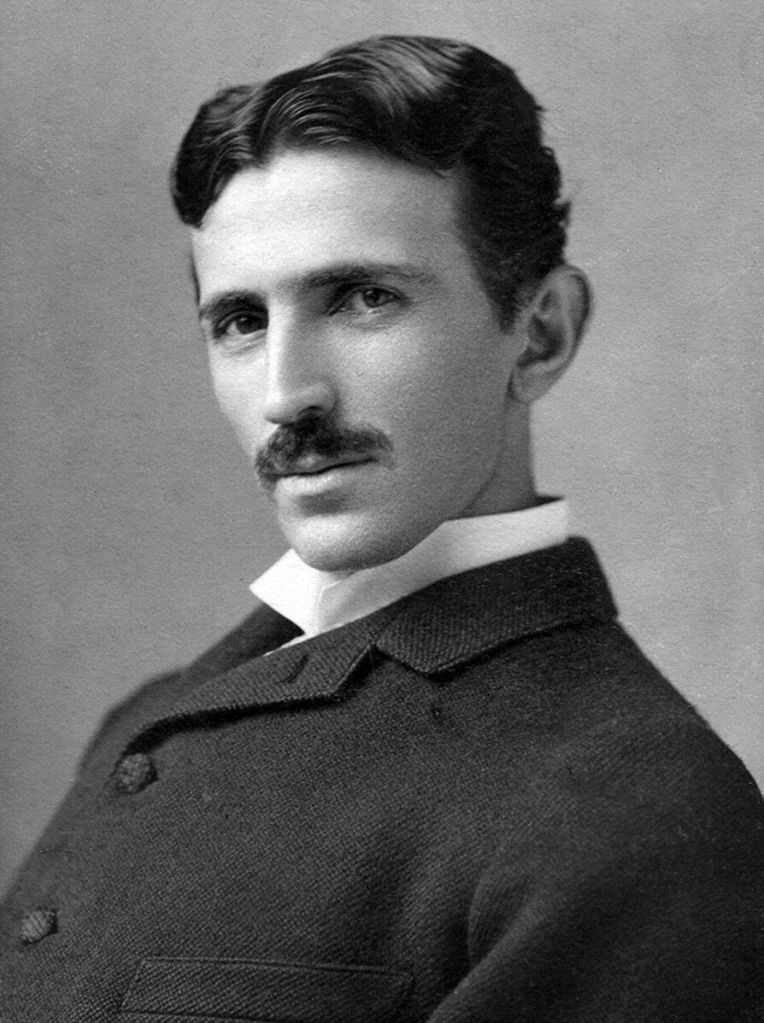
Elon Musk may be the poster child of modern innovation, but his electric car empire stands on a borrowed legacy. The name “Tesla” evokes images of genius, invention, and the possibility of boundless energy. Yet the man behind today’s billion-dollar electric vehicle company is not Nikola Tesla—the Serbian-American inventor who dreamed of free energy for all—but a tech mogul who commodified that dream.
What Musk sells under the Tesla banner is not the fulfillment of Tesla’s vision but the rebranded, paywalled version of it, funded largely by public subsidies and monopolized by utility companies.
Nikola Tesla’s Electric Car: Myth, Mystery, or Suppressed Innovation?
The stories surrounding Nikola Tesla’s electric car sound like science fiction—or conspiracy theory. According to third-party accounts, particularly those of Arthur Matthews (a claimed assistant to Tesla) and Peter Savo (allegedly Tesla’s nephew), Tesla designed and drove an electric vehicle in the 1930s powered not by conventional batteries but by wireless energy drawn from the atmosphere—a natural extension of his work on radio transmission and wireless power.
Tesla never used the term “cosmic energy” as some folklore suggests; his ambition was to use the Earth’s natural resonances and electromagnetic field to wirelessly transmit power—a field he pioneered through inventions like the Tesla coil and the Wardenclyffe Tower project.
While no blueprints of the vehicle exist, the fact remains: Tesla repeatedly demonstrated a capacity to build what he envisioned, often without drafts—creating and testing inventions entirely from the models formed in his mind. He was a refugee, a genius inventor, and a man whose ideas challenged monopolies and changed the world. After his death, the U.S. government seized his papers under the Office of Alien Property, keeping many documents classified for decades.
The Founders Before Musk
Tesla Motors was founded in 2003 by Martin Eberhard and Marc Tarpenning, two Silicon Valley engineers who were inspired by Nikola Tesla’s vision and chose to name the company in his honor. Eberhard, the original CEO, imagined a sleek, high-performance electric vehicle that would shatter the myth that EVs were slow and boring. Tarpenning brought the technical and financial backbone to the startup.
Their choice of the name “Tesla” was not just branding—it was homage. They aimed to revive Tesla’s principles of electrification, innovation, and disruption.
Elon Musk’s Entry and Rebranding of the Vision
Elon Musk joined Tesla Motors in 2004 as the lead investor in the company’s Series A funding round. He didn’t name the company. He didn’t invent the first Tesla Roadster. But he did bring capital, media magnetism, and governmental influence—ultimately shaping Tesla into a global brand.
While Musk’s role in scaling the company is undeniable, his leadership transformed Tesla from a tribute to a titan. Over time, Eberhard and Tarpenning left, and Musk became the uncontested face of the company. In a 2009 legal dispute, Eberhard sued Musk for defamation and misrepresenting himself as a founder. The case was settled with both acknowledged as co-founders, but the foundational contributions of Eberhard and Tarpenning remain largely overshadowed.
Tesla Motors uses the name “Tesla” as a symbol, not as a source of real technological lineage.
It’s branding, not homage.
Musk’s Tesla is corporate, closed-source, and profit-driven. Although his “open source 2014 announcement,” is nothing but a strategic PR move that: Helps Tesla frame itself as a climate-focused collaborator.
“While Tesla Motors pledged not to enforce its electric vehicle patents in 2014, this move falls short of a true open-source model. The company retains ownership of its intellectual property, defines the vague boundaries of ‘good faith’ usage, and has not released technical documentation. In practice, Tesla remains a proprietary, top-down corporation—not the open collaborative Tesla might have envisioned.”
Nikola Tesla’s vision was anti-monopoly, anti-greed, and pro-humanity.
If Nikola Tesla were alive today, he might be amazed at EV progress—but deeply disappointed that his name is now tied to the monetization of energy, not its liberation.
While Tesla’s early models used a variation of Tesla’s motor, current models use permanent magnet motors that owe more to modern material science than to Tesla’s original inventions. Still, Musk kept the name—knowing that “Tesla” carries cultural, scientific, and even mythical weight.
Musk leveraged that legacy to build a global EV empire—heavily funded by American taxpayers. By 2022, Tesla Inc. had received over $2.8 billion in direct subsidies and nearly $4.9 billion in indirect support through energy credits and federal programs.
Yet today, we, the taxpayers, see little return. Charging costs have tripled, solar credits have plummeted, and our utility bills have soared. Elon Musk’s company—named after a man who wanted to give energy away—sells it back to us under premium subscription models.
The Greenwashed Reality
Tesla’s electric vehicles may have zero tailpipe emissions, but the system that powers them is anything but free or clean. The electricity comes from an aging grid burdened with utility monopolies, rising costs, and state-level clean energy mandates that often mask financial exploitation with feel-good rhetoric.
Even worse, policies like California’s NEM 3.0—heavily influenced by utility lobbyists—cripple independent solar users, making it harder for everyday people to generate their own power. Nikola Tesla would have called this theft. And perhaps, so should we.
Nikola Tesla’s Legacy: Inventor of the Electrical Age
Inventor of the AC Induction Motor (US381968A)
Pioneer of wireless power transmission
Builder of the Tesla Coil
Developer of the radio-controlled boat (1898)
Visionary who imagined a world of free, accessible energy
Tesla died poor, alone, and largely erased by the very system he tried to liberate humanity from. His materials were seized by the U.S. government, his death beam research scrutinized, and his reputation buried under Edison’s corporate legacy.
Elon Musk’s Legacy: Borrowed Brilliance for Billionaire Ambition
Let’s give credit where it’s due: Musk helped revive interest in electric vehicles, disrupted the auto industry, and introduced ambitious tech like self-driving and reusable rockets. But let’s not confuse branding with origin.
Musk’s Tesla is a closed-source, for-profit machine built on government subsidies, consumer lock-in, and a narrative that capitalized on one of history’s most exploited geniuses.
The wealthiest man in the world owes his image to a man who died penniless.
Conclusion: A Legacy Used, A Dream Deferred
Tesla, the man, dreamed of a world where energy flowed freely—without bills, without war, without profit. Musk, the mogul, used that dream to build an empire.
We don’t need to villainize Elon Musk to speak the truth: his success was funded by us, the public, and his company rides on a name that deserves more than marketing.
It’s time we ask for more than promises. It’s time we demand the return on our investment—not just in dollars, but in ideals.
Sources and References:
US Patent US381968A – AC Induction Motor
Brooklyn Eagle, July 10, 1932 – Tesla’s Quote on Wireless Power
Tesla Inc. Government Subsidies – Good Jobs First
CPUC NEM 3.0 Decision D.22-12-056
PBS.org – U.S. Government Seizure of Tesla’s Papers
The modern Tesla, Elon Musk the genius
By Marivel Guzman
Elon Musk is a genius innovator, a unique mind entrepreneur and along with that an extreme risk-taker who does not take a NO! As an answer.
Musk feels he is running out of time. He feels the humanity itself is running out of time. Musk wants to put in place the infrastructures for a fully automatic, electric solar-powered earth. And, in order to do that, he needs to control the companies that he started. Only under his lead will those companies achieve his dream.
After listening to all of Musk’s lectures and interviews I got to the conclusion that Musk is a man of many ideas, who likes to take risks on the spot, but I believe he sees the investor as a nuisance in his way for innovation.
Investors want to secure their investments with minimum risks. Musk, for the contrary, has the insights of a genius. He believes in himself and his genius about it. He has the idea in his head, and he is sure he can develop that idea. It’s pretty much like Nikolas Tesla used to think.
Besides that, he took the oil companies by the horns. And as if that wasn’t enough, he gave the old obsolete NASA few lessons in innovation and recycling of materials.
The electric car was a dream of Nikolas Tesla, but mainstream science never credited with the invention. The most commonly reported Tesla electric car was a converted Pierce-Arrow from 1931. A version of the account of Tesla’s car is in the book Secrets of Cold War Technology – Project HAARP and Beyond, by Gerry Vassilatos.
It is common sense that J. P. Morgan, who at the time was the financier of Edison lab, where Tesla worked, removed his finance for Tesla electricity projects because Tesla goal was to give electricity free to the people.
Musk fought the same demons Tesla did in its time. The devil investors, the for-profit Thomas Edison, and the greed of J P. Morgan.
Musk finds himself at crossroads with his conscience. He sees himself as a modern Tesla, but with money where, if he is left alone to develop his ideas, he can do wonders for this world.
The DOJ and Securities Exchanges should leave Musk alone to continue with his efforts to save humanity.
“Tesla Inc. is under investigation by the Justice Department over public statements made by the company and Chief Executive Officer Elon Musk, according to two people familiar with the matter.
The criminal probe is running alongside a previously reported civil inquiry by securities regulators.” Bloomberg.com
Solar City, Tesla, and Space X are three companies with a genius behind who wants the betterment of humanity. With this, I leave you with the iconic Tesla’s idea of science:
“Science is a perversion of itself unless it has as its ultimate goal the betterment of humanity,” Nikolas Tesla

 Akashma Online News