Archive
Celebrities For Palestine – Suheir Hammad her Palestinian blood speaks with her poetry
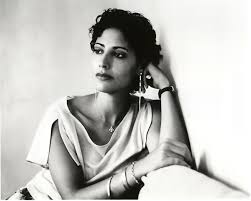
Suheir Hammad
One of our own #Celebs4Pal Suheir Hammad, a Palestinian poetess, actress and peace activist. Suheir Hamad is a gift to us, to Palestine, to Palestinians, to the Palestinian Solidarity Movement and to the women of the world. Suheir Hammad’s poetry is empowering by her women inner voice.
Over the years we have witnessed the pain of the land (Palestine) we seen her mothers taking their sons to the grave only with their courage and their pride as mothers of the martyrs of the land.
She is Palestinian one hundred percent Palestinian, she takes her blood to the stages of the world. Her poetry is powerful, energetic and even though it is sad poetry, her poetry deliver hope.
“As a child I had this sense that God was a huge poet,” she said. Her father taught her nationalist songs, which she later realized were originally written as poems. She then went on to discover for herself the great
Palestinian poetry has this pain ingrained in its soul, Mahmoud Darwish poetry has been an inspiration for thousands of poets, Suheir Hammad, Palestinian herself, said that his poetry played a significant role in her life and eventually in her poetry.
In ‘Salt of the Sea’ Suheir Hammad walks the streets of Palestine showing her (Palestine) terrible tragedy of being occupied land, “Salt of the Sea’ gives every Palestinian in the exile a taste of Palestine, to the world ‘Salt of the Sea’ gives testimony of an occupy land.
A fact little known is that our #Celebs4Pal Danny Glover, a known American actor was part of the Salt of the Sea production Co-producing of the project.
“The range of international co-producers — including Danny Glover’s Louverture Films — attests to the well-intentioned multinational desire to support Palestinian cinema, and “Salt” has received numerous pre- and post-production grants, including funding from San Sebastian’s Cinema in Motion 3 and the Hubert Bals Fund. Too bad Jacir’s characters are written to explain a situation rather than enjoy an independence of personality.” Variety.com
To understand Suheir’s poetry you need to understand women’s struggles, Palestinian’s struggles and her being born out of Palestinian refugees that even though have found a place in the world to raise a family they never forget Palestine. How could they?
When she read the script of Salt Of the Sea, she saw poetry in it and acted as Palestinians and not as an actress. The film was a success but as Suheir said,
“the film is really marginalized” she explains, “ but it’s also part of a continuum… so now other films that are not that aesthetic or are not that drive will have a chance now, because it pushed the door open. The victory is to see your position as part of the continuum and that’s where the hope is.”
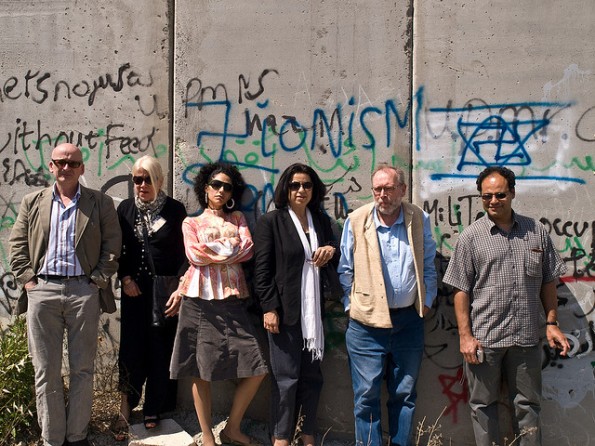
Roddy Doyle, Brigid Keenan, Suheir Hammad, Ahdaf Soueif,
http://globalartscentral.com/suheir-hammad-the-palestinian-poet-born-black/
Salt of the Sea Trailer Trailer
Support Suheir Hammad with her career, her activism and her poetry.
That is the beauty of being a #Celebs4Pal all their success, and their power taken to the stages, at the end their support Palestine with their voice.
In her poems and plays, Suheir Hammad blends the stories and sounds of her Palestinian-American heritage with the vibrant language of Brooklyn to create a passionately modern voice. TED.com
Follow her in her twitter https://twitter.com/yosuheirhammad, and support her directly buying her poetry, attending her speeches and her acting career.
Suheir Poetry at Amazon.com
The only way to support Palestine is if we are strong, for that we must support each other and unfortunately we can not travel the world speaking for Palestine if there is no financial support. We are supporting Palestine when we support our #Celebs4Pal through their art.
Poems of war, peace, women and power
Poet Suheir Hammad performs two spine-tingling spoken-word pieces: “What I Will” and “break (clustered)” — meditations on war and peace, on women and power. Wait for the astonishing line: “Do not fear what has blown up. If you must, fear the unexploded.” TED.com
The End of History?
The reflections of a human being, a witness of this era.
The End of History?
The short, strange era of human civilization would appear to be drawing to a close.
Noam Chomsky
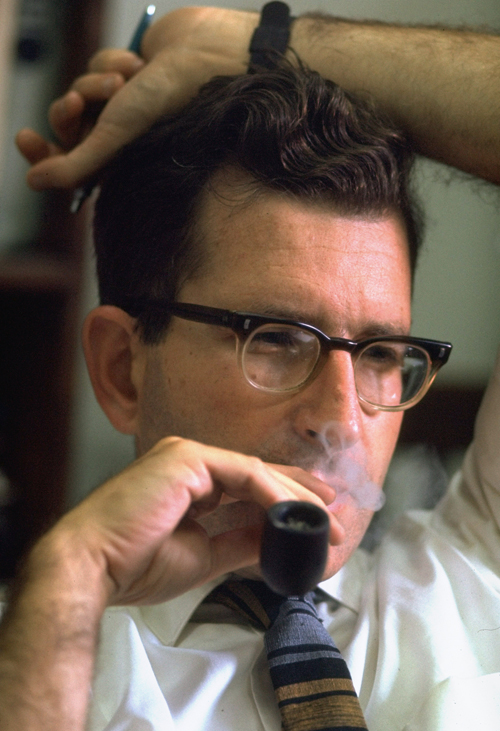
In 1969 he published American Power and the New Mandarins, the first of many books harshly criticising US foreign policy as neo-imperialist and terrorist. Chomsky has described his political views as libertarian socialist and/or anarcho-syndicalist; he regards all forms of power as corrupting and suspect.
(Image: Lee Lockwood/Time Life Pictures/Getty Images)
In These Times, September 4, 2014
It is not pleasant to contemplate the thoughts that must be passing through the mind of the Owl of Minerva as the dusk falls and she undertakes the task of interpreting the era of human civilization, which may now be approaching its inglorious end.
The era opened almost 10,000 years ago in the Fertile Crescent, stretching from the lands of the Tigris and Euphrates, through Phoenicia on the eastern coast of the Mediterranean to the Nile Valley, and from there to Greece and beyond. What is happening in this region provides painful lessons on the depths to which the species can descend.
The land of the Tigris and Euphrates has been the scene of unspeakable horrors in recent years. The George W. Bush-Tony Blair aggression in 2003, which many Iraqis compared to the Mongol invasions of the 13th century, was yet another lethal blow. It destroyed much of what survived the Bill Clinton-driven U.N. sanctions on Iraq, condemned as “genocidal” by the distinguished diplomats Denis Halliday and Hans von Sponeck, who administered them before resigning in protest. Halliday and von Sponeck’s devastating reports received the usual treatment accorded to unwanted facts.
One dreadful consequence of the U.S.-U.K. invasion is depicted in a New York Times “visual guide to the crisis in Iraq and Syria”: the radical change of Baghdad from mixed neighborhoods in 2003 to today’s sectarian enclaves trapped in bitter hatred. The conflicts ignited by the invasion have spread beyond and are now tearing the entire region to shreds.
Much of the Tigris-Euphrates area is in the hands of ISIS and its self-proclaimed Islamic State, a grim caricature of the extremist form of radical Islam that has its home in Saudi Arabia. Patrick Cockburn, a Middle East correspondent for The Independent and one of the best-informed analysts of ISIS, describes it as “a very horrible, in many ways fascist organization, very sectarian, kills anybody who doesn’t believe in their particular rigorous brand of Islam.”
Cockburn also points out the contradiction in the Western reaction to the emergence of ISIS: efforts to stem its advance in Iraq along with others to undermine the group’s major opponent in Syria, the brutal Bashar Assad regime. Meanwhile a major barrier to the spread of the ISIS plague to Lebanon is Hezbollah, a hated enemy of the U.S. and its Israeli ally. And to complicate the situation further, the U.S. and Iran now share a justified concern about the rise of the Islamic State, as do others in this highly conflicted region.
Egypt has plunged into some of its darkest days under a military dictatorship that continues to receive U.S. support. Egypt’s fate was not written in the stars. For centuries, alternative paths have been quite feasible, and not infrequently, a heavy imperial hand has barred the way.
After the renewed horrors of the past few weeks it should be unnecessary to comment on what emanates from Jerusalem, in remote history considered a moral center.
Eighty years ago, Martin Heidegger extolled Nazi Germany as providing the best hope for rescuing the glorious civilization of the Greeks from the barbarians of the East and West. Today, German bankers are crushing Greece under an economic regime designed to maintain their wealth and power.
The likely end of the era of civilization is foreshadowed in a new draft report by the Intergovernmental Panel on Climate Change (IPCC), the generally conservative monitor of what is happening to the physical world.
The report concludes that increasing greenhouse gas emissions risk “severe, pervasive and irreversible impacts for people and ecosystems” over the coming decades. The world is nearing the temperature when loss of the vast ice sheet over Greenland will be unstoppable. Along with melting Antarctic ice, that could raise sea levels to inundate major cities as well as coastal plains.
The era of civilization coincides closely with the geological epoch of the Holocene, beginning over 11,000 years ago. The previous Pleistocene epoch lasted 2.5 million years. Scientists now suggest that a new epoch began about 250 years ago, the Anthropocene, the period when human activity has had a dramatic impact on the physical world. The rate of change of geological epochs is hard to ignore.
One index of human impact is the extinction of species, now estimated to be at about the same rate as it was 65 million years ago when an asteroid hit the Earth. That is the presumed cause for the ending of the age of the dinosaurs, which opened the way for small mammals to proliferate, and ultimately modern humans. Today, it is humans who are the asteroid, condemning much of life to extinction.
The IPCC report reaffirms that the “vast majority” of known fuel reserves must be left in the ground to avert intolerable risks to future generations. Meanwhile the major energy corporations make no secret of their goal of exploiting these reserves and discovering new ones.
A day before its summary of the IPCC conclusions, The New York Times reported that huge Midwestern grain stocks are rotting so that the products of the North Dakota oil boom can be shipped by rail to Asia and Europe.
One of the most feared consequences of anthropogenic global warming is the thawing of permafrost regions. A study in Science magazine warns that “even slightly warmer temperatures [less than anticipated in coming years] could start melting permafrost, which in turn threatens to trigger the release of huge amounts of greenhouse gases trapped in ice,” with possible “fatal consequences” for the global climate.
Arundhati Roy suggests that the “most appropriate metaphor for the insanity of our times” is the Siachen Glacier, where Indian and Pakistani soldiers have killed each other on the highest battlefield in the world. The glacier is now melting and revealing “thousands of empty artillery shells, empty fuel drums, ice axes, old boots, tents and every other kind of waste that thousands of warring human beings generate” in meaningless conflict. And as the glaciers melt, India and Pakistan face indescribable disaster.
Sad species. Poor Owl.
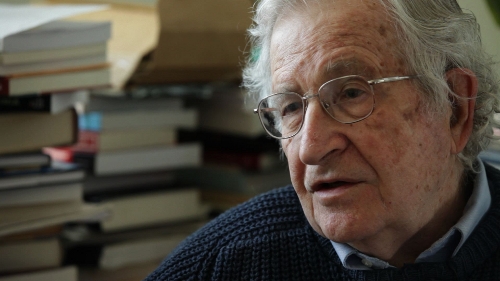
Noam Chomsky, Professor of Linguistics, philosopher, political activist in all the extension of the word, Chomsky one of the last honest social and political advisor if our era.
Source; Noam Chomsky
Israel Apartheid? Palestinians to be banned from West Bank settlers’ buses — RT News
The Apartheid Entity of Israel doing what knows best, discriminate.
Its walks like a duck and cuack like a duck……..
http://rt.com/news/199428-west-bank-settlers-buses/
Celebrities for Palestine doing the right thing – Beach Boys remove Israel from their list
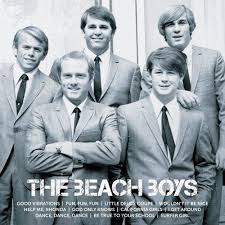
The Beach Boys
cover of their second cd
Beach Boys Band had cancelled their concert In Tel Aviv scheduled for November 29. #BDSIsrael movement supporters had been pressuring artists from performing in the Apartheid Entity of Israel since 2005 that the #BDSmovement was funded. #BDS had grown up globally and it is out of the control of Zionists organizations, and hasbarist.
For now we claim victory and claim the The Beach Boys belong to our camp #Celebs4Pal until otherwise is published. We know from past news on artists that had canceled their concerts in Apartheid Israel don’t want to publish the real reason, but we must recognize that Israel is losing the Public Relations campaign and its credibility is really low.
Companies are cutting ties with the Zionist entity, governments are showing their dissatisfaction with Israel’s latest atrocities in West Bank and the well known Gaza genocide that many in the media don’t talk about, but the pictures, videos from news agencies and the facts on the ground are all to tell a tale of genocide.
Show your support to Beach Boys by sending thanks notes to their twitter and facebook accounts like their page at The Beach Boys, and follow them @TheBeachBoys.
BDS all the way until Israel is dissolve form the map.
“The global movement for a campaign of Boycott, Divestment and Sanctions (BDS) against Israel until it complies with international law and Palestinian rights was initiated by Palestinian civil society in 2005, and is coordinated by the Palestinian BDS National Committee (BNC), established in 2007. BDS is a strategy that allows people of conscience to play an effective role in the Palestinian struggle for justice.” BDSmovement.org
The boycott is hurting Israel and its supporters where most hurt, the money!
Want to know more about Beach Boys like their facebook page, thanks them for being in the right side of history.
“The Beach Boys have called off a concert they had been scheduled to give on November 29 in Tel Aviv, the local promoter of the cancelled concert, Gad Oron, said on Tuesday.
He said he received a brief note informing him that the band had decided to cancel the concert at Tel Aviv’s Nokia Palace Arena.
Oron told media that he was not informed of the reasons behind the decision. He said ticket sales were satisfactory, and that he could not see any reasons for the concert being called off.” more on the story at hispanos servidornoticis
Some activists and public speakers had spoken on the BDS movement as something not good for Palestine, well we seen that the those feeling are at odds with the reality we have in front of us.
“To be pro-Palestinian does not necessarily mean you want the state of Israel to be wiped off the map; nor does it imply that you agree with either the two-state or one- state solution. The pro-Palestinian movement embraces many ideas and offers much diversity in way of critique and pro-active solutions. For instance, some activists take a stand, drawing upon the premise of Human Rights and International Law while others pursue different strategies outside of U.N. sanctions, precisely because the legal precepts have never been enforced. Similarly, it is with this context in mind, that we can view the Boycott, Divestment, Sanctions (BDS) movement where we witness much diversity in terms of strategy and goals.” Marivel Guzman from Akashma News
Celebrities for Palestine show their love for humanity through their music – Michael Heart
From Michael Heart Official Page

Michael Heart the singer and composer of “We will not go down, Gaza Tonight” song dedicated to the people of Gaza, Palestine
Michael Heart has no propensity for nonsense. Neither in his life nor in his music. His no-frills approach to songwriting and production work is a clear testament to that. Despite his vastly diverse musicianship skills in different genres (clearly a direct result of having been raised all over the world), he has an affinity for authenticity and purity when it comes to his music. When he makes a Pop/Rock record, you just know it’s a Pop/Rock record.
Such is the case with his debut Pop/Rock CD titled “Unsolicited Material”. Although this record may not necessarily entirely sound like the work of his musical influences, you can definitely hear traces of artists such as Don Henley and Bryan Adams, in a song or two.
His raspy, breathy voice has a very identifiable sound, which commands attention from the listener. The songs are well crafted and the lyrical content is somewhat diverse, yet relevant. He tackles serious topics such as adultery (“Living In Sin”); the challenges of making a living (“Life Goes On”); war (“Damaged World”) and even domestic violence (“Finally Free”). Having said that, once in a while, Michael still lets his sense of humor come out in a song like “Wanna Be Bad”. After all, rock’n roll is about having a good time. And just for good measure, he includes the obligatory, radio-friendly, mid-tempo, Pop/Rock love song, “Lost In You”. Although the moods of the various songs on this CD do vary, there is still a common thread in all of these songs that unify them as a collective work.
Michael’s background is as diverse as can be. Born in Syria and raised in Europe (Switzerland and Austria) and the United States, he has lived a multi-cultural life and absorbed the music of different parts of the world (although his current CD release is purely categorized as Pop/Rock). He started out on piano and guitar at age 10. Shortly thereafter, he began dabbling in songwriting and eventually made the natural progression towards recording.
After earning his audio engineering degree from Full Sail (recording school), he moved to Los Angeles in 1990 and spent the past 20 years working on the local studio circuit both as a session guitarist and a recording engineer.
In that time, he has worked with such artists as Brandy, Will Smith, Toto, Natalie Cole, The Temptations, Phil Collins, Patty LaBelle, The Pointer Sisters, Earth Wind & Fire, Rickie Lee Jones, Lou Rawls, Jesse McCartney, Hillary Duff, Jessica Simpson, Jennifer Paige, Al Jarreau, K-Ci & Jojo, Deborah Cox, Monica, Taylor Dayne, Keiko Matsui, Steve Nieves, Luis Miguel and Tarkan. Michael’s fluency in French was definitely an added bonus when he also worked in the studio with French artists like Calogero (The Charts), Marc Lavoine and Veronique Sanson. Other projects also included work with producers Rodney Jerkins, Philippe Saisse and David Foster. (note: on most of these recording credits, Michael is credited as “Annas Allaf”, his real name, Michael Heart being the stage name). Although most of Michael’s work has been in the recording studio, he has also done some touring (notably back in the early 90’s, when he toured as a Flamenco guitarist in a guitar trio with Juan Manuel Canizares, opening for Dire Straits). He has also recorded and toured with the smooth jazz band Jango.
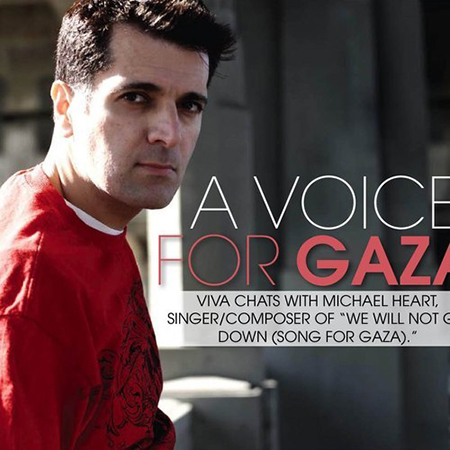
Michael Heart A Voice for Gaza (Cover of Gaza Tonight)
Michael has also written songs in support of various causes. The most recent song, “What About Us” was written about the tragic situation in Syria. The song “Freedom” was inspired by the popular protests in North Africa and the Middle East. His song “We Will Not Go Down” was written about the horrific situation of the Palestinian people in Gaza. Michael also wrote a song called “Help is on the Way”, about the devastating earthquake in Haiti, in 2010.
These days, when he is not working on his own original music, Michael lends his production skills working with local artists in the Los Angeles area.
DOWNLOAD mp3 HERE http://itunes.apple.com/us/album/we-w…
A SONG ABOUT HUMAN RIGHTS, NOT RELIGION.
ALL MUSIC RIGHTS RESERVED. Michael Heart Copyright 2009. Please do not use this song in any new videos.
This is the original video. The very first one that was posted on YouTube in Jan 2009, by Michael Heart, before it spread like wildfire all over the internet. Yes, it is primitive and very low quality, but there it is.
Visit Michael Heart’s official YouTube channel here:
https://www.youtube.com/channel/UCZHg…
Check out his 2-part video interview here below:
Part 1: http://www.youtube.com/watch?v=dmgfcL…
Part 2: http://www.youtube.com/watch?v=-FEgy-…
Thank you for supporting Michael and his music! You can buy his debut Pop/Rock album “Unsolicited Material” here:
Celebrities for Palestine: Julia Boutros sings for Gaza
by Akashma News
Julia Boutros in Dubai during One Candle Lit for Every Martyr Donations to be gathered on campus
Lebanese Christian Julia Boutros is considered one of the top pop singers of the Arab world. She has just released a new album, entitled ‘Righteousness is my weapon’ in which she praises the steadfastness of Hamas and other Gaza resistance groups for giving a bloody nose to the Jewish army.
“Righteousness is my weapon and I resist. Despite my pain I will resist, I will not give up, I will not give in. And about my country I will not compromise” said one of the verses of his praise song for Gaza resistance fighters.
“My home is here, my land is here. the sea, the plains, the river are ours. And how, while facing fire can I be peaceful” continue the song
The newly released “Al-Haq Silahi” (The Right is my Weapon) is an ode to the Palestinian resistance fighting in Gaza and all those who resisted Israeli occupation. The song rejects Israeli settlements, supporting the Palestinian claim to the natural landscapes of the occupied territories, said Albawaba
in veooz.com
Julia has vocally supported Hizbullah and the “Resistance” despite being a Christian herself – making her a living embodiment of how an “Islamic Resistance” could transcend nationalism.
According to wiki article 0n October 11, 2006, Boutros announced a new single called “Ahibaii” (My loved ones). The lyrics are based on a letter sent by Hizbollah secretary general Hassan Nasrallah to the fighters in South Lebanon during the 2006 Summer War between Hezbollah and Israel. The poet Ghassan Matar adapted the original text. The music is composed by Ziad, brother of Julia and arranged by Michel Fadel. The profits from the song’s sale went to help the families of Hizbollah fighters and to all Lebanese who died during the Israel-Lebanon conflict
Boutros began singing at the age of 12. From very beginning of her singing career, she decided to use her talent on behalf of others. Her first song, a French tune titled ‘A Maman“, was dedicated to all mothers on Mother’s Day. It proved to be the first step in a lifelong journey of dedication: her gift to others.
By the age of 14, she had released her first album, titled ‘C’est La Vie’ (This is Life), which was written and composed by Elias Rahbani. It was also around this time that the civil war in Lebanon broke out, playing a central role in Julia’s life and bringing into sharp focus her desire to commit herself and her singing to humanity and civilization in the Lebanese community in particular and the world in general.
Julia Boutros speaking at the American University in Dubai for an event to raise funds for Gaza
On January 2009, the Palestinian Arab Cultural Club at the American University in Dubai organized the AUD Rally and Candlelight Vigil, in support of the people in Gaza. The event took place on campus where members of the faculty, administrative and student bodies at AUD assembled to raise their voices against the massacres in Gaza in the presence of the Consul General of the State of Palestine in Dubai and the Northern Emirates, Mr. Hussein Abdul Khalek, and Mrs. Julia Boutros – who participated to express her solidarity with the innocent in Gaza-, as well as prominent dignitaries from the media.
Early on, unlike other artists of her age, Boutros dedicated her career to a cause. This burning desire to be a voice for others led directly in 1985 to her recording “Ghabet Shams Al Haq”, which was composed by Julia’s brother Ziad Boutros, who composes most of her work today. The song expresses her anger at the continued killing of the innocents: children, women, men and the elderly civilians by Jewish army and its Christian Lebanese Phalangist collaborators.
“The only thing we were able to do at the time was to raise our voices and send a message to the world, and that was achieved by my first song” says Julia.
She wanted to send a message, and she did so, forcefully. One week after this song was released; Julia’s voice entered every house in the Arab world. Her voice had become their voice, with millions of people singing her songs. Even schools began teaching the children the real meanings of Julia’s words.
After “Ghabet Shams Al Haq”, Julia would say, “I felt that I had a responsibility and that it is to speak on behalf of my people whose voice goes unheard“.
Today, Julia’s fans range from children to elderly, as she became a national symbol for Nationalism, Patriotism, Resistance and even Romance.
Julia received several national and international awards, including the Lebanese President’s Award which was presented to Julia for her contribution, through her voice, to the Lebanese Islamic Resistance Hizbullah against the Israeli occupation of Lebanon, shortly after the liberation of the South in May 2000.
Recently, and during the 2006 Israeli 34-day carpet-bombing of Lebanese civilian population, Julia Boutros was featured on Al Jazeera TV Station in a special program; she talked about the Politics in the Arab world, daring to say the least. She has today developed a fundraising project for the families of all Lebanese Martyrs who perished during the 34-day war.
Exclusive: Christian singer Julia Botrous honors fighters in Gaza with subtitles in English (الحق سلاحي). Her newly released 2014 music video “Righteousness is my weapon” refers to resistance movements in Gaza. Released on July 25, 2014, under Al-Mayadeen television.
Celebrities for Palestine – Iranian pop musicians with one voice sing for Gaza children
Iranian pop singers to sing for Gaza
“Singing of Love and Hope in Solidarity with Innocent Children of Gaza”
A number of Iranian pop singers participated in a series of concerts in Tehran in support of the children of Gaza.
The Iranian Ministry of Culture and Islamic Guidance has authorized 11 pop singers to have a live performances in Tehran for the festival of “Singing of Love and Hope in Solidarity with Innocent Children of Gaza”.

Xaniar Khosravi,
Xaniar Khosravi, before to his April live concert Khosravi was considered an underground pop singer, he was allowed to perform in public for the first time on April.
Khosravi is part of the group of Iranian singers to take part in the concert for Gaza’s children. Kkosravi is one of the emerging singers that become famous in the internet even before he staged a live concert.
When last April he announced his public performance the tickets were quickly sold out.
“I am so sad I couldn’t get a ticket. I wanna die,” one unlucky fan wrote on the singer’s Facebook page.
Under Iran’s Islamic sharia law, musicians must be approved by the culture ministry, which checks whether a song’s lyrics and music can be deemed in line with the country’s moral values.
Iran had proved to be one of the few Palestinians supporters on the planet. It had supported Palestinian leadership and its people with money, weapon technology and political muscle on the floor of the United Nations.
Iran officially endorses the creation of a Palestinian state, In official forums Iran refers Palestine as under occupation by the Zionist regime. Ayatollah Khamenei, the Supreme Leader of Iran, rejects a two state solution and stated that Palestine is inseparable
The list of singers that take part in the concert are as follow:
Xaniar Khosravi, Sirvan Khosravi, Morteza Pashaee, Kiarash Hasanzadeh, Mehdi Yarahi, Benyamin Bahadori, Behnam Safavi, Farzad Farzin, Reza Yazdani and Reza Sadeghi
“Singing of Love and Hope in Solidarity with Innocent Children of Gaza” Concert The rights for these live performances are reserved for Hafiz Institute of Art and Culture.
When people think about Palestine most probably relate to it by the media propagated Israeli-Palestinian conflict, but Palestine is older that Israel supporters are willing to accept. Palestine is old, prove of that is Gaza that little tiny piece of Mediterranean port, in history books is considered one of the oldest sports on earth.
“Surely now there is room for us to turn to the spirit of Hafiz’s teaching. For if ever there was a time when we needed the universality of Hafiz as a guiding light it is today when there are forces that threaten the roots of humanity. Class and race competition threaten to submerge the highest joy of life and living – namely, the search for, and conquest of, true beauty and goodness which, could we but know it, are ever within our grasp.
In that spirit I appeal to the intellectual classes in this country to come and join up with the Iran Society, to help forward similar association, to study and understand Islamic, Hindu and Far Eastern philosophy, culture, literature and art. Thus the spiritual and emotional inheritance of Great Britain, Europe and America(North and South) should not be merely derived from Greece and Judaism, but from the world as a whole, for I am certain that Asiatic culture in its widest sense can bring as much to man’s common heritage as either Greece or Palestine.” Sir Sultan Muhammad Shah Aga Khan, in Novemember 9, 1936, during his inaugural lecture before the Iranian Society, in London, United Kingdom.”
I have learned so much from God
That I can no longer call myself
a Christian, a Hindu, a Muslim, a Buddhist, a Jew.
The Truth has shared so much of Itself with me
That I can no longer call myself
a man, a woman, an angel, or even a pure soul.
Love has befriended Hafiz.
It has turned to ash and freed me
Of every concept and image my mind has ever known.
A poem by Hafiz, 1320 c.e to 1389
Celebrities for Palestine use their royalty status to seek justice; Queen Rania

Queen Rania, a Palestinian by birth, is an international celebrity and has been often noted for her commitment to charity work geared toward women’s education, but also Rania had dedicated her precious time to seek justice for Palestinians. As a first lady, consort to the King of Jordan, she probably can not speak broadly without diplomatic repercussions for her country, but she does it in her role of social activist and she does very well. Her vocal support for Palestine has been latent in the news since she married king Abdullah of Jordan.
As a Jordanian, Queen Rania whose family is of Palestinian origin, she is concerned with the plight of Palestinians, On 2011, Queen Rania led a pro-Palestinian demonstration in Jordan’s capital, Amman. She urged the international community to end the massacres being committed in the occupied territories.
In Jordan, where nearly a third of the population is composed of Palestinian refugees, the Israeli occupation of the Palestinian territories of Gaza and the West Bank is “a hurt we feel each day,” Queen Rania Al Abdullah told a packed audience at Yale on Sept. 22, 2009. (Video attached)
“Larry King Live” on April 16, Queen Rania seemed to almost usurp Jordanian foreign policy from her husband. When King asked her about Jordan’s position on Palestinian attacks against Israeli civilians, she replied:
“Jordan has been very, very clear in this regard. We stand against any aggression committed against any innocent civilians, irrespective of the perpetrator or the victim. We do not approve of any aggression. We made that very clear.” Then — almost as an afterthought — she added, “King Abdullah also made that very clear.” said the Globalist
On 27 July UN Relief and Works Agency (UNRWA) Commissioner-General Pierre Krähenbühl met at UNRWA Headquarters in Amman with Jordan’s Queen Rania Al Abdullah to discuss the severe crisis and to express the Agency’s gratitude for the support of the Kingdom of Jordan.
During the meeting, which included several members of the UNRWA team, Her Majesty said that the attacks on helpless civilians on UNRWA premises and other humanitarian spaces in Gaza “demonstrate the blatant disregard for human life in this conflict. What more proof does the world need that there is no safe place in Gaza? No safe place for tens of thousands of desperate and defenseless civilians seeking refuge from the violence?”
Queen Rania addresses the audience during her visit to Yale University.
NY, USA/ September 22, 2009
Queen Rania makes an urgent plea on behalf of all the civilians living in Gaza for a “humanitarian ceasefire” and for the international community to do all it can to help alleviate the suffering.
Amman, Jordan/ January 5, 2009
Celebrities for Palestine part of the peacemaking process; Jen Marlowe

Sami al Jundi (left) collaborated with writer and friend Jen Marlowe (right) on his autobiography, together crafting what one Israeli writer called “the most authentic account of the Palestinian refugees’ painful ordeal that I have ever read.” Credit: Nation Books.
Jen Marlowe is a Seattle-based award-winning author/documentary filmmaker/playwright and human rights activist.
It takes humility to feel peoples struggles and pains and witnessing Palestinian struggles is more than enough to feel the necessity to want to be a bridge for peace. Marlowe uses her writing to give solutions to the Israeli/Palestinian violence.
“On July 28, at least eight children in Gaza were killed when a playground was shelled. Entire extended families—children included—have been wiped out. According to Save the Children, one-third of those injured in Gaza are children and tens of thousands more have been displaced from their homes, or have lost homes that were damaged or destroyed,” said Marlowe on Rays of Hope in Gaza
The reality has never been so grim, she said, And yet, in the midst of this darkness, there are Israelis and Palestinians who are working tirelessly for an end to bloodshed, and to all forms of violence—including the structural violence of the occupation/siege, Marlowe said.
Marlowe began her professional life working at Seattle Children’s Theatre; from 1994-2000, she did youth theatre work in Seattle, using theatre as a platform for students to tell their stories.
Marlowe lived and worked in Jerusalem several years, using some of these same techniques to engage in dialogue-based conflict resolution with Palestinian and Israeli teenagers. Jen also did conflict resolution work with youth in Afghanistan, Cyprus, India, Pakistan and Bosnia-Herzegovina. It was while working with youth in conflict areas that she first picked up a video camera—at that time, in order to record messages being exchanged between Israeli and Palestinian youth. As the youth themselves pushed the video dialogue project to more complex realms, Jen began to explore the idea of how film can be used, not only as a tool of dialogue, but also as a tool of activism. In 2004, with colleagues Adam Shapiro and Aisha Bain, Jen traveled to Northern Darfur and Eastern Chad to make the award-winning documentary film Darfur Diaries: Message from Home and wrote the accompanying book Darfur Diaries: Stories of Survival (Nation Books, 2006). Darfur Diaries was included in the 2007 edition of the Best American Non-Required Reading, edited by Dave Eggers.
Jen’s second feature-length award-winning documentary is called Rebuilding Hope: Sudan’s Lost Boys Return Home. Rebuilding Hope follows three Sudanese-American young men on their first homecoming trip back to Sudan, to discover whether their homes and families survived the civil war and to build a school, drill wells and bring medical supplies to their villages in Sudan.
Jen’s second book, called The Hour of Sunlight: One Palestinian’s Journey from Prisoner to Peacemaker (Nation Books, 2011), is co-authored with and tells the story of Sami Al Jundi, a Palestinian man who spent ten years in Israeli prison for being involved in militant anti-occupation activities as a youth and who has spent the last two decades of his life working towards nonviolence and peaceful reconciliation between Israelis and Palestinians.The Hour of Sunlight was the winner of the London-based Middle East Monitor’s Palestine Book Award in 2012.
Celebrities for Palestine awaken conscience speak up; Marjorie Wright
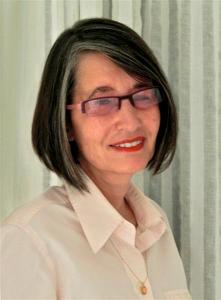
Marjorie Wright, American writer and producer winner of the 2009 Armin T. Wegner Award
Marjorie Wright is an American filmmaker of conscience concerned with human rights. In 2008 wrote and Co-directed with Lucy Martens, “Voices From Inside, Israelis Speak,” a film that weaves historic footage with modern-day views of Palestine: its partition walls, “apartheid roads,” demolished homes and the Israeli soldiers sent to “protect” Israel, says, The San Francisco Reporter.
In 2011 Wright was part of a group of 267 artists and supporters of the arts—including dozens of prominent playwrights, actors, directors, filmmakers, producers and theater professors from the U.S., New Zealand, Israel, England and other countries—have signed a public letter to Israeli authorities decrying the Israeli military’s attacks on The Freedom Theatre in Jenin, a northern city in the West Bank, Palestine, which was founded by Juliano Mer-Khamis, who was assassinated on 4 April 2011 in Jenin.
Voices From Inside, Israelis Speak is a documentary film tracing an Israeli evolution of consciousness from early Zionism, a holocaust perspective, and seeds of militaristic nationalism to a positive modern perspective of conscience, honesty, and reconciliation: the real path to lasting peace.
The 16 peace activists interviewed for the film say citizens of Israel need to wake up to the country’s reality, particularly parents who send their sons and daughters to the army in which, “blinded by power,” they commit unspeakable acts.
Those Jews who speak out against human-rights abuses in Israel and Palestine increasingly face their own “ominous loss of rights,” Wright says. “There have been arrests, confiscation of computers, threats of huge fines and imprisonment.” Recent interviews with American Jewish academics, Wright says, point to the rise of what they call “fascist elements inside Israeli society and the erosion of rights even for Jewish citizens.”
The film was awarded Arpa’s Armin T. Wegner in 2009, which each year is awards a motion picture that contributes to the fight for social conscience and human rights, “Voices from Inside: Israelis Speak.” “This feature length documentary film is based on the stories of 16 Jewish Israeli voices of conscience, each representing a different facet of the peace movement inside Israel,” says Zaven Khachaturian, Arpa Film Festival Curator who invited the film to the festival.
On 2013, said of the film ” Voices Across the Divide, that millions of dollars are spent on campus groups and in the media, aggressively promoting an Israel-right-or-wrong political stand and actively attacking students, professors, writers, and performers who exhibit sympathy or interest in “the other side.” This muzzling of the dialogue is a major threat to our fundamental principles of free speech and tolerance and thus to our basic democratic values. It is also deeply corruptive to our foreign policy and our ability to understand how others see us. Voices Across the Divide follows Alice Rothchild’s personal journey as she begins to understand the Palestinian narrative, while exploring the Palestinian experience of loss, occupation, statelessness, and immigration to the US, exploring voices for a just peace in the region.” Written by Alice Rothchild
Voices From Inside
Voices From Inside, Israelis Speak Part 2

 Akashma Online News