Archive
Beyond The Headlines: Seeing Hunter Biden’s Humanity
By Marivel Guzman — Akashma News
A Conversation That Changed My Perspective on Hunter Biden

Source/Credit:
Screenshot via [YouTube — “Candace x Hunter Biden: The Interview”](https://www.youtube.com/watch?v=Ux1kzgQxkws&utm_source=chatgpt.com) (published May 21, 2026).
Beyond the Headlines: The Humanity of Hunter Biden
By far, this was one of the most meaningful conversations ever featured on Candace Owens’ platform. More than an interview, it felt like an intimate and deeply human conversation between two people willing, at least for a moment, to step outside the machinery of politics and public narratives.
I’m genuinely moved by Hunter Biden’s candor and honesty. There were moments when he still sounded scared, as if parts of those dark years still linger inside him. Yet what emerged throughout the conversation was not the image of a spoiled rich kid or the political caricature many of us were conditioned to believe. What I saw was a survivor.
When Hunter openly admitted, “I was a crackhead,” the statement did not feel performative or rehearsed. It landed with the weight of someone stripping himself bare in front of millions of people. There was no glamour in the confession. No self-pity. Only the exhausted honesty of a man forced to confront the wreckage of his own life.
Perhaps the moment that struck me the hardest was when he described waking up every day with a simple but terrifying internal question: whether to “get out of bed and live or die.” That sentence alone shattered years of political noise surrounding him. Because in that instant, he was no longer “the president’s son,” nor a tabloid headline, nor a symbol used by media and political factions. He was simply a human being drowning in despair.
I must ask forgiveness, because I was one of those people who assumed he had it easy simply because he was the son of a president. But pain does not discriminate. Addiction does not care about status, money, influence, or family name.
As I listened to him speak about addiction, shame, grief, and survival, I could see the sorrow in his eyes — as if he was revisiting memories he still has not fully escaped. There was a fragility in his voice at times, but also resilience. The conversation revealed someone who has endured public humiliation on a scale most people cannot even imagine, yet somehow managed to remain emotionally present enough to speak honestly about it.
What surprised me most was seeing the person behind the headlines: an artist, a published author, an experienced businessman, and above all, a man trying to reclaim his humanity after years of personal collapse and public destruction. He did not come across as arrogant or entitled. He came across as reflective, intelligent, wounded, and painfully self-aware.
One of the most powerful aspects of the interview was that Candace Owens herself appeared willing to let go of the performative hostility that dominates modern political media. Instead of turning the conversation into a spectacle, she allowed space for vulnerability, accountability, and humanity. That alone made the interview different from the endless cycle of outrage-driven commentary that defines so much of today’s discourse.
As a mother, there were moments when I simply wanted to give Hunter a warm hug and send him blessings. It takes courage to speak openly about such profound pain under the unforgiving glare of public life. Many people never recover from addiction privately; he had to do it while the world watched, judged, mocked, and politicized every mistake he made.
For perhaps the first time, many viewers were forced to confront an uncomfortable truth: we often reduce people to headlines and forget the human soul underneath. We consume scandals so quickly that we stop asking what pain, trauma, or loneliness may exist beneath the surface.
This interview reminded me that compassion should never be selective. Humanity should not depend on political affiliation. And redemption, no matter how imperfect, should still matter in a society that claims to believe in healing and second chances.
Thank you, Candace, for handling the conversation with respect, humility, and humanity. In a world consumed by outrage and political tribalism, this interview reminded us that compassion should never be selective.
Taxed, Tracked, and Betrayed: The IRS, Immigrants, and the Broken Promise of Privacy
By Marivel Guzman | Akashma News
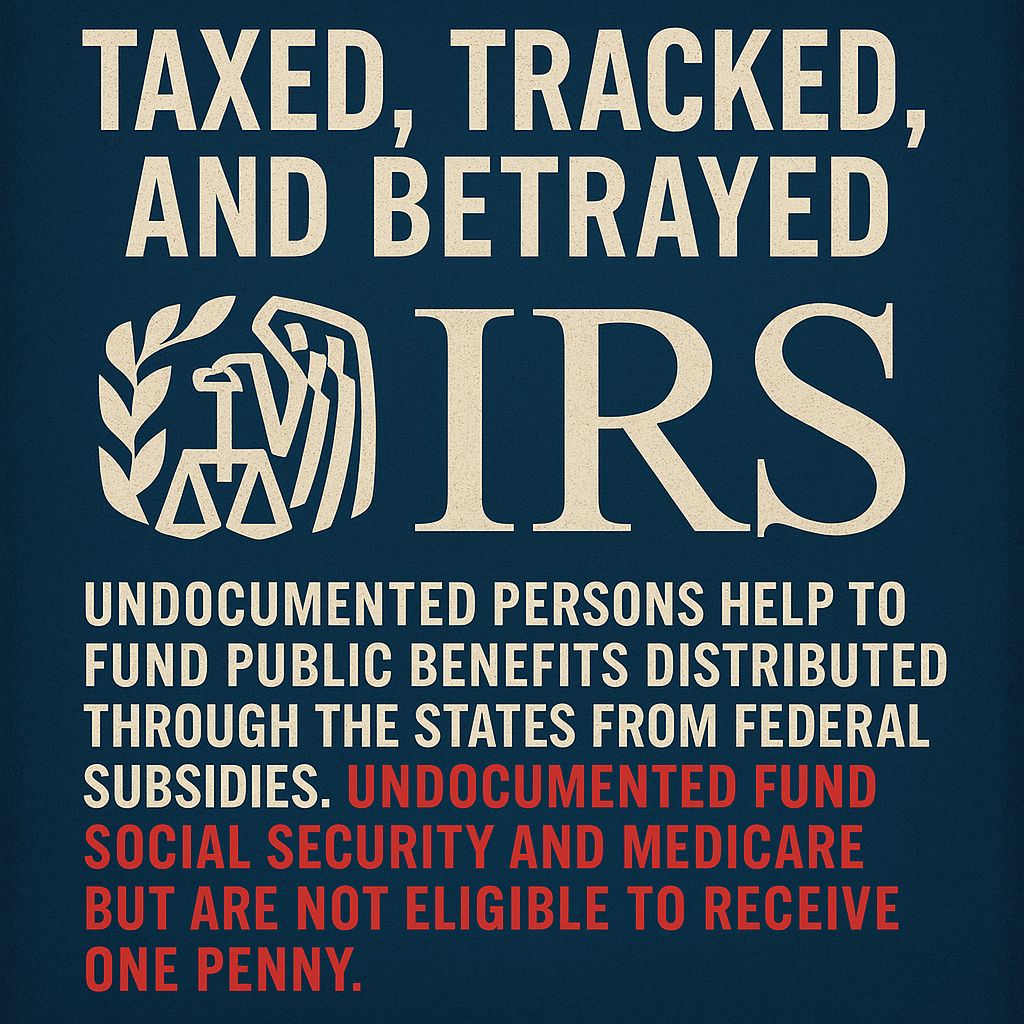
For decades, undocumented immigrants have been blamed for draining public resources while supposedly avoiding any financial contribution to the tax system. This narrative, fueled by political rhetoric and media simplifications, has helped justify harsh immigration enforcement and rising anti-immigrant sentiment. But the numbers—and the lived experiences—tell a starkly different story.
A Myth of Dependency
The claim that undocumented immigrants exploit U.S. public benefits without contributing is not only misleading—it’s demonstrably false. In 2022 alone, undocumented immigrants contributed nearly $100 billion in federal, state, and local taxes, according to ITEP. These taxes include sales taxes, property taxes (often through rent), and most importantly, payroll taxes such as Social Security and Medicare—benefits they are categorically excluded from receiving.
Far from being a financial burden, undocumented workers help fund programs that millions of Americans rely on, but they are denied access to these same programs. They do not qualify for Social Security retirement benefits or Medicare coverage, despite years—sometimes decades—of wage-based contributions through their paychecks.

The Role of the ITIN: A Deal of Trust
In order to file taxes, undocumented individuals must apply for an Individual Taxpayer Identification Number (ITIN). For years, the IRS encouraged this practice, emphasizing that tax data would remain confidential and would not be shared with immigration authorities. The promise: contribute to the nation, obey tax laws, and your privacy will be protected.
According to the IRS, taxpayers have a “Right to Privacy” and “Right to Confidentiality.” These include protections against intrusive investigations and assurance that personal information—addresses, bank accounts, financial disclosures—will not be shared arbitrarily.
But that promise has now been broken.
Data Sharing: A Betrayal of Trust
Court records reveal a disturbing deal: the IRS has agreed to share tax data with immigration authorities under pressure from the Trump administration, despite the agency’s long-standing assurance that it would not do so. This unprecedented agreement could hand over the private information of millions of immigrants to the Department of Homeland Security, setting the stage for widespread deportation efforts. (USA Today, 2025)
In protest, a top IRS official resigned, calling the move a betrayal of the public trust. As PBS reported, the resignation underscores just how serious this violation of policy and principle is—an action that could chill future voluntary tax compliance and create dangerous precedents for civil liberties.
Scapegoating for Political Gain
Undocumented immigrants have long been the scapegoats of every administration—used as political pawns in debates over crime, jobs, and welfare. But research from the National Academies shows that minority and immigrant families do not dominate welfare rolls—a narrative often perpetuated without evidence. White families have historically accounted for a substantial portion of welfare usage, undermining the racially coded myths surrounding public assistance.
What remains constant is how immigrants are blamed for economic woes while quietly helping prop up the very system that targets them.
Who Really Benefits?
States rely heavily on federal subsidies to fund local benefits. Undocumented immigrants, by paying into the system without reaping equivalent rewards, are in effect subsidizing state governments and public services—schools, infrastructure, healthcare—without recognition, rights, or returns.
This contradiction is stark: immigrants pay in, but cannot cash out. Instead of appreciation, they face raids, deportations, and vilification.
The Bigger Question: What Does Privacy Mean?
When a government body like the IRS chooses to breach its own code of confidentiality, it sets a precedent not just for immigrants, but for every taxpayer. What does it mean to claim a Right to Privacy if those rights are politically negotiable?
And what message does it send to millions of people who did the “right” thing—filed taxes, gave up their private data, trusted the system?


