Archive
Beyond The Headlines: Seeing Hunter Biden’s Humanity
By Marivel Guzman — Akashma News
A Conversation That Changed My Perspective on Hunter Biden
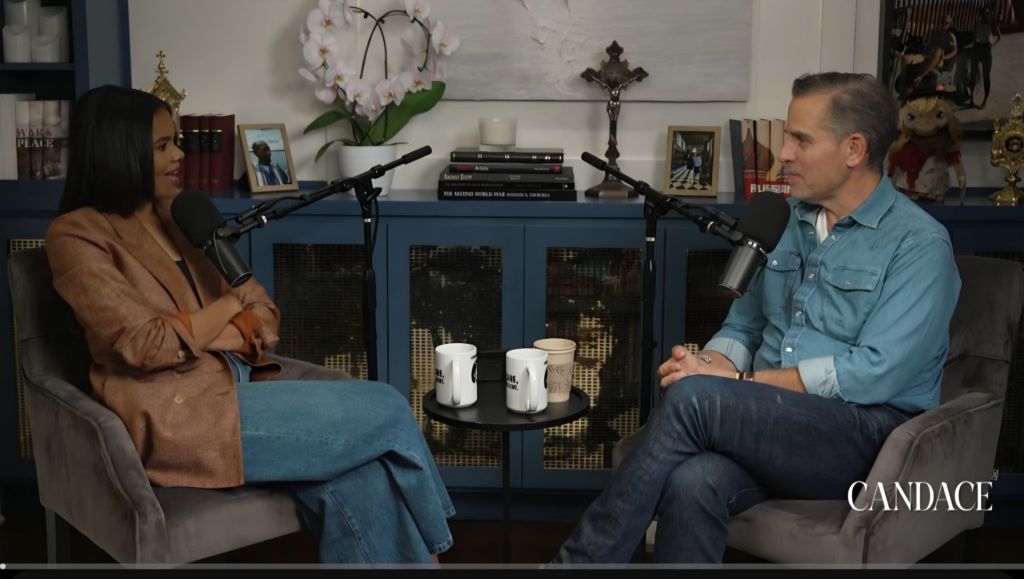
Source/Credit:
Screenshot via [YouTube — “Candace x Hunter Biden: The Interview”](https://www.youtube.com/watch?v=Ux1kzgQxkws&utm_source=chatgpt.com) (published May 21, 2026).
Beyond the Headlines: The Humanity of Hunter Biden
By far, this was one of the most meaningful conversations ever featured on Candace Owens’ platform. More than an interview, it felt like an intimate and deeply human conversation between two people willing, at least for a moment, to step outside the machinery of politics and public narratives.
I’m genuinely moved by Hunter Biden’s candor and honesty. There were moments when he still sounded scared, as if parts of those dark years still linger inside him. Yet what emerged throughout the conversation was not the image of a spoiled rich kid or the political caricature many of us were conditioned to believe. What I saw was a survivor.
When Hunter openly admitted, “I was a crackhead,” the statement did not feel performative or rehearsed. It landed with the weight of someone stripping himself bare in front of millions of people. There was no glamour in the confession. No self-pity. Only the exhausted honesty of a man forced to confront the wreckage of his own life.
Perhaps the moment that struck me the hardest was when he described waking up every day with a simple but terrifying internal question: whether to “get out of bed and live or die.” That sentence alone shattered years of political noise surrounding him. Because in that instant, he was no longer “the president’s son,” nor a tabloid headline, nor a symbol used by media and political factions. He was simply a human being drowning in despair.
I must ask forgiveness, because I was one of those people who assumed he had it easy simply because he was the son of a president. But pain does not discriminate. Addiction does not care about status, money, influence, or family name.
As I listened to him speak about addiction, shame, grief, and survival, I could see the sorrow in his eyes — as if he was revisiting memories he still has not fully escaped. There was a fragility in his voice at times, but also resilience. The conversation revealed someone who has endured public humiliation on a scale most people cannot even imagine, yet somehow managed to remain emotionally present enough to speak honestly about it.
What surprised me most was seeing the person behind the headlines: an artist, a published author, an experienced businessman, and above all, a man trying to reclaim his humanity after years of personal collapse and public destruction. He did not come across as arrogant or entitled. He came across as reflective, intelligent, wounded, and painfully self-aware.
One of the most powerful aspects of the interview was that Candace Owens herself appeared willing to let go of the performative hostility that dominates modern political media. Instead of turning the conversation into a spectacle, she allowed space for vulnerability, accountability, and humanity. That alone made the interview different from the endless cycle of outrage-driven commentary that defines so much of today’s discourse.
As a mother, there were moments when I simply wanted to give Hunter a warm hug and send him blessings. It takes courage to speak openly about such profound pain under the unforgiving glare of public life. Many people never recover from addiction privately; he had to do it while the world watched, judged, mocked, and politicized every mistake he made.
For perhaps the first time, many viewers were forced to confront an uncomfortable truth: we often reduce people to headlines and forget the human soul underneath. We consume scandals so quickly that we stop asking what pain, trauma, or loneliness may exist beneath the surface.
This interview reminded me that compassion should never be selective. Humanity should not depend on political affiliation. And redemption, no matter how imperfect, should still matter in a society that claims to believe in healing and second chances.
Thank you, Candace, for handling the conversation with respect, humility, and humanity. In a world consumed by outrage and political tribalism, this interview reminded us that compassion should never be selective.
The Medicated Joe: How the Elderly Are Silently Overprescribed into Dependency
By Marivel Guzman | Akashma News

An overwhelmed elderly man, known as ‘Ordinary Joe,’ clutches a handful of pills as men in suits walk by with briefcases filled with cash and pharmaceuticals. Behind him, a faceless figure in a white coat represents the impersonal machinery of modern medicine.
Image Credit: Illustration generated by artificial intelligence in collaboration with ChatGPT (OpenAI) for Akashma News. Concept and direction by Marivel Guzman. Created on July 20, 2025.
Introduction: A Human Story Lost in Blister Packs
At 77 years old, Joe sits quietly in his home in Southern California, surrounded by blister packs labeled “morning,” “evening,” and “as needed.” His wife died a year ago. Now alone, he relies on the goodwill of neighbors and distant relatives to help manage his daily routine.
But what he is truly drowning in is not grief or isolation—it’s pills.
This is not just his story. Joe is the face of a growing phenomenon: the silent overmedication of the elderly in America.
From Patient to Pharmaceutical Client
Since April 2025, Joe has been prescribed over a dozen medications, including gabapentin, tramadol, atorvastatin (Lipitor), esomeprazole, mirtazapine, tamsulosin, and sucralfate.
He takes nearly ten pills every morning, and more throughout the day—for pain, acid reflux, blood pressure, cholesterol, depression, and neuropathy.
His discharge paperwork makes no mention of dietary changes.
No One Asked Joe About His Diet
Not once in the discharge papers did it mention a change in nutrition. Not one specialist explained how certain foods affect these medications. Instead, Joe was sent home with instructions like:
“Take Tamsulosin every 24 hours.”
“Use Lidocaine patches on the knee” (despite no shingles rash there).
“Take 10 pills in the morning.
”He still eats the same food, unaware of how potassium, sodium, or fat content might interfere with his medications.
.
This isn’t healthcare. This is blindfolded dosing
No physical therapy was prescribed for his visible muscle atrophy.
No blood glucose monitoring was suggested—despite being prescribed Lipitor, a statin known to increase the risk of Type 2 diabetes, especially in older adults with prediabetes.
The Lipitor Paradox: Cholesterol Panic for Profit
In 1986, Pfizer patented atorvastatin. Within a decade, it became the best-selling drug in history. Around the same time, the National Cholesterol Education Program (NCEP)—funded in part by Pfizer—redefined what constituted “normal” cholesterol. Millions of Americans suddenly became “at risk” overnight.
The same company that profited from cholesterol panic helped write the rules that defined it. Akashma News
Though Lipitor successfully lowers cholesterol numbers, cardiovascular disease remains the leading cause of death in the United States. The numbers haven’t changed—but the market has exploded. (Wikipedia)
The Convenient Origins of Lipitor
“Pfizer didn’t just make Lipitor. It helped shape the rules that made millions of people statin patients.”
Lipitor was patented in 1986 and became a $130 billion success. But this wasn’t just good luck. Pfizer also funded key institutions that influence cholesterol guidelines:
National Cholesterol Education Program (NCEP)
National Lipid Association (NLA)
National Heart, Lung, and Blood Institute (NHLBI)
These same organizations changed the definition of “high cholesterol,” lowering the threshold in the early 2000s. Overnight, millions of Americans became “at risk,” and Lipitor prescriptions soared.
“Normal” cholesterol numbers changed. The market exploded.
Gabapentin: Treating Pain or Causing Despair?
Joe was prescribed gabapentin three times a day for neuropathy. What his chart didn’t mention was that the FDA warns gabapentin may cause suicidal thoughts, depression, agitation, and mood swings—even after short-term use. (NIH)
Ironically, Joe also takes mirtazapine, an antidepressant, to treat the very symptoms gabapentin might be worsening. This isn’t treatment. It’s chemical noise.
Medicating Symptoms While Ignoring Root Causes
Joe suffers from documented muscle wasting, yet was also prescribed metocarbamol—a muscle relaxant—earlier this year. He takes multiple medications that lower blood pressure, despite being underweight and prone to dizziness. At least four of his medications depress the central nervous system.
The cumulative effect? Fatigue, confusion, emotional blunting, and a complete loss of autonomy.
What They Never Told Joe About Gabapentin
Gabapentin has been widely prescribed for off-label use, especially in elderly patients. Yet it carries serious psychiatric risks:
- Suicidal ideation
- Mood swings and depression
- Severe allergic reactions
- Dementia
- Alzeimer
- Cognitive Dysfunction
New Evidence: Gabapentin’s Hidden Cognitive Toll>
“Three times more at risk of dementia, Alzheimer’s, and cognitive dysfunction…” — MedPage Today, July 20, 2025A
Groundbreaking analysis published today by MedPage Today reveals that long-term gabapentin use in chronic low back pain patients is associated with a significantly increased risk of dementia and mild cognitive impairment (MCI)—raising the stakes for seniors like Joe
After just six or more gabapentin prescriptions, dementia risk increased by 29%, and MCI risk by 85%, when compared to non-users. For those with 12 or more prescriptions, dementia risk climbed to 40%, with MCI up 65%. The effect was especially stark in younger adults (35–64)—risk more than doubled, but it applies even more critically to older patients.
In the case of Joe, who is already medicated for depression and exhibits signs of withdrawal and fatigue, continuing gabapentin without reassessment is not just risky—it is ethically negligent.
No one told Joe that the pills for pain could cause suicidal thoughts.
For Joe, it’s not depression—it’s pharmaceutical saturation.
While Dr. Nafis Eghrari of Case Western Reserve University stops short of directly linking gabapentin to cognitive decline, his words carry a quiet alarm. He emphasizes that the findings, though not yet definitive, should prompt urgent cognitive screening for patients on long-term gabapentin. In doing so, he walks the tightrope between scientific caution and ethical responsibility—leaving the burden of action on overwhelmed families and physicians, rather than the institutions that continue to promote the drug.
Three times more at risk of dementia, Alzheimer’s, and cognitive dysfunction…”
MedPage Today, July 20, 2025
The Weight of the Unspoken
None of Joe’s prescriptions appear tailored to his body weight, nutritional intake, or real-time needs. There is no plan for deprescribing. There is no assessment of long-term interaction effects. He has become, in every sense, a client of the pharmaceutical industry—not a patient under compassionate care.
Regulatory Capture in White Coats
Pfizer and other major drug companies have long funded institutions that create the very medical guidelines used to justify prescriptions. The NCEP, the National Lipid Education Council, and even the National Heart, Lung, and Blood Institute have received industry funding. The lines between science, policy, and sales have all but vanished.
Conclusion: The Call for Reassessment
This is not an indictment of medicine, but of a system that has replaced care with protocols, and replaced healing with lifelong dependency. For patients like Joe—our Ordinary Joe—the question is no longer whether the drugs are helping.
The real question is: Who’s asking the question at all?
This article is part of Akashma News’ ongoing series on elder care, pharmaceutical influence, and the ethics of modern medicine. To contribute your story, contact us at investigative@akashmanews.com.
Sources:
CDC – Statins and Diabetes
NHS – Atorvastatin Side Effects


