Archive
Balochistan the poorest province of Pakistan
By Humera Karim
Originally published March 24, 2014
Exclusive Article
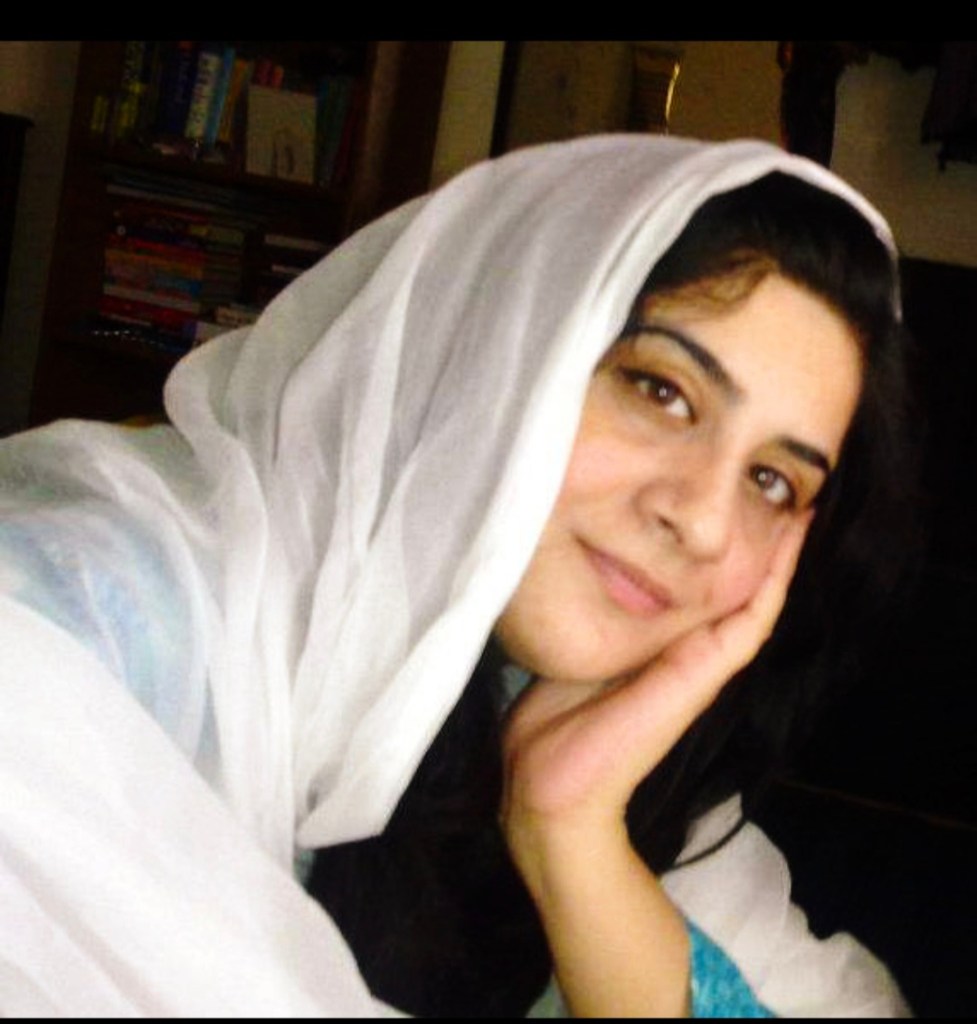
This is a memorial republication of an article written by my dear friend Humera Karim of Quetta, whom I affectionately called my princess.
Humera wrote about Balochistan with the familiarity of someone who belonged to it, understood its contradictions and cared deeply about its people. I want to preserve this article not only because of what it says about Balochistan in 2014, but because it preserves a piece of her voice.
I have lightly edited the English for grammar, punctuation, paragraph structure and clarity. I will not rewrite her argument, soften her criticism or replace her expressions with my own. Where Humera’s wording carries irony, frustration, affection or political judgment, I have tried to leave that spirit intact.
Editor’s Note
This article was originally written by the late Humera Karim of Quetta, Balochistan, and published by PK Articles Hub on March 24, 2014. The original website is no longer online, but the article survives through the Internet Archive’s Wayback Machine.
It is republished by Akashma News with the permission of Humera Karim’s husband, Hashim Ali, as a tribute to her journalism and her commitment to the people of Balochistan.
Humera’s native language was Urdu. This republication has received only light editorial treatment for English grammar, punctuation, paragraph structure and clarity. Her argument, political commentary, irony, statistics as originally reported, and overall voice have been preserved as closely as possible.
It is republished by Akashma News with the permission of Humera Karim’s husband, Hashim Ali, as a tribute to her journalism and her commitment to the people of Balochistan.
The Provincial Assembly of Balochistan unanimously passed bills increasing the salaries and allowances of the chief minister, speaker, deputy speaker and members of the Provincial Assembly.
Balochistan is the poorest province of Pakistan.
According to a May 2013 report by the Social Policy and Development Centre (SPDC), the percentage of Pakistan’s population living below the poverty line had increased to 36.79 percent in 2013, compared with 29.76 percent in 2004–05. Balochistan remained at the top of the poverty list, with 45.68 percent of its population living below the poverty line.
In such circumstances, passing this bill should perhaps be highly appreciated because, in the poorest province, apparently the poorest of the poor are sitting in the Assembly.
In such circumstances, passing this bill should perhaps be highly appreciated because, in the poorest province, apparently the poorest of the poor are sitting in the Assembly.
Balochistan is a tribal society. Baloch areas, in particular, remain strongly influenced by Nawabs and Sardars compared with Pashtun areas. Baloch areas have also faced insurgency and have witnessed little development or infrastructure. In many places, infrastructure is difficult to find at all.
Baloch tribesmen are poor, but apparently the heads of the tribes—the Nawabs and Sardars—are the poorest of the poor.
Although the provincial government is led by the National Party under Dr. Abdul Malik, a non-Sardar and educated political leader, with Mir Hasil Bizenjo, known as a liberal and learned man, it remains a coalition government that includes Nawabs and Sardars.
Although the provincial government is led by the National Party under Dr. Abdul Malik, a non-Sardar and educated political leader, with Mir Hasil Bizenjo, known as a liberal and learned man, it remains a coalition government that includes Nawabs and Sardars.
During the previous five years of the Raisani government in Balochistan, we witnessed enormous development—but unfortunately, much of it seemed to occur in the corruption sector.
Every MPA received millions for development, and many certainly succeeded in developing themselves.
Meanwhile, Balochistan was increasingly transformed into a volcano. Law and order deteriorated while political leaders appeared preoccupied with their own development.
Meanwhile, Balochistan was increasingly transformed into a volcano. Law and order deteriorated while political leaders appeared preoccupied with their own development.
Balochistan became almost a mission impossible for the government that followed. The Pakistan Muslim League-Nawaz took what appeared to be a wise step by allowing the National Party to lead the provincial government.
The National Party was expected to introduce positive reforms. Inevitably, this also generated opposition from within the governing structure itself. Nawabs and Sardars were not accustomed to seeing a non-Sardar serving as chief minister, and accepting such a change was not easy.
As expected, Dr. Malik chose what appeared to be the wisest available path: maintaining a balance rather than entering into direct confrontation with these long-established centers of power.
For generations, Nawabs and Sardars have exercised tremendous authority over the fate of their tribesmen.
Since Balochistan was granted the status of a separate province, its Assembly has repeatedly included powerful tribal figures. When outside government, many speak loudly about Baloch rights. Once in power, however, their commitment to those same rights can become considerably less visible.
The salary bill is only a small example.
The common citizen cannot ordinarily afford to contest an election. In practice, only particular segments of society possess the financial and political resources necessary to reach the Assembly.
The justification offered for increasing salaries and allowances referred to the rising cost of living, daily expenses, residential accommodation and transportation.
Apparently, then, it had become imperative to increase the salaries and privileges—not of the ordinary people struggling with those same costs, but of their already privileged representatives.
Balochistan is a geographically vast province with a scattered population. The absence of roads leaves many communities poorly connected with one another.
Many things considered basic human necessities remain unavailable to substantial numbers of people, including health care, education and clean drinking water.
The education system faces a severe shortage of secondary-school teachers and science lecturers. Many schools and colleges lack libraries, laboratory equipment and other educational facilities.
Some institutions even lack basic amenities such as safe drinking water and toilets.
At the time, Balochistan’s literacy rate stood at approximately 34 percent—an extremely low figure.
Security threats had also forced some Baloch teachers to migrate to other provinces, further weakening an already fragile educational system.
Health care presents another serious challenge.
The available medical facilities across the province were insufficient to serve a widely dispersed population of approximately eight million people at the time.
This produced a painful reality: hospitals throughout Balochistan often lacked even the basic resources necessary to treat people who could not afford private medical care.
Inadequate health and welfare services also placed children at particular risk. Insufficient medical care affected communities across the province, while health services available to poor Baloch families in both urban and rural areas remained inadequate.
The quality of care was further limited by shortages of technology, medicine and trained personnel.
It is unfortunate to report that hospitals across the province—including those in the provincial capital—faced severe shortages of beds, doctors, ambulances, professional staff, nursing services, free clinics and medicines.
People living near provincial borders sometimes traveled to other provinces simply to obtain basic medical treatment.
Districts including Bolan, Kech, Ziarat, Jhal Magsi, Musakhel and Panjgur had among the weakest government facilities for providing clean drinking water.
Electricity presented another challenge.
Load shedding in Balochistan could not simply be solved by increasing Pakistan’s overall electricity supply because the province also suffered from a weak transmission network.
A large proportion of Balochistan’s population was therefore deprived of services considered basic elsewhere.
Economic deprivation also contributed to political anger and unrest. When people have few opportunities to earn a livelihood, frustration inevitably grows.
As we know, the ordinary citizen rarely reaches the assemblies of our country. Sometimes it appears that the ordinary citizen cannot even reach the gate.
But let us remain specific to dear Balochistan.
If we examine the list of MPAs, most come from influential political or tribal backgrounds. Some may not formally be Nawabs or Sardars, but few could reasonably be described as so poor that they required increases not only in salaries but also in allowances and privileges.
We now wait to see what these elected representatives of the poorest of the poor will deliver after receiving their salary increases.
Perhaps these additional privileges will finally enable them to think about improving the lives of the people they represent.
Perhaps a miracle will occur, and they will remember Baloch rights while they are actually in power.
Having personally experienced the difficulty of meeting their own expenses during a period of rising prices, perhaps they will now consider those who live below the poverty line.
And perhaps that realization will motivate them to take meaningful action.
After all, these increases in salaries and privileges are made possible through the hard work of taxpayers.
And the taxpayer, once again, is the ordinary person.
Original publication;
Karim, H. (2014, March 24). Balochistan the poorest province of Pakistan. PK Articles Hub. Internet Archive Wayback Machine.
Part II: Blood Money and Broken Oaths – How America’s Wars Were Lost to Greed
by Marivel Guzman | Akashma News

They said it was about freedom. They said it was about justice. They said it was about protecting American lives.
But the body count rose, the lies piled up, and the contracts multiplied.
Behind every failed operation, every smokescreen of national interest, and every “freedom mission” abroad—there was a ledger. And the names in those ledgers weren’t soldiers or widows. They were stockholders, politicians, former generals, and billionaires.
This is not anti-war rhetoric. This is forensic journalism. We follow the money. We follow the lies. And we follow the names.
I. The Bush Dynasty: Family Business Meets Foreign Invasion
George H.W. Bush – former CIA Director, oilman, war president. His company, Zapata Offshore, had connections to offshore drilling, Latin America operations, and covert interests.
George W. Bush – sat atop the nation in 2001, as oil executives and military contractors circled the wreckage of 9/11 like vultures. He handed the no-bid reconstruction contracts to Halliburton, formerly run by his vice president, Dick Cheney.
And then came the war built on a lie—Weapons of Mass Destruction—a falsehood pushed by political operatives and amplified by a willing press. The Bush-Cheney doctrine turned Iraq into a playground for profiteers.
II. Dick Cheney: Halliburton’s Shadow Commander
Vice President Cheney made millions from Halliburton stock options even after supposedly “severing ties.” In 2003 alone, Halliburton secured $7 billion in contracts from the U.S. government.
His fingerprints are everywhere:
KBR (Kellogg Brown & Root, a Halliburton subsidiary) billed billions for “reconstruction.”
Allegations of fraud, overcharging, and unsafe conditions for troops.
Private subcontractors like Blackwater (now Academi) acted as mercenary extensions of U.S. foreign policy—with legal immunity.
III. Congress for Sale: The Blood-Soaked Wallets on Capitol Hill
Congress didn’t just approve the wars—they invested in them.
Senator Dianne Feinstein: Her husband, Richard Blum, had stakes in military contractors that gained from Iraq contracts.
Rep. Mike Turner (R-OH): Longtime advocate of defense expansion, recipient of funds from Raytheon and Lockheed.
Dan Crenshaw (R-TX): Public military hero, private supporter of increased private security contracting. Multiple donations from defense PACs.
And let’s not forget Rep. Don Bacon (R-NE)—our cyber subcommittee chair. With decades of military service and political clout, he embodies the revolving door. No direct link to NSO Group or Palantir yet, but his pro-surveillance stances and cyber warfare lobbying track suggest he’s under corporate gravity.
Use OpenSecrets.org and Project on Government Oversight to track the steady stream of blood money funneled through campaign donations and insider contracts.
IV. When Generals Turn Into Guns-for-Hire
Gen. James Mattis: Board member of General Dynamics after his military career.
Gen. Stanley McChrystal: Became advisor to Palantir Technologies, a CIA-seeded surveillance company.
Gen. Michael Hayden: Ex-NSA director turned private consultant for Booz Allen Hamilton—the same firm Edward Snowden worked for when he exposed global surveillance.
They fought wars. Then they sold the playbook.
V. The Tech Profiteers: From Silicon Valley to Baghdad
Bill Gates: Not just the vaccine mogul—Microsoft technology undergirded U.S. digital surveillance and logistics systems in war zones. While Microsoft didn’t profit from boots-on-the-ground war, its infrastructure contracts in Iraq and Afghanistan were extensive.
Peter Thiel: Founder of Palantir, funded by In-Q-Tel, the CIA’s venture capital arm. Palantir’s predictive policing software was deployed in Iraq and on U.S. streets.
Jeff Bezos: Amazon’s AWS cloud bid for the JEDI war cloud contract—worth $10 billion—showed that today’s wars aren’t about tanks. They’re about data.
VI. The Looting of Iraq: $6.6 Billion Gone in Cash
Between 2003–2007, the U.S. “lost” $6.6 billion in cash meant for Iraq’s reconstruction. That money was flown in on pallets—literally—in C-130s, and vanished.
Where did it go? Corrupt Iraqi officials? American contractors? Halliburton vaults?
No accountability. No charges. No return.
VII. From Patriot Act to Panopticon
With the ink still wet from the Twin Towers’ collapse, Congress passed the Patriot Act, giving birth to:
NSA mass surveillance.
Fusion centers spying on Americans.
Corporate surveillance networks with no oversight.
Big Tech, security firms, and retired brass cashed in. And the American people were told: “If you have nothing to hide, you have nothing to fear.”
Meanwhile, the architects of fear had everything to gain.
VIII. Conclusion: The Road to Treason Is Paved with Contracts
America didn’t lose its wars because of incompetence. It lost them because winning was never the goal.
The Pentagon became a piggy bank. Congress a stock exchange. And the generals? Many became consultants, CEOs, and lobbyists.
They served money, not country. And money, as we know, doesn’t need a passport to move through the doors of corruption.
So we name them. We trace the dollars. And we demand that history stop calling them patriots when they were, in truth, profiteers.
In Part III, we’ll break down timelines, show document trails, and map the full revolving door from war zones to corporate boardrooms.
Welcome to Part III: Blood Money and Btoken Oaths: The Empire’s Ledger – Mapping the Timeline of Treason


