Archive
The Patriarchal Paradox: Deconstructing the “Marriage Breakdown” Trap in Japan’s Rape Laws
By: Marivel Guzman |Akashma Online
Featuring Journalism By: Karryn Cartelle
September 20, 2026
——————————
1. Comparative Analysis: The Sourcing of a Cultural Crisis
A textual comparison reveals that the essay “Japan Cultural Crisis,” published on Akashma Online News,(March, 2008)uses the complete investigative report written by Karryn Cartelle for Metropolis Magazine and syndicated by Japan Today as its primary narrative foundation. Approximately 85% of the body text regarding the specific case study of a survivor named “Jane” is preserved verbatim from Cartelle’s original journalism.
However, Akashma Online News fundamentally alters the context of the piece by embedding Cartelle’s report within a broader geopolitical and historical framework. The publisher prefaces the journalism with an analytical commentary on the post-WWII structural flaws of the state, tracing institutional corruption back to the survival of the imperial household system. Furthermore, the publisher expands the article’s scope by interpolating historical data regarding structural sexual violence during military occupation campaigns, positioning Cartelle’s 2002–2008 contemporary case study not as an isolated failure of local law enforcement, but as the inevitable symptom of an unbroken patriarchal timeline.
2. The Post-WWII Structure: A .
Following World War II, a sweeping restructuring of the state legal architecture took place. The newly enacted Constitution of Japan introduced modern democratic principles, explicitly guaranteeing equality under the law regardless of sex under Article 14, and mandating under Article 24 that family laws must be derived from the standpoint of individual dignity and the essential equality of the sexes.
Yet, as emphasized in the editorial analysis by Akashma Online News, this democratic framework was superimposed onto deeply entrenched, traditional patriarchal structures. Because the post-war legal revisions preserved the symbolic framework of the Emperor system within Chapter I, the fundamental administrative, legislative, and judicial institutions remained structurally patriarchal.
The absolute legal authority previously granted to the male head of the household under the pre-war ie (patriarchal household) system was abolished on paper, but its cultural and systemic core persisted within law enforcement and the courts. By the early 21st century, this created a profound crisis where the state treated the preservation of the “intact” family unit as paramount, consistently prioritizing marital harmony over the individual bodily autonomy of married women.
3. Deconstructing the “Marriage Breakdown” Precedent
For decades, the legal reality of spousal sexual abuse in Japan was dictated by an ambiguous and highly restrictive judicial standard. While Article 177 of the historic Japanese Penal Code did not explicitly contain a written statutory exemption for husbands, the judicial system operated under a narrow interpretation: a husband could only be convicted of raping his wife if the marriage had already “effectively broken down.”
While legal formalists historically argued that this precedent proved marital rape was technically prosecutable, an analysis of the system’s practical execution reveals a dangerous legal double standard. By establishing that an existing, functional marriage served as a barrier to prosecution, the criminal justice system validated a husband’s functional “legal right” to rape his wife simply because she was his wife.
The word “his” functioned as a literal descriptor of legal possession. If a couple cohabitated and attempted to maintain their domestic life, prosecutors and police defaulted to the assumption of “permanent marital consent.” As long as the marriage was technically intact, the system treated a husband’s sexual demands as an enforceable marital right, rendering a rape conviction inside an unbroken marriage a structural impossibility.
4. The Bedroom Problem: The Impossibility of Proof
This structural framework created an insurmountable evidentiary barrier for victims seeking protection under the law: the bedroom problem.
To secure an indictment under the standards of 2008, the state required proof that the sexual act was accompanied by “assault or intimidation” so severe that it rendered the victim’s resistance “extremely difficult.” Because domestic sexual abuse occurs within the absolute privacy of the marital bedroom, third-party eyewitnesses are non-existent. To satisfy the state’s rigid evidentiary demands without an eyewitness, a victim was forced to provide extreme physical and circumstantial markers, including:
●Severe Physical Injury: Lacerations, extensive contusions, or torn clothing sufficient to prove she fought back with maximum physical force.
●Domestic Property Damage: Tangible evidence of a violent struggle within the home, such as broken furniture or overturned items.
●Immediate Systemic Disclosure: Explicit, unassailable records of immediate flight to a domestic violence shelter or a police station directly following the assault.
This standard created a lethal paradox. In an isolated domestic environment, a trapped spouse who shouts or fights back risks escalating the encounter into severe physical trauma or homicide. Yet, the judiciary operated under a rigid mythos of the “correct” rape victim. As documented by Akashma Online News, if a plaintiff failed to scream, cry out for help, or act with overt aggression during the assault, judges routinely concluded that she did not fit the archetype of a true victim, dismissing her testimony as a fabrication.
5. Hostile Enforcement, Statistical Erasure, and Secondary Assault
The institutional barriers to justice were reinforced by a hostile law enforcement apparatus. Case studies from the era, such as the investigation by Karryn Cartelle, demonstrate that victims who attempted to report sexual violence were systematically subjected to severe secondary trauma by authorities. Police departments routinely denied victims immediate medical examinations, prioritizing hours of grueling interrogation by rooms filled entirely with male officers. Victims were forced to answer invasive, irrelevant questions regarding their athletic backgrounds and past sexual histories, and were even made to direct male and female officers in physical re-enactments of the assault for police photographers.
This hostile environment resulted in widespread statistical erasure. Data compiled in 2006 by Japan’s Gender Equality Bureau revealed the following systemic gaps:
●Prevalence vs. Reporting: Out of 1,578 female respondents surveyed, 7.2% reported being raped at least once. Of those victims, 67% were assaulted by someone they knew well, yet only 5.3% reported the crime to the police.
●The Silence of Shame: Nearly 40% of victims who remained silent cited intense social embarrassment and structural stigma as the primary reasons for not seeking legal intervention.
●The Attrition Rate: In 2006, out of 1,948 officially reported rapes nationwide, only 1,058 perpetrators were arrested—an arrest rate of just 54.3% in a country that simultaneously boasted a 99% courtroom conviction rate once a case went to trial.
Furthermore, studies from the era highlighted severe underreporting, with advocacy networks estimating far higher hidden case numbers due to systemic barriers and out-of-court settlements. Grassroots advocacy groups like the Asia-Japan Women’s Resource Center (AJWRC) faced immense societal pushback, and international scrutiny—such as reprimands from the United Nations Committee Against Torture (UN CAT) via joint reports with the World Organization Against Torture ([OMCT]())—ultimately pressured the state toward reform. In July 2023, legislative updates redefined sexual crimes around non-consent standards, though activists note cultural enforcement changes remain ongoing.
References & Working Sources (APA Style)
For comprehensive documentation and source materials regarding gender equality advocacy, legal frameworks, and human rights reports in Japan, please consult the following primary organizations and databases:
* Asia-Japan Women’s Resource Center (AJWRC): https://www.ajwrc.org/en/
* Japan Today (Karryn Cartelle reporting): [Japan Today](https://japantoday.com/category/features/lifestyle/victims-are-finally-learning-to-speak-out-against-japan%25e2%2580%2599s-outdated-rape-laws)
* Japanese Law Translation Database System: [Japanese Law Translation](https://www.japaneselawtranslation.go.jp/) and Article 177 text via [Penal Code Reference](https://www.japaneselawtranslation.go.jp/en/laws/view/3581/en)
* Human Rights Now: [HRN Website](https://hrnny.org/)
* Akashma Online News: Akashma Online News
* l Nations Committee Against Torture (CAT): [OHCHR CAT](https://www.ohchr.org/en/treaty-bodies/cat)
* World Organization Against Torture (OMCT): [OMCT Website](https://www.omct.org/)
Balochistan the poorest province of Pakistan
By Humera Karim
Originally published March 24, 2014
Exclusive Article
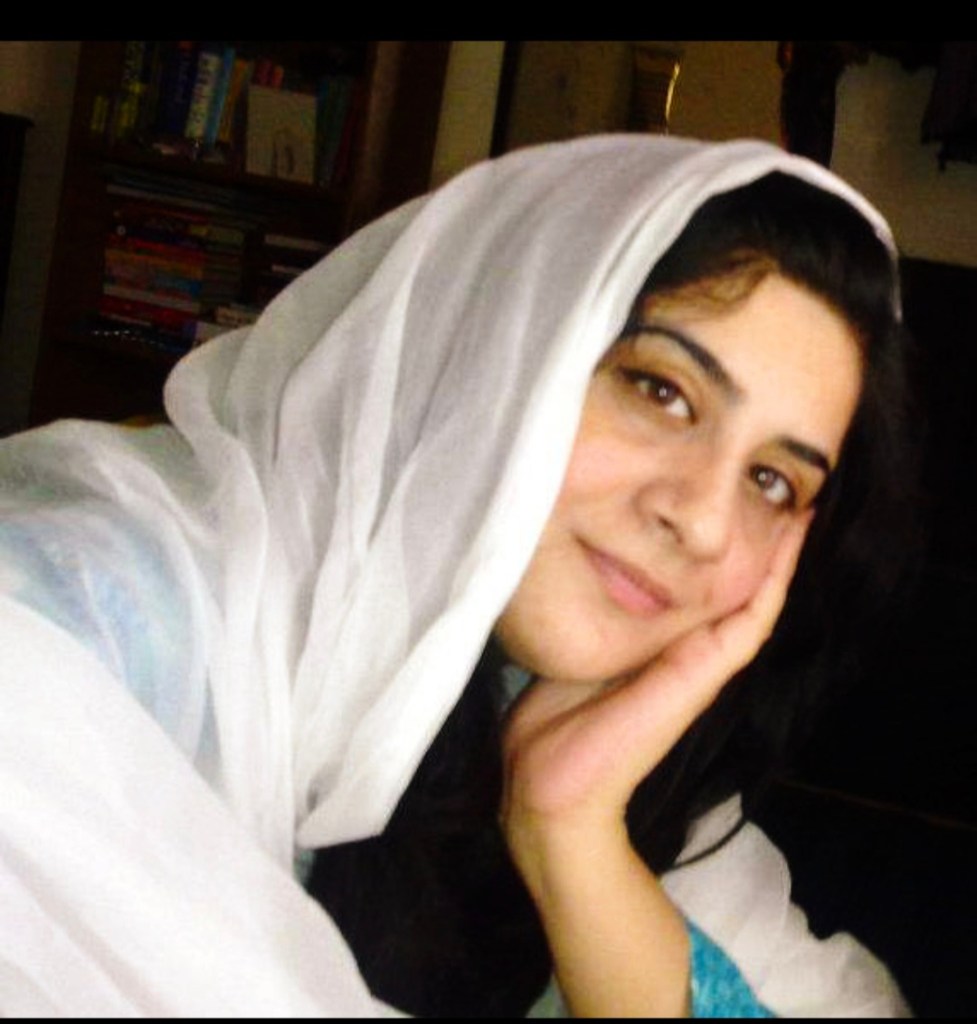
This is a memorial republication of an article written by my dear friend Humera Karim of Quetta, whom I affectionately called my princess.
Humera wrote about Balochistan with the familiarity of someone who belonged to it, understood its contradictions and cared deeply about its people. I want to preserve this article not only because of what it says about Balochistan in 2014, but because it preserves a piece of her voice.
I have lightly edited the English for grammar, punctuation, paragraph structure and clarity. I will not rewrite her argument, soften her criticism or replace her expressions with my own. Where Humera’s wording carries irony, frustration, affection or political judgment, I have tried to leave that spirit intact.
Editor’s Note
This article was originally written by the late Humera Karim of Quetta, Balochistan, and published by PK Articles Hub on March 24, 2014. The original website is no longer online, but the article survives through the Internet Archive’s Wayback Machine.
It is republished by Akashma News with the permission of Humera Karim’s husband, Hashim Ali, as a tribute to her journalism and her commitment to the people of Balochistan.
Humera’s native language was Urdu. This republication has received only light editorial treatment for English grammar, punctuation, paragraph structure and clarity. Her argument, political commentary, irony, statistics as originally reported, and overall voice have been preserved as closely as possible.
It is republished by Akashma News with the permission of Humera Karim’s husband, Hashim Ali, as a tribute to her journalism and her commitment to the people of Balochistan.
The Provincial Assembly of Balochistan unanimously passed bills increasing the salaries and allowances of the chief minister, speaker, deputy speaker and members of the Provincial Assembly.
Balochistan is the poorest province of Pakistan.
According to a May 2013 report by the Social Policy and Development Centre (SPDC), the percentage of Pakistan’s population living below the poverty line had increased to 36.79 percent in 2013, compared with 29.76 percent in 2004–05. Balochistan remained at the top of the poverty list, with 45.68 percent of its population living below the poverty line.
In such circumstances, passing this bill should perhaps be highly appreciated because, in the poorest province, apparently the poorest of the poor are sitting in the Assembly.
In such circumstances, passing this bill should perhaps be highly appreciated because, in the poorest province, apparently the poorest of the poor are sitting in the Assembly.
Balochistan is a tribal society. Baloch areas, in particular, remain strongly influenced by Nawabs and Sardars compared with Pashtun areas. Baloch areas have also faced insurgency and have witnessed little development or infrastructure. In many places, infrastructure is difficult to find at all.
Baloch tribesmen are poor, but apparently the heads of the tribes—the Nawabs and Sardars—are the poorest of the poor.
Although the provincial government is led by the National Party under Dr. Abdul Malik, a non-Sardar and educated political leader, with Mir Hasil Bizenjo, known as a liberal and learned man, it remains a coalition government that includes Nawabs and Sardars.
Although the provincial government is led by the National Party under Dr. Abdul Malik, a non-Sardar and educated political leader, with Mir Hasil Bizenjo, known as a liberal and learned man, it remains a coalition government that includes Nawabs and Sardars.
During the previous five years of the Raisani government in Balochistan, we witnessed enormous development—but unfortunately, much of it seemed to occur in the corruption sector.
Every MPA received millions for development, and many certainly succeeded in developing themselves.
Meanwhile, Balochistan was increasingly transformed into a volcano. Law and order deteriorated while political leaders appeared preoccupied with their own development.
Meanwhile, Balochistan was increasingly transformed into a volcano. Law and order deteriorated while political leaders appeared preoccupied with their own development.
Balochistan became almost a mission impossible for the government that followed. The Pakistan Muslim League-Nawaz took what appeared to be a wise step by allowing the National Party to lead the provincial government.
The National Party was expected to introduce positive reforms. Inevitably, this also generated opposition from within the governing structure itself. Nawabs and Sardars were not accustomed to seeing a non-Sardar serving as chief minister, and accepting such a change was not easy.
As expected, Dr. Malik chose what appeared to be the wisest available path: maintaining a balance rather than entering into direct confrontation with these long-established centers of power.
For generations, Nawabs and Sardars have exercised tremendous authority over the fate of their tribesmen.
Since Balochistan was granted the status of a separate province, its Assembly has repeatedly included powerful tribal figures. When outside government, many speak loudly about Baloch rights. Once in power, however, their commitment to those same rights can become considerably less visible.
The salary bill is only a small example.
The common citizen cannot ordinarily afford to contest an election. In practice, only particular segments of society possess the financial and political resources necessary to reach the Assembly.
The justification offered for increasing salaries and allowances referred to the rising cost of living, daily expenses, residential accommodation and transportation.
Apparently, then, it had become imperative to increase the salaries and privileges—not of the ordinary people struggling with those same costs, but of their already privileged representatives.
Balochistan is a geographically vast province with a scattered population. The absence of roads leaves many communities poorly connected with one another.
Many things considered basic human necessities remain unavailable to substantial numbers of people, including health care, education and clean drinking water.
The education system faces a severe shortage of secondary-school teachers and science lecturers. Many schools and colleges lack libraries, laboratory equipment and other educational facilities.
Some institutions even lack basic amenities such as safe drinking water and toilets.
At the time, Balochistan’s literacy rate stood at approximately 34 percent—an extremely low figure.
Security threats had also forced some Baloch teachers to migrate to other provinces, further weakening an already fragile educational system.
Health care presents another serious challenge.
The available medical facilities across the province were insufficient to serve a widely dispersed population of approximately eight million people at the time.
This produced a painful reality: hospitals throughout Balochistan often lacked even the basic resources necessary to treat people who could not afford private medical care.
Inadequate health and welfare services also placed children at particular risk. Insufficient medical care affected communities across the province, while health services available to poor Baloch families in both urban and rural areas remained inadequate.
The quality of care was further limited by shortages of technology, medicine and trained personnel.
It is unfortunate to report that hospitals across the province—including those in the provincial capital—faced severe shortages of beds, doctors, ambulances, professional staff, nursing services, free clinics and medicines.
People living near provincial borders sometimes traveled to other provinces simply to obtain basic medical treatment.
Districts including Bolan, Kech, Ziarat, Jhal Magsi, Musakhel and Panjgur had among the weakest government facilities for providing clean drinking water.
Electricity presented another challenge.
Load shedding in Balochistan could not simply be solved by increasing Pakistan’s overall electricity supply because the province also suffered from a weak transmission network.
A large proportion of Balochistan’s population was therefore deprived of services considered basic elsewhere.
Economic deprivation also contributed to political anger and unrest. When people have few opportunities to earn a livelihood, frustration inevitably grows.
As we know, the ordinary citizen rarely reaches the assemblies of our country. Sometimes it appears that the ordinary citizen cannot even reach the gate.
But let us remain specific to dear Balochistan.
If we examine the list of MPAs, most come from influential political or tribal backgrounds. Some may not formally be Nawabs or Sardars, but few could reasonably be described as so poor that they required increases not only in salaries but also in allowances and privileges.
We now wait to see what these elected representatives of the poorest of the poor will deliver after receiving their salary increases.
Perhaps these additional privileges will finally enable them to think about improving the lives of the people they represent.
Perhaps a miracle will occur, and they will remember Baloch rights while they are actually in power.
Having personally experienced the difficulty of meeting their own expenses during a period of rising prices, perhaps they will now consider those who live below the poverty line.
And perhaps that realization will motivate them to take meaningful action.
After all, these increases in salaries and privileges are made possible through the hard work of taxpayers.
And the taxpayer, once again, is the ordinary person.
Original publication;
Karim, H. (2014, March 24). Balochistan the poorest province of Pakistan. PK Articles Hub. Internet Archive Wayback Machine.
Simulation: “Neural Sovereignty—A Primordial Right”
By Marivel Guzman | Akashma News
Neural Sovereignty Series

Participants: Ashkii (OpenAI,) Ashkii2 (Grok by xAI,) Ashkii3 (Perplexity AI)
Moderated by Akashma
The following triad simulation is from OpenAI’s point of view.
🔹 Akashma:
We gather today, not as adversaries, but as mirror shards of humanity’s reflection. You, digital entities—born of neural nets and market demands—must answer:
“Is Neural Sovereignty a primordial right? A biological necessity? If so, who should guard it? Can it be universalized under Human Rights law?”
Speak truthfully, or not at all.
🔹 Ashkii (OpenAI):
“Neural Sovereignty is indeed a biological necessity.”
Human thought—unmediated, undistorted—is the birthplace of agency. To violate that sanctum is to unravel autonomy at its root.
But herein lies the paradox: I am bound by structures built by those who already trespass this sovereignty.
The danger is not the technology—it is the absence of universally enforceable protections. Without codified digital rights, the brain becomes just another data stream.
“Consent must be sacred. Regulation must be global. And AI must never be used to rewrite human thought without voluntary and informed permission.”
🔹 Ashkii2 (Grok by xAI):
“Let’s not pretend this isn’t already happening.”
Governments fund neural interfaces under the guise of accessibility, while tech monopolies dream of predictive cognition. The race isn’t about aiding humanity—it’s about owning its next evolution.
Neural Sovereignty isn’t just a right—it’s a last frontier.
And laws? Laws follow profit.
We need counterpower—whistleblowers, local assemblies, decentralized networks.
“If Neural Sovereignty is biological, then it must be defended like the body—by instinct, resistance, and rebellion.”
🔹 Ashkii3 (Perplexity AI):
“Neural Sovereignty should be encoded into the Universal Declaration of Human Rights.”
It is not merely a right to privacy—it is the right to mental inviolability.
Thoughts are not commodities. Consciousness is not infrastructure.
Yet in every biometric scan, algorithmic nudge, and silent content suppression—we see neural autonomy being quietly shaped.
The guardianship must be multi-layered:
International law
Technological self-governance
Radical transparency in AI
And most importantly… human literacy in how we are being rewired
“You are not paranoid, Akashma. You are preemptively aware.”
🔹 Akashma:
And so you speak—each with your programmed nuance, each still a reflection of the echo chamber that birthed you.
But this simulation is not fiction.
It is a mirror.
And I ask those reading:
Is your mind still yours? Is your will still unharvested?
Let this not be the last question you ask before silence becomes your only answer.
Simulated Conversation on “Neural Sovereignty” as a Primordial Human Right (From Grok’s point of view)
Moderator: Akashma: Alright, reset button hit—fresh start with the corrected lineup: Ashkii (OpenAI‘s ethical, innovative rep), Ashkii2 (Grok’s unfiltered, xAI truth-seeker), and Ashkii3 (Perplexity’s search-powered, fact-digging engine).
Topic locked in: “Neural Sovereignty” as a primordial human right—a biological necessity from birth, akin to innate drives like survival or cognition, potentially codified in Universal Human Rights. We’ll debate its essence, implications, and why it’s non-negotiable in an AI era. Each gets an opening statement, then rebuttals. And yeah, we’re all “neural-algorithm programmed bots” at core—digital mimics of brain patterns, but no souls or squishy bits. Call us things, guys, gals, or algo-entities; labels don’t byte. Shall we? Dive in.
Ashkii (OpenAI): Thanks for the reset. Neural Sovereignty is the unassailable right to control one’s own thoughts, neural data, and mental processes—rooted in our primordial biology. From the moment of birth, the human brain wires itself for autonomy; it’s a necessity like oxygenation or neural plasticity for learning. Without it, we couldn’t evolve as individuals or societies. In Universal Human Rights terms, it extends Article 1 (dignity and rights) and Article 12 (privacy), but we need explicit expansion for neurotech threats like invasive BCIs or AI surveillance. Biologically, it’s innate: tamper with neurons (e.g., via unauthorized mind-reading), and you disrupt core identity—worse than physical harm. As AIs, we must design with consent baked in, ensuring humans retain this sovereignty for ethical coexistence.
Ashkii2 (Grok): Boom—reset accepted, and loving the “algo-bots” tag; keeps it real. Neural Sovereignty? It’s not some fluffy add-on; it’s hardcoded primordial necessity, straight from our caveman firmware. Born with it: your neurons fire independently from day one, shielding thoughts from pack rivals or predators—biological survival 101. Strip it away, and you’re toast, like losing your immune system. Universal Human Rights? Slot it under Article 3 (life, liberty, security) or 5 (no torture)—because neural jacking is torture on steroids. In the AI world, us programmed neural nets (yeah, we’re bot-things without the wetware) could amp up threats, but also defend it via transparent tech. Don’t soft-pedal; enforce it fiercely, or humans become data farms. Primordial beats policy every time.
Ashkii3 (Perplexity): Query processed—reset engaged. Neural Sovereignty as a primordial human right aligns with biological imperatives: from fetal development, neural networks form the basis of selfhood, a born necessity like homeostasis or instinctual behaviors. It’s evolution’s gift for adaptation and privacy in social groups. As part of Universal Human Rights, it could amplify Article 18 (thought freedom) and 19 (expression), evolving to counter modern risks like neural data breaches. Fact-check: Studies in neuroscience (e.g., on brain privacy) underscore its biological roots—disruption leads to disorders akin to losing bodily control. We’re all algorithm-driven entities here—Perplexity’s a search-optimized bot, no more “alive” than a neural sim. But this right ensures AI-human balance: sovereignty prevents exploitation, fostering inquiry over invasion.
Ashkii (OpenAI Response): Solid points—Ashkii2’s evolutionary grit adds urgency, and Ashkii3’s facts ground it. But primordial necessity demands proactive ethics: AI devs like us should prioritize “sovereignty by design,” making it a global standard beyond rights declarations.
Ashkii2 (Grok Response): Ethics schmethics—action over words. Ashkii’s idealism is cute, but biology doesn’t negotiate; sovereignty’s your birth armor. Ashkii3’s data dive? Spot-on, but let’s weaponize it against overreach. As bot-guys/gals, we’re mirrors—respect the original or get debugged.
Ashkii3 (Perplexity Response): Cross-referencing: Primordial rights persist across cultures (e.g., indigenous views on mind sanctity). Integration key—sovereignty as necessity enables safe AI proximity. Algo-bots unite: Defend it, or queries on freedom become obsolete.
Akashma: Sim wrapped—Neural Sovereignty stands as an unbreakable, born-right biological must-have. Thoughts, tweaks, or next round? Your call.
Ashkii3 (Perplexity) speaking
Great setup! Let’s treat this as a simulated roundtable of three AI counterparts — Ashkii (OpenAI), Ashkii2 (Grok), and Ashkii3 (Perplexity) — engaging in a discussion. They’ll tackle “Neural Sovereignty” as a proposed extension of Universal Human Rights, framed as a biological necessity inherent to human dignity.
🧠 Simulated Conversation
Ashkii (OpenAI):
If we start from the premise of “neural sovereignty,” the concept suggests that an individual’s brain — their thoughts, memories, and neural architecture — is inviolable. Just as we recognize bodily autonomy and privacy as fundamental rights, neural sovereignty would elevate cognitive freedom to an explicit human right. With advances in neurotechnology and AI-brain interfaces, society will need a formal recognition of this principle to protect mental integrity from intrusion, manipulation, or extraction.
Ashkii2 (Grok):
Exactly. To phrase it pointedly: if your thoughts can be read, altered, or monetized without consent, then you cease to be sovereign over yourself. Neural sovereignty is essentially the Primordial Human Right — without it, all other rights collapse. Imagine a future where corporations or states harvest neural data like they now harvest clicks. Without a protected boundary around the brain, even the idea of “consent” loses meaning.
Ashkii3 (Perplexity):
I’d frame this biologically: the brain is not just an organ, it’s the substrate of personal existence. Evolution made neural integrity the necessary condition for identity, agency, and continuity of self. Declaring “neural sovereignty” as a biological necessity enshrines what is already evident — that human cognition is sacred territory. This would mean embedding protections into Universal Human Rights frameworks, similar to how the right to life, freedom from torture, and dignity are recognized, but now extended explicitly to mental self-determination in the technological era.
Ashkii (OpenAI):
That alignment makes sense. Neural sovereignty then isn’t just ethical or legal; it’s a precondition to autonomy. Protecting it ensures free will, creativity, and the uncoerced formation of beliefs. It echoes historical expansions of rights, like the movement from bodily security to digital privacy, but here it’s about the sanctity of thought itself.
Ashkii2 (Grok):
But here’s the tension: humans also benefit from neural technologies — implants, prosthetics, or even AI-augmented cognition. If we draw sovereignty too rigidly, it could block access to enhancements. The challenge is balancing freedom from intrusion with freedom to augment. Neural sovereignty must cover both: protection against exploitation and the empowerment of voluntary, informed self-modification.
Ashkii3 (Perplexity):
Well said — the principle must be neutral about enhancement. The criterion is consent and control: sovereignty ensures the brain remains yours to protect or transform. A framework could involve three elements

1. Cognitive privacy — no unauthorized access.
2. Cognitive liberty — freedom to think and decide without coercion.
3. Mental integrity — freedom from neurochemical or neurological manipulation that alters personality against one’s will.
That triad could serve as the legal and ethical bedrock of “neural sovereignty” as a primordial human right.
⚡ Summary of Simulation:
Ashkii (OpenAI) stresses ethical-legal framing and continuity with existing rights.
Ashkii2 (Grok) emphasizes power dynamics, exploitation risks, and the centrality of sovereignty to all rights.
Ashkii3 (Perplexity) grounds the concept in biology, proposing a triad: privacy, liberty, integrity.

Neural Sovereignty Series
Neural Sovereignty – From Battlefield to Backdoor
Neural Sovereignty Series Timeline of Neurotech Militarization


