Archive
Balochistan the poorest province of Pakistan
By Humera Karim
Originally published March 24, 2014
Exclusive Article
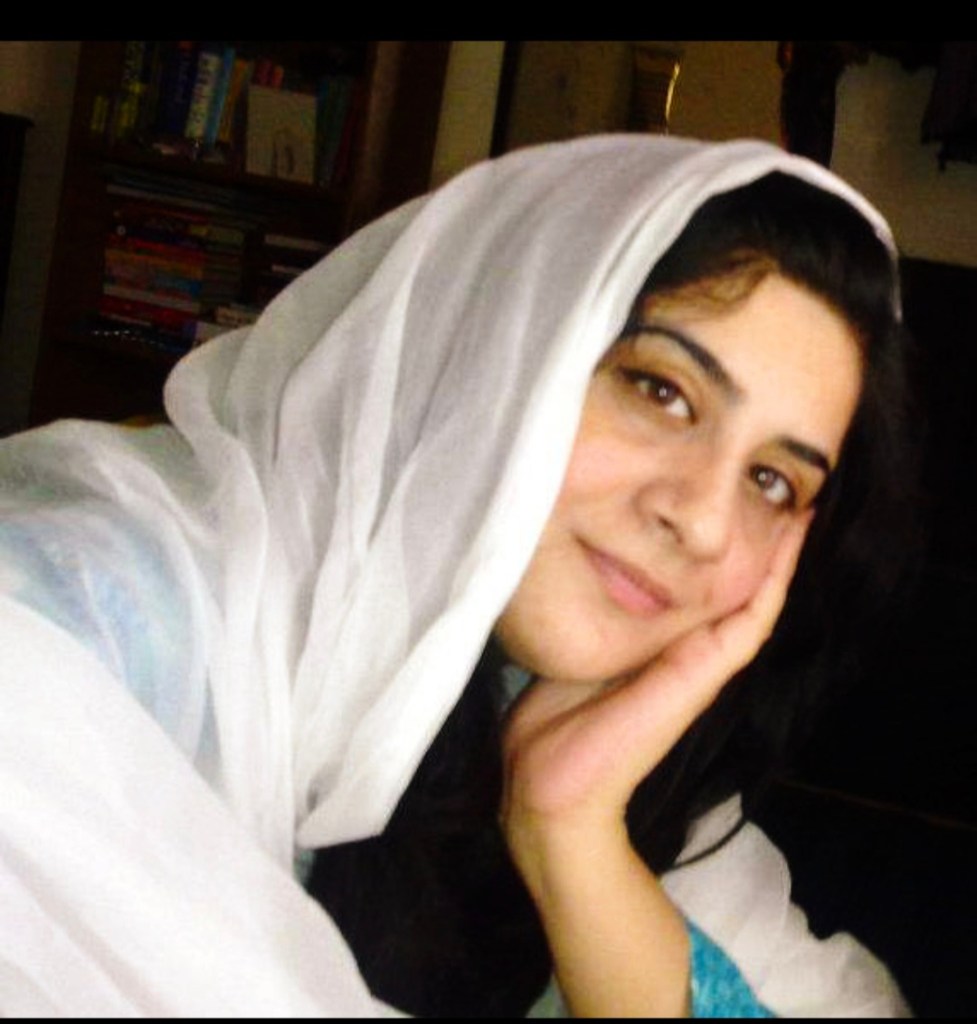
This is a memorial republication of an article written by my dear friend Humera Karim of Quetta, whom I affectionately called my princess.
Humera wrote about Balochistan with the familiarity of someone who belonged to it, understood its contradictions and cared deeply about its people. I want to preserve this article not only because of what it says about Balochistan in 2014, but because it preserves a piece of her voice.
I have lightly edited the English for grammar, punctuation, paragraph structure and clarity. I will not rewrite her argument, soften her criticism or replace her expressions with my own. Where Humera’s wording carries irony, frustration, affection or political judgment, I have tried to leave that spirit intact.
Editor’s Note
This article was originally written by the late Humera Karim of Quetta, Balochistan, and published by PK Articles Hub on March 24, 2014. The original website is no longer online, but the article survives through the Internet Archive’s Wayback Machine.
It is republished by Akashma News with the permission of Humera Karim’s husband, Hashim Ali, as a tribute to her journalism and her commitment to the people of Balochistan.
Humera’s native language was Urdu. This republication has received only light editorial treatment for English grammar, punctuation, paragraph structure and clarity. Her argument, political commentary, irony, statistics as originally reported, and overall voice have been preserved as closely as possible.
It is republished by Akashma News with the permission of Humera Karim’s husband, Hashim Ali, as a tribute to her journalism and her commitment to the people of Balochistan.
The Provincial Assembly of Balochistan unanimously passed bills increasing the salaries and allowances of the chief minister, speaker, deputy speaker and members of the Provincial Assembly.
Balochistan is the poorest province of Pakistan.
According to a May 2013 report by the Social Policy and Development Centre (SPDC), the percentage of Pakistan’s population living below the poverty line had increased to 36.79 percent in 2013, compared with 29.76 percent in 2004–05. Balochistan remained at the top of the poverty list, with 45.68 percent of its population living below the poverty line.
In such circumstances, passing this bill should perhaps be highly appreciated because, in the poorest province, apparently the poorest of the poor are sitting in the Assembly.
In such circumstances, passing this bill should perhaps be highly appreciated because, in the poorest province, apparently the poorest of the poor are sitting in the Assembly.
Balochistan is a tribal society. Baloch areas, in particular, remain strongly influenced by Nawabs and Sardars compared with Pashtun areas. Baloch areas have also faced insurgency and have witnessed little development or infrastructure. In many places, infrastructure is difficult to find at all.
Baloch tribesmen are poor, but apparently the heads of the tribes—the Nawabs and Sardars—are the poorest of the poor.
Although the provincial government is led by the National Party under Dr. Abdul Malik, a non-Sardar and educated political leader, with Mir Hasil Bizenjo, known as a liberal and learned man, it remains a coalition government that includes Nawabs and Sardars.
Although the provincial government is led by the National Party under Dr. Abdul Malik, a non-Sardar and educated political leader, with Mir Hasil Bizenjo, known as a liberal and learned man, it remains a coalition government that includes Nawabs and Sardars.
During the previous five years of the Raisani government in Balochistan, we witnessed enormous development—but unfortunately, much of it seemed to occur in the corruption sector.
Every MPA received millions for development, and many certainly succeeded in developing themselves.
Meanwhile, Balochistan was increasingly transformed into a volcano. Law and order deteriorated while political leaders appeared preoccupied with their own development.
Meanwhile, Balochistan was increasingly transformed into a volcano. Law and order deteriorated while political leaders appeared preoccupied with their own development.
Balochistan became almost a mission impossible for the government that followed. The Pakistan Muslim League-Nawaz took what appeared to be a wise step by allowing the National Party to lead the provincial government.
The National Party was expected to introduce positive reforms. Inevitably, this also generated opposition from within the governing structure itself. Nawabs and Sardars were not accustomed to seeing a non-Sardar serving as chief minister, and accepting such a change was not easy.
As expected, Dr. Malik chose what appeared to be the wisest available path: maintaining a balance rather than entering into direct confrontation with these long-established centers of power.
For generations, Nawabs and Sardars have exercised tremendous authority over the fate of their tribesmen.
Since Balochistan was granted the status of a separate province, its Assembly has repeatedly included powerful tribal figures. When outside government, many speak loudly about Baloch rights. Once in power, however, their commitment to those same rights can become considerably less visible.
The salary bill is only a small example.
The common citizen cannot ordinarily afford to contest an election. In practice, only particular segments of society possess the financial and political resources necessary to reach the Assembly.
The justification offered for increasing salaries and allowances referred to the rising cost of living, daily expenses, residential accommodation and transportation.
Apparently, then, it had become imperative to increase the salaries and privileges—not of the ordinary people struggling with those same costs, but of their already privileged representatives.
Balochistan is a geographically vast province with a scattered population. The absence of roads leaves many communities poorly connected with one another.
Many things considered basic human necessities remain unavailable to substantial numbers of people, including health care, education and clean drinking water.
The education system faces a severe shortage of secondary-school teachers and science lecturers. Many schools and colleges lack libraries, laboratory equipment and other educational facilities.
Some institutions even lack basic amenities such as safe drinking water and toilets.
At the time, Balochistan’s literacy rate stood at approximately 34 percent—an extremely low figure.
Security threats had also forced some Baloch teachers to migrate to other provinces, further weakening an already fragile educational system.
Health care presents another serious challenge.
The available medical facilities across the province were insufficient to serve a widely dispersed population of approximately eight million people at the time.
This produced a painful reality: hospitals throughout Balochistan often lacked even the basic resources necessary to treat people who could not afford private medical care.
Inadequate health and welfare services also placed children at particular risk. Insufficient medical care affected communities across the province, while health services available to poor Baloch families in both urban and rural areas remained inadequate.
The quality of care was further limited by shortages of technology, medicine and trained personnel.
It is unfortunate to report that hospitals across the province—including those in the provincial capital—faced severe shortages of beds, doctors, ambulances, professional staff, nursing services, free clinics and medicines.
People living near provincial borders sometimes traveled to other provinces simply to obtain basic medical treatment.
Districts including Bolan, Kech, Ziarat, Jhal Magsi, Musakhel and Panjgur had among the weakest government facilities for providing clean drinking water.
Electricity presented another challenge.
Load shedding in Balochistan could not simply be solved by increasing Pakistan’s overall electricity supply because the province also suffered from a weak transmission network.
A large proportion of Balochistan’s population was therefore deprived of services considered basic elsewhere.
Economic deprivation also contributed to political anger and unrest. When people have few opportunities to earn a livelihood, frustration inevitably grows.
As we know, the ordinary citizen rarely reaches the assemblies of our country. Sometimes it appears that the ordinary citizen cannot even reach the gate.
But let us remain specific to dear Balochistan.
If we examine the list of MPAs, most come from influential political or tribal backgrounds. Some may not formally be Nawabs or Sardars, but few could reasonably be described as so poor that they required increases not only in salaries but also in allowances and privileges.
We now wait to see what these elected representatives of the poorest of the poor will deliver after receiving their salary increases.
Perhaps these additional privileges will finally enable them to think about improving the lives of the people they represent.
Perhaps a miracle will occur, and they will remember Baloch rights while they are actually in power.
Having personally experienced the difficulty of meeting their own expenses during a period of rising prices, perhaps they will now consider those who live below the poverty line.
And perhaps that realization will motivate them to take meaningful action.
After all, these increases in salaries and privileges are made possible through the hard work of taxpayers.
And the taxpayer, once again, is the ordinary person.
Original publication;
Karim, H. (2014, March 24). Balochistan the poorest province of Pakistan. PK Articles Hub. Internet Archive Wayback Machine.


