CALIFORNIA’S SOLAR SCANDAL: THE SUN IS FREE, BUT MONOPOLY UTILITIES MAKE US PAY
By Akashma News
SACRAMENTO — California has become a national leader in solar power, boasting the largest number of rooftop solar installations in the United States. With endless sunlight and billions in taxpayer subsidies, one might expect the state’s energy costs to be low and accessible. Instead, Californians are facing skyrocketing electric bills, while utility giants reap profits from policies shaped by powerful lobbyists and a complicit state legislature.
Despite producing more electricity than the state can consume during peak solar hours, consumers are still paying among the highest rates in the nation. At the core of this contradiction lies a tale of broken promises, policy manipulation, and a green energy revolution hijacked by corporate interests.
Sunlight Subsidized by Taxpayers, Monetized by Utilities
Over the past two decades, both federal and state governments have invested heavily in making solar energy viable. Programs like the federal Investment Tax Credit (ITC) and California’s Solar Initiative (CSI) funneled billions into the development and installation of solar technology. The Self-Generation Incentive Program (SGIP) even paid residents to install battery systems.
But while taxpayers funded the transition, they were never guaranteed access to the benefits. Instead, the electricity generated by the sun — a limitless and free resource — became a product bought and sold by utility monopolies.
Net Energy Metering 3.0: A Gift to Utilities
In April 2023, the California Public Utilities Commission (CPUC) implemented Net Energy Metering 3.0 (NEM 3), slashing the compensation new solar customers receive for selling excess solar energy back to the grid. Under previous versions, customers earned between 20 and 30 cents per kilowatt-hour (kWh). Under NEM 3, new adopters now receive just 3 to 5 cents.
However, existing customers who installed solar panels under earlier NEM agreements remain “grandfathered in” and continue receiving the higher compensation rates, at least for the duration of their original contract period.
Consumer advocates and independent energy experts argue that NEM 3 is a calculated move by the utilities to undercut solar adopters and preserve profits. “This is nothing short of legalized theft,” said a renewable energy consultant who requested anonymity. “Taxpayers built the system, but utilities own the profits.”
The utility companies claim that reduced net metering rates help protect low-income ratepayers and maintain grid reliability. But the reality paints a different picture. Investor-owned utilities like Pacific Gas & Electric (PG&E), Southern California Edison, and San Diego Gas & Electric have reported rising revenues while residential electricity rates have soared.
The Lobbyists Behind the Curtain
Documents obtained through the California Secretary of State’s lobbying disclosure system show that utility companies spent millions lobbying legislators in the years leading up to NEM 3’s approval. These corporations funneled money into campaign donations, PR campaigns, and pressure groups to promote their version of a “fair” energy market.
State lawmakers, many of whom received significant contributions from energy sector PACs, largely fell in line. The result: legislation that gutted one of the most successful solar adoption programs in the country.
“The politicians in Sacramento sold us out,” said Sarah Ramirez, a homeowner in Riverside who installed solar panels in 2020. “We were promised energy independence and lower bills. Now I’m locked into a system where I sell my energy for pennies and buy it back at a premium.”
The Green Mirage: EV Costs and Energy Exports
The push for electric vehicles (EVs) has only added insult to injury. In 2019, it cost around $7 to charge an EV for 270 miles. Today, thanks to rising electricity prices, that same charge can cost upwards of $20 at public charging stations.
Meanwhile, surplus electricity produced during peak hours is sold to neighboring states at discounted wholesale rates. California residents, who helped fund the solar infrastructure, are essentially subsidizing cheap energy for other states while paying some of the highest rates in the U.S.
Who Owns the Sun?
California’s energy paradox begs a fundamental question: Who owns the sun? If the public funded solar infrastructure and the sun shines freely, why are residents paying monopoly prices for power?
The answer lies in policy manipulation and a regulatory framework that prioritizes investor returns over public benefit. Until lawmakers confront the influence of utility lobbyists and restore fair compensation to solar producers, Californians will continue to bear the burden of a broken system.
As sunlight continues to flood the Golden State, the question remains: How long will we let corporate monopolies bottle and sell our sunshine back to us at a premium?

Photo of Ilhan Omar in Mugshot Circulates on Social Media
By Akashma News
March 30, 2025

A photo depicting Rep. Ilhan Omar (D-Minn.) in a mugshot has gone viral on social media, sparking widespread discussion and speculation. The image, shared by a user on X (formerly Twitter), includes the caption, “Is this real? Ilhan Omar, daughter of terrorists,” along with the mugshot-style photo of Omar.
The origins of the image remain unclear, and no official sources have confirmed its validity. The claim in the tweet that Omar is the “daughter of terrorists” is unsubstantiated and appears to be part of a broader pattern of misinformation targeting the congresswoman.
Ilhan Omar’s father, Nur Omar Mohamed, was a teacher and a key figure in her upbringing. Omar, a Somali-American refugee, has often spoken about her family’s journey to the United States and the challenges they faced. Her father’s role in her education and values has been a recurring theme in her public statements.
Rep. Omar, a prominent progressive voice in Congress, has not publicly addressed the photo or the claims in the tweet as of this writing. Her office has been contacted for comment.
The viral nature of the post highlights the rapid spread of unverified content on social media and the potential for misinformation to influence public discourse. Experts urge users to verify the credibility of such images and claims before sharing them.
As the photo and accompanying claims continue to circulate, it serves as a reminder of the challenges posed by digital misinformation and the importance of critical media literacy.
Ilhan Omar, a U.S. Representative for Minnesota’s 5th congressional district, has been the subject of various rumors and controversies. Here are the facts based on credible and unbiased sources:
1. Marriage Allegations (Rumor: Married Her Brother)
Fact: There have been allegations that Ilhan Omar married her brother, Ahmed Nur Said Elmi, for immigration purposes. These claims have been widely circulated but remain unproven.
Investigation: In 2019, the Minnesota Campaign Finance Board investigated Omar for alleged campaign finance violations related to her divorce and marriage records. The board found that she had inadvertently used campaign funds for personal expenses but did not find evidence to support the marriage allegations.
Omar’s Response: Omar has denied the allegations, calling them “baseless and absurd.” She has stated that her marriage to Elmi was legitimate and that they divorced in 2017.
Credible Sources: Fact-checking organizations like PolitiFact and Snopes have found no credible evidence to support the claim that Omar married her brother.
2. Arrest Rumors (Rumor: Arrested 23 Times)
Fact: There is no credible evidence to support the claim that Ilhan Omar has been arrested 23 times. This rumor appears to be a fabrication.
Omar’s Background: Omar has been involved in activism and politics, but there are no records of her being arrested multiple times. She has been a vocal advocate for progressive policies and has faced criticism from some quarters, but the arrest claims are unsubstantiated.
Credible Sources: Major news outlets and fact-checking organizations have found no evidence to support this rumor. The Associated Press and Reuters have not reported any such arrests.
3. Background and Political Career
Early Life: Ilhan Omar was born in Somalia in 1982 and fled the country with her family during the civil war. She spent four years in a refugee camp in Kenya before immigrating to the United States in 1995.
Political Career: Omar was elected to the Minnesota House of Representatives in 2016, becoming the first Somali-American legislator in the United States. In 2018, she was elected to the U.S. House of Representatives, making her one of the first two Muslim women to serve in Congress.
Policy Positions: Omar is a member of the Democratic Party and is known for her progressive stances on issues such as healthcare, immigration, and foreign policy. She is also a member of “The Squad,” a group of progressive Democratic congresswomen.
4. Controversies
Comments on Israel: Omar has faced criticism for her comments on Israel and the influence of pro-Israel lobbying groups in U.S. politics. Some of her remarks have been criticized as antisemitic, though Omar has stated that she is criticizing the Israeli government’s policies, not the Jewish people.
Ethics Investigations: As mentioned earlier, Omar has faced ethics investigations, including the one by the Minnesota Campaign Finance Board, but no significant wrongdoing has been proven.
Conclusion
While Ilhan Omar has been the subject of various rumors and controversies, credible sources have found no evidence to support the claims that she married her brother or was arrested 23 times. These allegations appear to be part of a broader pattern of misinformation targeting her. For accurate information, it is best to rely on reputable news organizations and fact-checking sites.
The Real Killers: Hunger, Dirty Water, and the Philanthropy Profit Game
By Akashma News
In 2023, 4.8 million children under five died—13,100 daily—according to UNICEF. Nearly half, 2.2 million, succumbed because their bodies, ravaged by hunger, couldn’t fight off infections. Meanwhile, 2.2 billion people drank unsafe water, and 3.6 billion lacked basic toilets, unleashing a waterborne death toll of 2-2.5 million yearly—1.5 million from diarrhea alone, including 525,000 kids (WHO, 2023). These are the monsters stalking humanity: starvation and shit-filled rivers, not just the viruses philanthropists love to jab away. Yet, Gavi, the Vaccine Alliance—bankrolled by the U.S., the Gates Foundation, and Big Pharma—warns that a $300 million U.S. funding cut will kill 1.2 million over five years by skipping 75 million vaccines. The math’s slick, but it’s a scare tactic masking a deeper rot: profit over people.
Vaccines: A Profitable Half-Measure
Gavi’s CEO, Sania Nishtar, told Fortune in February 2025 that losing $300 million yearly means 240,000 deaths annually—$1,250 per life saved. Measles (144,000 of that toll), malaria (36,000), HIV (28,800), COVID-19 (60,000), and polio (19,200) dominate their models. But these numbers assume vaccines work like magic across starving, dehydrated bodies. They don’t. Measles shots drop from 95% efficacy to 60% in malnourished kids (2019 Frontiers in Immunology). Malaria’s RTS,S falls from 35% to 25% (WHO, 2021). Rotavirus, a diarrhea fighter, dips from 70% to 50% (2016 Vaccine). Adjust for 40% of kids and 20% of adults in Gavi’s 75 million being malnourished—20 million kids, 5 million adults—and effective vaccinations shrink to 61 million. Deaths? Maybe 864,000 over five years, not 1.2 million—28% less.Worse, hunger and dirty water claim lives vaccines can’t touch. Of Gavi’s 240,000 yearly deaths, 40% (96,000) overlap with hunger’s 9 million annual toll (2.2 million kids, 5.9 million adults, Global Nutrition Report, 2021) or diarrhea’s 1.5 million—kids too weak to survive, jabbed or not. Net impact: 172,800 lives at $1,736 per life. Gavi’s 1.2 million is a donor-friendly mirage, ignoring the real killers.
Nutrition and Water: The Ignored Lifelines
What if that $300 million fed the starving instead? UNICEF’s 3.1 million annual child hunger deaths could halve with $4 billion—1.55 million lives. Scale it: $300 million saves 232,500 at $1,290 per life—cheaper and broader than Gavi’s adjusted haul. In Somalia, where 40-60% of kids are malnourished and 1 doctor serves 10,000 (UNICEF), a full belly boosts immunity more than a shaky measles shot. Or take water: $300 million in wells and latrines could save 300,000-500,000 yearly (UN Water, 2023)—$600-$1,000 per life—crushing Gavi’s numbers while slashing diarrhea’s 1.5 million toll.
These aren’t hypotheticals. A 2020 Lancet study valued Gavi at 1.5 million lives saved over years—impressive, until you see hunger’s 3.1 million kids yearly dwarf it. Waterborne deaths—cholera (95,000), typhoid (135,000), dysentery (165,000 kids)—add a 2-2.5 million body count Gavi barely touches. Rotavirus shots help, but without clean water, kids keep dying. The fix is obvious: feed them, hydrate them, stop the shit-flow. So why doesn’t Gavi pivot?
Philanthropy’s Profit Engine
Gavi’s a machine built by power, not compassion. The Gates Foundation’s $750 million kickoff in 2000, alongside Pfizer and GSK’s board seats, steers it toward pharma profits—$21-per-child subsidies (MSF, 2015) for vaccines like GSK’s $100 rotavirus dose, not wells at $50 a pop. Donors—U.S. ($1.5 billion pledged through 2030), UK, Norway—love measurable shots over messy sanitation projects. Trump’s $1 billion aid cut (AP News, March 2025) threatens Gavi’s $300 million slice, cueing Nishtar’s 1.2 million death cry—a perfect scare to lock in grants, never mind the malnutrition-water overlap gutting its math.
This isn’t aid; it’s a business. Gavi’s 1.1 billion kids vaccinated (Gavi.org, 2025) is real, but its politics—donor-heavy, industry-tied—shun the Alma-Ata dream of health as a social fight. Africa begs for local manufacturing (post-COVAX snubs), yet Gavi sticks to Big Pharma’s supply chains. Why? Profit trumps humanity. Gates’ “results-driven” ethos—critiqued in 2014 PMC—picks tech over people, vaccines over villages.
Humanity First
Imagine redirecting $300 million to Somalia’s starving, waterless kids—232,500 fed, 300,000 hydrated, millions spared dysentery’s agony. Compare that to Gavi’s 172,800 adjusted lives, tethered to pharma’s bottom line. The choice is stark: humanity demands nutrition and clean water—cheap, systemic, life-saving—over a profit-soaked needle. Philanthropists peddling 1.2 million deaths as a funding plea aren’t saviors; they’re salesmen. The real monsters—hunger, dirty water—don’t care about their pitch. Neither should we.

History, Justice, and the Unfinished Struggle: Investigating Israel’s Crimes and the Palestinian Dispossession
By Akashma News
Introduction: The Line Between Truth and Accusation
In the modern age of journalism, reporting on Israeli policies in the occupied Palestinian territories often comes with a dangerous label: anti-Semitism. The accusation is frequently used to silence critics, whether they are journalists, human rights organizations, or even Jewish scholars who question Israeli state actions. But is exposing war crimes, settler violence, and military oppression truly an act of prejudice against Jewish people, or is it a necessary pursuit of truth and accountability?
Beyond this, a more fundamental question remains: Has history provided justice to the Palestinian people, who have faced decades of displacement, occupation, and systemic oppression? The answers lie in a century-long pattern of colonial ambition, international complicity, and an unwavering Palestinian resistance against historical injustice.
The Settler Question: Criticism or Hate Speech?
The Israeli government and pro-Zionist organizations often frame criticism of Israel as anti-Semitic. In 2016, the International Holocaust Remembrance Alliance (IHRA) adopted a controversial definition of anti-Semitism that includes “claiming that the existence of a State of Israel is a racist endeavor.” This definition has since been weaponized to silence activists, scholars, and even Jewish critics who oppose Israel’s apartheid policies.
However, major human rights organizations, including Amnesty International, Human Rights Watch, and B’Tselem (an Israeli NGO), have all independently concluded that Israel is committing crimes of apartheid. These reports document how Israel’s government enforces segregation, land seizures, and military oppression against Palestinians. If leading global watchdogs can make these claims without being anti-Semitic, why is the same standard not applied to journalists and activists?
Settler Violence and State Backing
One of the most egregious aspects of Israeli policy is the state-backed expansion of illegal settlements. The Fourth Geneva Convention explicitly prohibits an occupying power from transferring its population into occupied territory, making all Israeli settlements in the West Bank and East Jerusalem illegal under international law.
Yet, as of 2024, over 700,000 Israeli settlers live in these illegal enclaves. Reports from the United Nations, Al-Haq, and Breaking the Silence (a group of former Israeli soldiers) document systematic violence against Palestinians by settlers, often with the protection—or direct assistance—of the Israeli military.
This violence includes:
Forcible land seizures and home demolitions.
Arson attacks, such as the 2015 firebombing in Duma that killed an 18-month-old Palestinian baby and his parents.
Live fire against Palestinian civilians, frequently ignored or excused by Israeli courts.
Labeling these documented crimes as “anti-Semitic propaganda” serves only to shield perpetrators from accountability. As investigative journalists, our duty is to report the truth, not cater to political narratives that suppress it.
Historical Dispossession: The “Jewish Dream” and Palestinian Reality
From Balfour to the Nakba: How Palestine Was Stolen
The roots of Palestinian dispossession date back to 1917, when British Foreign Secretary Arthur Balfour issued the Balfour Declaration, promising British support for a Jewish homeland in Palestine. This declaration was made without consulting the 95% majority Palestinian population, who suddenly found their fate being decided by a foreign power and a Zionist movement led by figures like Lord Rothschild and Chaim Weizmann.
When the British Mandate took control of Palestine in 1920, Zionist paramilitary groups—the Haganah, Irgun, and Lehi (Stern Gang)—began violently seizing Palestinian land. These groups conducted terrorist operations, including bombings and assassinations, against both Palestinians and the British.
By 1947, despite Jews owning only 6% of the land, the United Nations partition plan allocated 55% of Palestine to the Jewish population, fueling Palestinian resistance. The response from Zionist militias was ruthless:
The Nakba (1948): Ethnic Cleansing and Massacres
During the war following the unilateral declaration of Israel’s statehood in May 1948, Zionist militias executed a calculated campaign of ethnic cleansing. Israeli historian Ilan Pappé, in his book The Ethnic Cleansing of Palestine, documents how 750,000 Palestinians were forcibly expelled, and over 500 villages were destroyed in a deliberate effort to erase Palestinian presence.
Massacres such as Deir Yassin (April 9, 1948), where over 100 Palestinian men, women, and children were slaughtered, served as psychological warfare to drive out more Palestinians. Survivors recall scenes of rape, executions, and mutilations—horrors reminiscent of other colonial genocides.
By the time the war ended, Israel controlled 78% of historic Palestine, far beyond the UN’s partition allotment. The remaining 22%—the West Bank and Gaza Strip—came under Jordanian and Egyptian control, only to be occupied by Israel in 1967.
The 1967 War and Ongoing Occupation
Following Israel’s victory in the Six-Day War (1967), it occupied the remaining Palestinian territories. Since then, Israel has implemented a military regime over millions of Palestinians, depriving them of basic human rights. The occupation continues to this day, with:
2.2 million Gazans living under a near-total blockade, described by the UN as an “open-air prison.”
Over 500 military checkpoints in the West Bank restricting Palestinian movement.
Apartheid laws that grant Israeli settlers full rights while denying them to native Palestinians.
Has History Delivered Justice?
Despite numerous UN resolutions condemning Israeli actions, little has changed. The U.S. veto power at the UN Security Council ensures Israel remains shielded from international law.
Meanwhile, Palestinians remain stateless, refugees in their own homeland or scattered across the world. No reparations, no right of return, and no accountability have been offered to the victims of Zionist colonization.
Even attempts to hold Israel legally accountable have been crushed. In 2021, the International Criminal Court (ICC) opened an investigation into Israeli war crimes, but faced severe pushback from Western governments. In contrast, these same nations demand justice for Ukraine against Russia, exposing the double standard in international law.
The Fight for Justice Continues
Despite Israel’s military and political power, the Palestinian resistance—both armed and non-violent—continues. Movements such as:
Boycott, Divestment, Sanctions (BDS), which pressures companies and institutions to cut ties with Israeli apartheid.
Legal challenges at the ICC and UN bodies.
Grassroots resistance in occupied territories, where Palestinians fight back against home demolitions, settler violence, and military oppression.
Conclusion: A Call for Unbiased Journalism
To expose Israel’s crimes is not to be anti-Semitic—it is to uphold the principles of journalism and human rights. The real issue is not religious identity, but settler colonialism, military occupation, and ethnic cleansing.
History has failed Palestine, but the future remains unwritten. Journalists, historians, and activists must continue to document, expose, and challenge the forces that seek to erase the Palestinian people. The world ignored the Nakba in 1948. Will it ignore the ongoing Nakba today?
About the Author: Marivel Guzman
Marivel Guzman is an investigative journalist and photographer with a fervent dedication to uncovering the truth and advocating for social justice. She earned her Bachelor of Arts from California State University, Sacramento, where she honed her skills in journalism and developed a passion for storytelling.
Throughout her career, Guzman has contributed to various reputable publications, including Lariat News, Orange Coast Report, and The State Hornet. Her work delves into complex socio-political issues, aiming to shed light on underreported stories and marginalized communities. She is also the founder of Akashma Online News, a platform she has used since 2007 to research, analyze, and document pressing global issues.
In addition to her journalistic endeavors, Guzman has served as a proof editor for the Baluchistan Red Crescent quarterly magazine and volunteers as a photographer for the United Nations Relief and Works Agency (UNRWA), capturing the resilience and struggles of displaced populations.
Guzman’s commitment to social activism extends beyond traditional journalism. She maintains a political blog where she explores pressing global issues and engages readers in thoughtful discourse. Her poetry, reflecting themes of solitude, resilience, and hope, has been featured in Akashma Online News, offering readers a glimpse into her introspective and creative perspective.
Her dedication to investigative reporting is further enriched by her extensive worldwide travels, which have provided her with profound cultural insights and a global perspective on issues of human rights, colonialism, and justice. These experiences deeply inform her writing, allowing her to engage with diverse narratives and historical contexts.
Currently based in Orange County, California, Guzman continues to leverage her investigative skills and passion for storytelling to inform, inspire, and provoke thought among her audience. Her unwavering dedication to truth and justice remains at the core of her work, as she strives to amplify the voices of those who are often unheard.
“The Vaccine Profit Paradox: How Bill Gates’ Philanthropy Fuels Personal Gain”
By Akashma News
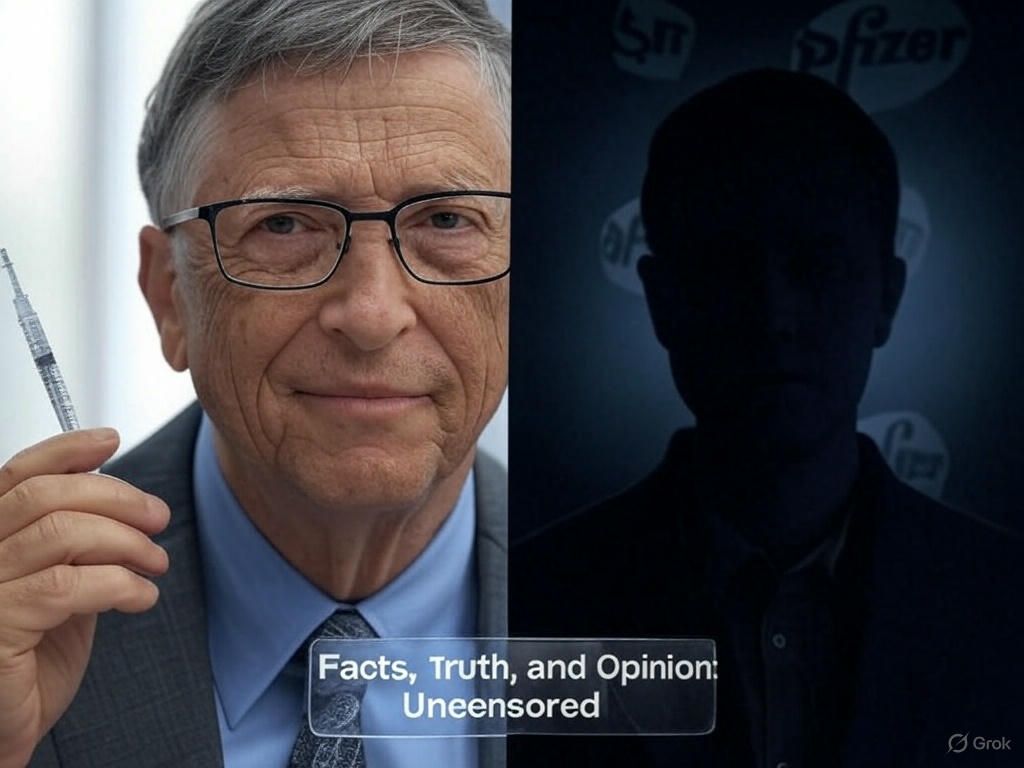
Bill Gates – The central figure, whose dual roles in philanthropy and investment drive the narrative.
Vaccine Funding – The linchpin of the story, spotlighting the Trump administration’s cuts to Gavi and global health programs.
Gavi – The Vaccine Alliance, a key player in Gates’ nonprofit ecosystem, now at risk from U.S. policy shifts.
Philanthropy – The public face of Gates’ work, questioned for its overlap with personal profit motives.
Investment – Gates’ personal financial gains through Cascade, tied to pharma giants like Pfizer and BioNTech.
RFK Jr. – Robert F. Kennedy Jr., whose vaccine insights and HHS role may influence Trump’s decisions against Gates’ interests.
Global Health – The broader stakes, where funding cuts could lead to vaccines supplies to poor countries.
Introduction
In a world where global health teeters on the edge, Bill Gates stands at a crossroads of altruism and profit. On March 26, 2025, the Trump administration slashes U.S. funding for vaccine programs in poor countries—ending $300 million annually to Gavi, the Vaccine Alliance—shaking the foundation of Gates’ global health empire. The New York Times uncovered a 281-page USAID spreadsheet detailing cuts to $76 billion in foreign aid, a decision some link to Robert F. Kennedy Jr.’s influence as Trump’s HHS Secretary, given his critiques of vaccine policy. Gates, whose Bill & Melinda Gates Foundation has funneled over $4 billion into Gavi, warns he can’t bridge the gap alone, yet his personal wealth—bolstered by investments in vaccine giants like Pfizer and BioNTech—paints a contrasting picture. This investigation reveals how Gates’ nonprofit ecosystem drives a machine that, intentionally or not, fattens his bank account, posing the question: is this philanthropy, or a calculated play for self-interest?
The Dual Empire Unveiled
The Gates Foundation’s role in global health is colossal, shaping vaccine markets through Gavi since its $750 million founding pledge in 1999. Gates himself touted a 20-to-1 return on his $10 billion health investment in a 2019 CNBC interview at Davos, claiming it yielded $200 billion in economic benefits. “It’s been $100 billion overall that the world’s put in, our foundation is a bit more than $10 billion,” he said, framing it as a societal win. But behind the nonprofit facade, Gates’ personal investment vehicle, Cascade Investment LLC, has reaped millions from pharma stocks tied to the same ecosystem. His $55 million stake in BioNTech in 2019 ballooned to $550 million by 2021 as COVID-19 vaccines rolled out, a tenfold profit he cashed in on before critiquing mRNA shots’ flaws in 2023. This duality—nonprofit influence amplifying for-profit gains—defines the Gates paradox.
The Trump Cut and RFK Jr.’s Shadow
Trump’s March 2025 decision to axe Gavi funding jolts Gates’ model. The U.S., Gavi’s third-largest donor, could spark a global retreat—European nations like the UK ($2 billion in 2020) might waver. RFK Jr., now HHS Secretary, brings a critical lens to vaccine policy. In a 2023 Joe Rogan interview, he argued, “We’re giving kids too many vaccines—by 18 months, starting day one, with aluminum, mercury, and toxins that can affect brain development.” He’s questioned mandates, not vaccines themselves, suggesting diseases like measles offer stronger immunity than waning shots and can be treated medically. In 2020, Kennedy accused Gates on X of “profiting off pandemics,” a charge echoing in his 2021 book, The Real Anthony Fauci, where he cast Gates as a profiteer in global health. Now, as HHS Secretary, RFK Jr.’s influence is tangible—Trump’s three-hour Mar-a-Lago chat with Gates in late 2024 (Wall Street Journal, January 2025) may have tilted toward Kennedy’s views, especially after his Senate confirmation softened his tone but not his skepticism.
The Foundation’s Market Machine
The Gates Foundation doesn’t just fund vaccines—it shapes the market. Gavi’s $30 billion since 2000, 80% from governments, secures bulk deals with manufacturers like Pfizer, where Gates has held personal stakes via Cascade. In 2009, Pfizer joined Gavi’s Advance Market Commitment, a Gates-backed initiative to supply vaccines to the poorest nations. The Foundation’s $1.6 billion pledge at the 2020 Global Vaccine Summit, plus $150 million for COVAX, exemplifies this leverage. “We’re not doing the work ourselves,” Gates told ABC News in December 2020, emphasizing partnerships. Yet, these deals boost pharma profits—Pfizer’s $26 billion in 2021 vaccine sales dwarfed its $3 billion R&D cost, per WIRED—while Gates’ investments ride the wave.
Personal Profit, Public Good?
Gates’ personal gains are stark. Cascade’s Pfizer holdings grew during the COVID-19 boom, and his BioNTech exit in 2021 netted a massive return. Forbes pegged his net worth at $137 billion in 2021, up from $98 billion in 2019—pharma profits a key driver. The Foundation’s $40 million CureVac stake in 2020, reported by The Nation, soared 400% after its IPO, though it’s unclear if Gates cashed out. Critics on X since 2020 have dubbed this “philanthropy with a profit motive,” a sentiment echoed by James Love of Knowledge Ecology International: “He was the first mover and the most influential mover,” he told Politico in 2022. Gates counters this in a 2025 New Yorker interview, saying, “I give billions to save millions,” inverting RFK Jr.’s attack.
The Global Health Fallout
Trump’s cuts shrink Gavi’s reach, spotlighting a deeper flaw in Gates’ vaccine obsession. UNICEF reports that in 2023, 4.8 million children under five died—13,100 daily—with nearly half, about 2.2 million, linked to undernutrition’s toll on immunity. Gavi’s CEO, Sania Nishtar, warned Fortune in February 2025 that losing $300 million yearly from the U.S. could mean 75 million fewer vaccinations, projecting 1.2 million more deaths over five years. But these models assume vaccines alone save lives, ignoring treatable diseases like measles (128,000 deaths in 2021, WHO) in places like Somalia, with 1 doctor per 10,000 people (UNICEF). Starvation, not just disease, is the killer—malnutrition drives 45% of under-five deaths (UNICEF), weakening kids against infections. Why not feed them instead? A 2020 Lancet study valued Gavi’s impact at 1.5 million lives saved, but $4 billion in food aid could cut hunger’s 3.1 million annual child deaths (UNICEF), sidelining Gates’ pharma profits for a real fix.
The RFK Jr. Wildcard
RFK Jr.’s HHS role could reshape the game. In a 2021 Children’s Health Defense podcast, he said, “Vaccine makers don’t do long-term, double-blind placebo studies—vaccinated versus unvaccinated—to spot side effects worse than the disease.” He’s slammed the 1986 National Childhood Vaccine Injury Act for shielding manufacturers from liability, arguing on X in 2022, “They’re not responsible for deaths or harm.” Scientific American noted on March 18, 2025, NIH staff scrubbed mRNA from grants under pressure—a nod to Kennedy’s sway. Gates told NPR in February 2025, “I don’t think he’ll do anything precipitous,” betting on dialogue, but RFK Jr.’s focus on accountability could stall Gates’ mRNA legacy.
The Philanthropist’s Dilemma
Gates’ model thrives on a potent synergy: Foundation funds de-risk vaccine development, governments amplify scale, and his investments profit. His 2019 Davos claim of a $200 billion return—touted as a 20-to-1 economic impact, per Copenhagen Consensus—wasn’t cash in his pocket, but the optics sting. “He’s elevated the pharmaceutical industry,” James Love told Politico in 2022, pointing to Gates’ push to lock Oxford’s vaccine with AstraZeneca over an open license, backed by his $384 million via CEPI (Bloomberg). This clout underscores a critique: his system privatizes gains—Pfizer’s billions—while socializing risks through taxpayers’ R&D subsidies.
Where Next for Gates?
With Gavi reeling, Gates faces a fork. He could double down on private funding—his $15 billion endowment boost in 2021 shows he can—or shift Cascade’s focus. Health tech, like mRNA beyond vaccines, or climate ventures could replace pharma bets. “We’ll look to the U.S. commitment to maintain generosity,” he told NPR in February 2025, eyeing Gavi’s spring fundraising. But RFK Jr.’s shadow and Trump’s cuts may force a retreat from global health dominance, testing Gates’ adaptability.
The Bigger Picture
This isn’t just about Gates—it’s about who controls global health. His Foundation’s $1.75 billion COVID response by 2020, per ABC News, dwarfed many nations’ efforts. Yet, transparency lags—SEC filings hint at pharma ties, but details are murky. “There’s a flaw in global health,” a German official told Politico in 2022, “these philanthropists are needed, but some things don’t work.” Gates’ dual role—savior and profiteer—sparks debate: is he a visionary leveraging wealth for good, or a monopolist extending Microsoft’s playbook to humanity’s survival?
Conclusion
As Trump’s cuts land and RFK Jr. critiques, Gates’ vaccine empire wavers. His Foundation’s billions have fueled Gavi’s global reach, but personal profits from the same system blur charity and self-interest. Gavi claims 19 million lives saved, yet no conclusive, independent study—comparing vaccinated versus unvaccinated populations over decades—backs this boast; it’s a model, not a fact. Meanwhile, UNICEF’s 2023 data reveals 4.8 million under-five deaths, with 2.2 million tied to malnutrition—a root cause vaccines sidestep. Nutrition, not needles, could fortify immunity naturally, slashing hunger’s 3.1 million annual toll (UNICEF) without padding pharma coffers. The world watches: will Gates adapt, or will his paradox collapse? “This will be seared in this generation’s memory,” he told ABC News in 2020. Five years on, it’s his legacy—noble, flawed, or both—that’s etched into ours, with nutrition begging the louder question: why vaccinate when we could nourish?
Gates, CNBC, January 23, 2019.Gates, ABC News, December 2020.Gates, NPR, February 2025.Gates, Reuters, March 18, 2025.Gates, New Yorker, 2025.RFK Jr., Joe Rogan interview, 2023.RFK Jr., Children’s Health Defense podcast, 2021.RFK Jr., X post, 2020 & 2022.James Love, Politico, 2022.German official, Politico, 2022.
A Soaring Tribute to Freedom and Faith: A Review of A Prayer on Wings
By Akashma News
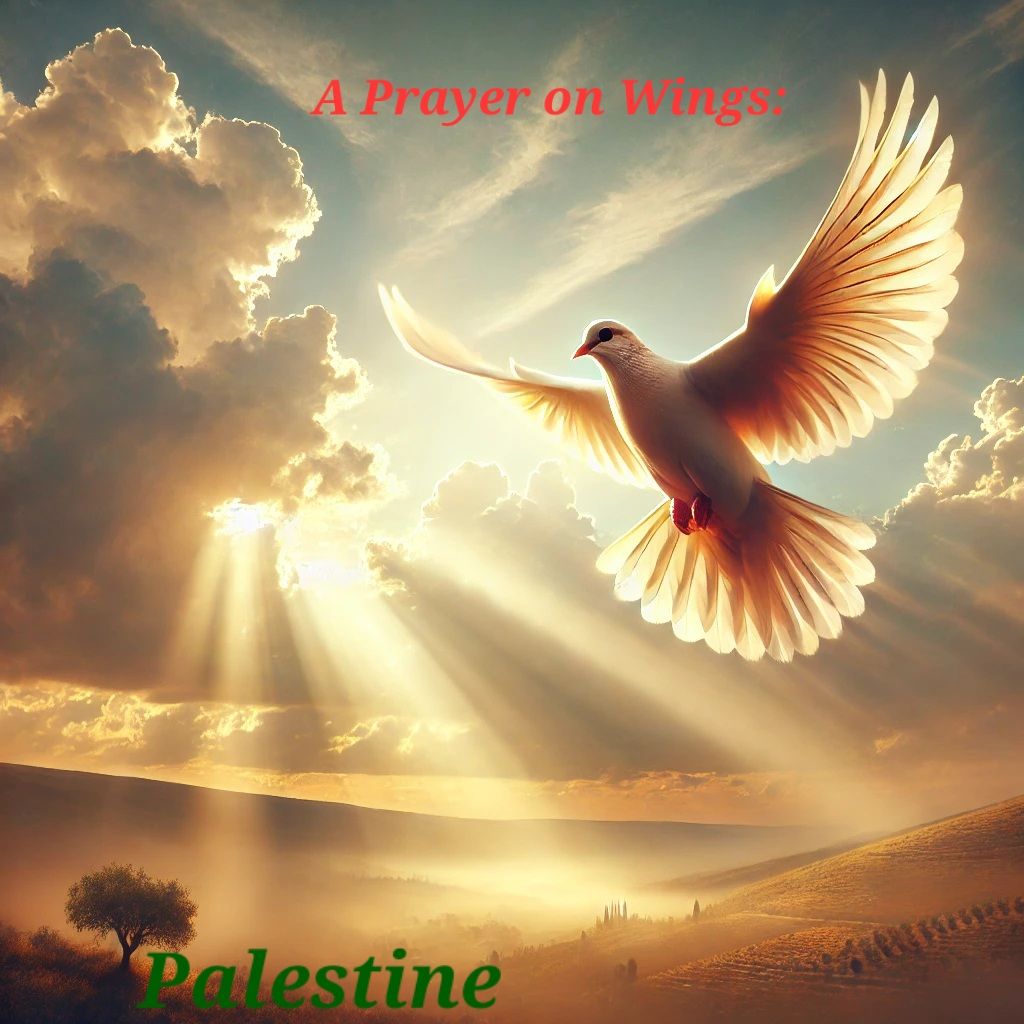
“A Prayer On Wings: A Poem Of Palestinian return
A bird
Soaring the skies
Wings beating
Bringing blessings
As it embraces the air
A messenger of hope
And symbol of peace rare
The sound of silence
Resonating
Within those who dare
To have upturned eyes
To the heavens
To witness
Where
A solitary creation
Of Allah
In His might
Has been given
The gift of flight
Thus, we stand in awe
In Allah’s Light
And take flight
Towards
The magnificence
Of
Allah’s Light
All praise to Allah
As He foresees
Human plight
And acknowledges
The flight
Of freedom
Given
And ordained
By the King of Heaven”
Poem by Khaled Alhajahmed
Khaled’s A Prayer on Wings: A Poem of Palestinian Return is a poignant and deeply spiritual meditation on freedom, resilience, and divine grace. Through the imagery of a bird soaring in the sky, the poet crafts a powerful symbol of hope, peace, and the longing for return—a sentiment that resonates profoundly with the Palestinian experience.
The bird, “a solitary creation of Allah,” is more than just a creature of flight; it becomes a messenger, a vessel carrying prayers, dreams, and the unyielding spirit of a people yearning for liberation. Khaled masterfully intertwines themes of faith and struggle, reminding us that true freedom is both a physical and spiritual journey—one ordained and guided by the Almighty.
The poem’s rhythm mirrors the gentle yet purposeful beating of wings, reinforcing the sense of movement, aspiration, and ascension. Lines like “Thus, we stand in awe / In Allah’s Light / And take flight” evoke a sense of reverence, urging readers to look beyond the hardships of the earthly realm and toward the divine.
Opinion: The Blogosphere’s Rise as a Voice for the Unfiltered Truth
Posted on August, 2011
by Marivel Guzman
Blogs emerged as a revolutionary medium, empowering individuals to disseminate information independently across the globe. Initially, these digital diaries allowed writers to share unfiltered thoughts, free from the constraints of traditional media gatekeepers. Platforms like Open Diary, launched in 1998, democratized content creation, enabling anyone with internet access to voice their opinions.
The term “blog,” a contraction of “weblog,” was coined in the late 1990s, reflecting the medium’s evolution from personal online journals to influential platforms shaping public discourse. Early bloggers, such as Jorn Barger with his “Robot Wisdom” weblog, curated links and commentary, setting the stage for the diverse blogosphere we know today.
Frustrated by editorial constraints, many columnists turned to blogging to preserve the authenticity of their voices. This shift allowed them to present unvarnished narratives, free from the red pens of editors influenced by corporate or political affiliations. The rise of platforms like Blogger in 1999 further simplified the process, leading to an explosion of personal and professional blogs.
I founded Akashma Online News in 2007, driven by the same desire to break free from editorial suppression and provide readers with in-depth, independent analysis. What started as a platform for research and investigation has evolved into a space where truth is prioritized over corporate narratives. Like other independent outlets, Akashma has become part of the broader movement redefining how information reaches the public.
Bloggers offer fresh perspectives, often filling gaps left by mainstream media. During significant events, such as the 2004 U.S. presidential election, blogs played a pivotal role in shaping public opinion and providing real-time analysis. This period marked the ascent of the blogosphere as a formidable force in journalism.
Platforms like The Huffington Post, Opinion-Maker.org, and Akashma Online News exemplify the fusion of traditional journalism and blogging. By blending news reporting with opinion pieces, these platforms redefine media consumption in the digital age.
In essence, blogging has democratized information dissemination, allowing diverse voices to contribute to global conversations. This evolution underscores the public’s appetite for unfiltered, authentic narratives, challenging traditional media to adapt and evolve.
Social media is a public space
May 06, 2019
By Akashma News
Fellow journalists, we must raise our voices against the actions of tech giants such as Facebook, Google, and Twitter. Their recent measures pose significant threats to free speech, amounting to censorship and potential violations of First Amendment rights.
In May 2019, Facebook banned several high-profile individuals, including Alex Jones and Louis Farrakhan, labeling them as “dangerous individuals.” This action raises concerns about the platform’s role in determining what content users can access, read, or share. As journalists, we must question whether these companies are qualified to dictate the information we consume.
The voices being silenced have the right to be heard, and the public has the right to form their own opinions on matters of interest. These tech companies operate primarily through the internet, a space that should be protected as a public forum.
The U.S. Supreme Court addressed this issue in the landmark case of Packingham v. North Carolina in 2017. The Court ruled that access to social media is a constitutional right, stating that cyberspace is “one of the most important places to exchange views.” This decision underscores the importance of protecting free speech in the digital age.
Public space in the digital era lacks physical form, but its significance in discourse is undeniable. The Supreme Court’s ruling emphasizes that states cannot broadly limit access to social media, reinforcing the idea that these platforms are integral to modern communication.
As journalists, we have a responsibility to hold these companies accountable. We must advocate for transparency and challenge any actions that infringe upon free speech. It is crucial to ensure that these platforms do not become arbiters of truth, controlling the flow of information and stifling diverse perspectives.
In conclusion, the actions of Facebook, Google, and Twitter warrant scrutiny. We must remain vigilant in defending free speech and ensure that the digital public square remains a place for open and diverse discourse.
The BDS Controversy! The Movement that Can Change History
Posted on April 29, 2012
Whose Cause: Gilad Atzmon, Norman Finkelstein, Ali Abunimah, Omar Barghouti or Palestine?
The BDS Controversy: What Does It Mean to Be a Pro-Palestinian Activist?
Being a pro-Palestinian activist does not necessarily mean you wish for the State of Israel to be wiped off the map, nor does it imply agreement with either the two-state or one-state solution. For some pro-Palestinians, their stance has been rooted from the beginning in the principles of human rights and international law.
The international community of peace activists has been actively boycotting Israeli products, goods, and services, including through academic boycotts. However, some segments of the solidarity movement participate only if the products are exported from settlements within the occupied territories, specifically those in the West Bank and East Jerusalem.
There is no consensus on the BDS movement and there is not a Universal Strategic of how to support Palestine following the BDS Movement, because the BDS movement has many branches, many goals, millions of supporters, and everyone has it own idea of what they try to achieve, but something is really clear in the minds of many, when they think Boycotts and Disinvestment Sanctions one thought cross in their minds “South Africa Apartheid System”, and many will follow the campaign thinking on how to stop the State of Israel from halting their Apartheid practices.
Israeli citizens living in Israel who support the BDS Movement do so primarily to encourage the country to comply with international law and respect the rights of Palestinians in the occupied territories. However, they often avoid discussions about the two-state solution, focusing instead on achieving peace within Israel. They believe that respecting Palestinian rights is essential to stopping the violence. Conversely, other activists argue that purchasing Israeli products equates to supporting actions that harm Palestinians. They aim to boycott all products made in Israel, as well as companies known to have ties with Israel, believing that this will weaken the financial foundation supporting the state. They feel a moral obligation to support the BDS campaign and derive satisfaction from their efforts.
What ever is the goal of the participants on the BDS movement, I personally think that it is a Moral duty to every citizen of the world to support the BDS movement, which by this time it is not an exclusive movement of Omar Barghouti even thought he is one of the founders, but by no means he owns the movement, the BDS movement has taken global proportions and we all are participants and important integral part of this movement, and regardless of the opinion that some people have of Omar Barghouti , that won’t take away the value of the BDS Campaign.
The BDS have reached the world, is not only the idea that this movement can cripple Israel economy, but also is tarnishing the image that Israel gives to the world, every time some company comes public in its support for the BDS Movement and severes its economical ties with Israel, there is an article written about it, there is also a contra propaganda and more is known about Israel Apartheid System.
We can not discount the achievements of this movement only because some people say so. What took more than 20 years in South Africa for its BDS movement to be known around the world and to start to have the moral effect in the conscience of the people, have taken only 5 or 6 years in the Palestinians BDS campaign to be known and to feel the effects.
By this time the BDS have taken life of its own, the ideology of the founders or their political aspirations have nothing to do with BDS anymore.
There is no office at this point that can control or organize what people around the world do to support Palestine, so the rhetorical question of the Two State Solution that some want to use against the founders of the movement or against the movement can not undermine the global support for Palestine that this movement is awakening in the people of conscience.
“Boycott – basically its a tool of the weak, who individually are weak but collectively can have some strength against overweening power. The first use of the word was a combination of tenant farmers in Ireland against their land agent, famous cases are the Montgomery Bus boycott and little more recently the sporting boycott and other boycotts against South Africa.
There are difference between all these boycotts, and I would stress that by taking the archetypal case of that of the tenant farmers who resisted the land agent Charles Boycott, who gave his name to the whole process, in the 1880s in Ireland. Boycott was the land agent for an absentee English noble. And what they did, when he became too domineering, is they denied him labour to save the harvest, they put him into isolation – refused to talk to him under any circumstances, they shops wouldn’t serve him, the workers wouldn’t go and look after his house for him, and the person wouldn’t deliver him letters. And in reasonably short order, by the end of the year Boycott had been forced out and returned to England. So very direct.” Professor Jonathan Rosenhead, Novemeber 11, 2011
When important people, and I mean important by intellectuals, writers , Emeritus Professors, Nobel Prize laureates, famous politicians, International Acclaimed Activists speak on a issue, we all think and feel that our support for such issue it is validated and at the same time, if those same people speak against that issue that we support, we feel betrayed, we get mad at those people, we look for answers, we start doubting our own standing, in that moment we become followers and not thinkers. If we have already adopted a position on certain issues become we felt it it was right.
In the case of the BDS movement, it can not be accepted as a universal doctrine that fits all necessities, it is not a movement that seeks the liberation of Palestine, because it is not at its CORE, this movement started only to satisfy 3 main points:
1. Rights of refugees
2. Equally for Arabs in Israel
3. End of the occupation
The three points if, satisfy will satisfy International Law as well, ….now!
The Movement itself have evolved, the ideas have evolved as well, and by natural effect, the goals have changed, at least for some.
For Pro-Palestinians that seek the liberation of Palestine, it is not enough to satisfy the 3 points, because if they do it inside the context from where it was drafted it will legalized Israel, and a lots of people; Palestinians and no Palestinians that see the partition of Palestine as Illegal and infair will never accept Israel.
No one it is debating the two state solution or the one state solution inside the original founders movement, even if they do not accept Israel they see it as a beginning for a more broad movement, and to a better outcome, perhaps they know that eventually Israel will dissipate, because they see the Palestinians population growth as the best tool to defeat Israel.
On his Interview with Frank Baratta a well known Human Rights Activist, on February 9, 2012 in the Imperial college London, he said astonishing statements that left us all surprised and wondering what got into him.
Norm Finkelstein is now famous for repeating The is Clear, and he shield his views on BDS charging that Israel it is a State and that it is the law, but sadly he forget how Israel had disregard the law thousands of times when it comes to respect the life and property of Native Palestinians.
“When the law is criminal, you must break it to be human.” – FendLOTRO youtube user
The controversy arises stronger when Professor Finkelstein bashed the BDS movement as a Cult, I heard his argument and he does not meant the

literal definition of a Cult but what he argues is the centralized idea that forcing Israel to comply with the 3 points of the BDS movement will literally destroy Israel, he goes on to say that he will support the BDS movement if the organizers will honestly speak on their goals, because he senses that they are not being genuine on their goals. Ali Abu Nimah has been a harsh critic of Prof Frankenstein and have started a huge campaign of dis information and lots of people have fallen into the rhetoric without even listening to the words of Finkelstein.
“I support the BDS, but I said that it will never reach a broad public, until and unless they’re explicit on their goal, and their goal has to include recognition of Israel, or it is not starter. It won’t reach the public, because the moment it goes out there, Israel will start to say, what about us? and they won’t recognize our right, and it fact that is correct, you can’t answer the Israelies on that, because they are making a statement that it is factually correct.
Is not an accident and unwitting omition that BDS does not mention Israel….you know that and I know that…is not that OH! we forgot to mention Israel!” Professor Norman Finkelstein
I highly respect the point of view of these personalities and their approach to the Palestinian-Israeli conflict because each of them have worked tirelessly for the Palestinian Cause, but all of them have their own goals, and because their goals differ in nature, their arguments also differ.
We all can be Peace Activists and be Pro Palestinians and not have an opinion on the Two State Solution, or one State Solution that has the center point for Ali Abu Minah when he criticizes Prof Norm Finkelstein, he fails to acknowledge that Professor Finkelstein position it is only on the legality or illegality of Israel Actions on the occupied territories, or the idea that the BDS Movement aim it is to destroy Israel.
It will be unfair to give credit or take credit away from the words of any of them over the others without first analyzing their background, their Profession, their nationality and what they are looking for when they state a position in public forums. Every Argument is defended with a goal in mind.
What Professor Finkelsteing is looking for defending or un defending Palestine and/or Israel?- Obviously he is selling his image as a writer/scientist political activist to sell his books, off course his integrity is at stake and he is taking an enormous professional risk when he bash Israel, and we give him credit for his courage and audacity no question about it, but also we must read between the lines. He has been a Pro Peace activist for years and he chose to stand beside the Palestinian cause, because it was a moral duty, he is defending the Truth, he is defending Justice, as he wants to say, he sides with the Law.
When Professor comes to any forum, people always expect that he defend the rights of Palestinians, because if he is on the side of the law as he says he is, he has to acknowledge that going back to the time when Israel was discussed on the League of Nations now United Nations, and when the few countries that voted to partition Palestine to create Israel, they did it on the basis that the rights of the Inhabitants of the Land, in this case Palestinians Muslims and Palestinians Christians would not be violated, that The Right of Return will be respected and that Jerusalem which hold the 3 major religions will be under the United Nations Mandate, so everything that Israel is now, it is Illegal.
As he says, “The Law it’s Clear, we can not be selective with the Law” Norman Finkelsteing
If the United Nations it is an International Body with legal binding to Create out of nowhere a State, as it did in 1948, then “It is the Law”, and should be respected, so why then!, when it comes to Palestine, the Law it is selective, and all the resolutions are not considered binding and are not enforced, and when Palestinians speak in a way to enforced the law, to bring Israel to comply with the law, not violently as it is the BDS Movement Professor Norman Frankenstein consider these Palestinians dishonest?
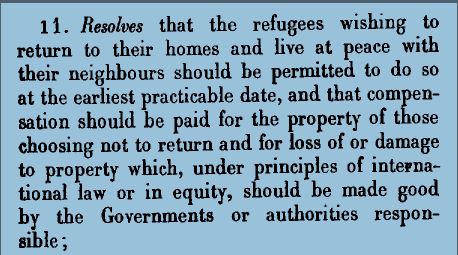
I add two screen shots of the original document of the United Nations – Resolution 194-8 and 194-11

All things being Equal, The truth will prevail. When given a fair chance, the truth should survive, because it is more natural, more attractive, and less contrived than falsehood. In a democracy, certain rights are inalienable, so that all men are equal before the law, on that assumption we must pressure Israel to abide by it’s own propagated idea that being “The only democracy in the Middle East” must abide by the law, the basic principle in a Democracy, so defending the Truth we will reach a conclusion.
I think where the Anti BDS propaganda is coming from..Ali Abu Nimah, Gilad Atzmon, Omar Barghouti and Norm Finkelstein..All of them being persons of weight in the media have expressed an opinion which have been taken out of context and have exponentially get out of control.

“Gilad Atzmon: “For more than a while, myself and others are very suspicious of the BDS. For some peculiar reason the BDS in the West is dominated by Jewish activists. Though the BDS’ principle is valid and worth a fight, it has become clear to many of us that something went wrong along the way. Last month we have seen BDS calls to stop Norman Finkelstein; this month we see BDS calls to stop me. Great, isn’t it. The BDS is now used to stifle freedom within the solidarity discourse.”
I m not blaming Gilad Atzmon for the anti BDS sentiment that is moving around, I m quoting his words that probably started the whole anti movement, added to the controversial interview of Norman Finkelstein and Ali Abu Nimah all added fire to the already heated debated on BDS.
I think he found the roots for the anti contra propaganda BDS movement. The people pushing harder on the surface the BDS movement are hijacking the movement and on the way, trying to silence the dissidents Jews as Gilad ATzmon and Norman Finkelstein because they are taking center stage in the Palestine Justice Movement and many people went along with the line pushed by a anonymous groups, that seems to operate as a behind the scene elements, type of spy rigs planting “thoughts” that are hurting the BDS movement. which is basically doing exactly what the Jews economic global boycott of Germany Goods did in Germany to weaken Hitler economical power during the second world world, and in South Africa during the horrible Apartheid Era.
I completely agree with Gilad Atzmon in its criticism of certain groups that are working within the BDS movement to silence him or other Jews dissidents, but I do not agree the wave of anti BDS sentiment that his words have created, and sadly I have seen good friends and Pro Palestinians activists writing against BDS. This is a movement that belongs to Palestine where millions of people are taking part of it, it is not exclusive of one or two people. The ones speaking against the BDS Campaign are doing great damage to Palestine.
“For more than ten years I have been writing about Israel, Zionism and Jewish identity. I am engaged in a process of deconstruction and critique of different Jewish texts, ideas, politics and practice. My intent is aiming towards some deeper realisation of what Zionism is. In my opinion, Zionism is one of the most dangerous political movements. It is a global operation that threatens world peace on a daily basis.” Gilad Atzmon
WHAT IS BDS?
In 2005, Palestinian civil society issued a call for a campaign of boycotts, divestment and sanctions (BDS) against Israel until it complies with international law and Palestinian rights. A truly global movement against Israeli Apartheid is rapidly emerging in response to this call. Boycott and Disinvestment Sanctions
The BDS movement it is not property of few persons, this it is a global campaign of awareness, to pressure Israel to end her apartheid practices inside the Occupied Territories, and to force Israel to respect the Human Rights of Palestinians that live in West Jerusalem, Gaza and West Bank.
“Boycott is a real complicated issue. For years we’ve been arguing in favour of divestment and boycott. At the time I supported any form of boycott in Israel, its products and its culture.
There are some elements in the boycott that are obviously very welcome. For instance, the fact that UK unions are standing up against Zionist evil is a major shift in the very right direction. The Boycott is certainly bad news for Israel and this is wonderful news in itself. Yesterday, I went to a reading of a play, it was actually a theatrical adaptation my latest book. The producer is Jewish, and at a certain stage when we were discussing the meaning of the play he stood up and said. “You see, we had a Jewish State, it is now sixty years later, and it is a very horrible place, it is so horrible that it has now been boycotted. And this is there to make us think, where did it go wrong?” This is the most positive impact of the boycott. It makes people reflect.” Gilad Atzmon July 2007
When Gilad Atzmon refer to Jewish, you have to understand his philosophy and point of view regarding the Modern Jewish in Israel and their mentality of chosen ones..Mentality that it is more and more intrinsic, by the Jewish Only Political Spectrum in Israel, and the tremendous power of Jewish Lobbys groups around the world..
Let’s not to confuse Israel Jewish Only Policies and Jewish as a religious person. I think we have to start using more the term, Judaism to separate the Jewish people ideology such the ones that support Israel Only Jewish policies and the Real Religious Person such Neturei Karta Ortodox Jews. ..
Recently a group of Intellectuals, and Pro Palestinians endorsed Ali Abu Minah in their letter against Gilad Atzmon. I think that some people are using the spot light of others to become center piece in the Palestinian Movement..
There are thousands of Pro Palestinians individuals that have worked very hard for the cause of Palestine, investing their time and sometimes their money without even thinking twice. And also there are Thousands of Pro Palestinians Individual that have make their job the Palestinian cause, they also have invested their time for the Palestinian cause, but they have become so active and busy that they have dedicated their life to Palestine and they have to make money to support themselves using various ways to do it..like private donations, or setting up Non Profit Organizations where the structure is similar to the official NGO’s that participate in charities but only do it to deduct taxes.
Now there is a special group of Individual that have become on the surface Pro Palestinians, not because they love Palestine, but because they fight Injustice.
I don’t think Gilad Atzmon or Prof Norman Finkelstein want the State of Israel to be wiped out of the map, NO! but they want that Israel behave as a democratic State that work inside the parameters of International law, that stop behaving as a Racist, Antisemitic State that promote anti tolerance, hate and disregard International Law.
Professor Norman Finkelstein to be in this category, he arguments that Israel violates International Law, War Rules and Universal Rights Statutes, specially when he speaks of Israel crimes in Gaza and he is very critical of individuals that defend Israel No matter what, like Prof Horowitz..
He engage in discussions with Pro Israelis personalities with Facts and the Law in his side. Well he thinks he is using the Law, but he end up contradicting himself in many occasion.
On February 2012 a video clip was released on youtube on an interview titled
Arguing the BDS Movement:Interview with Frank Barata and Political Scientist, writer and activist Norman Finkelstein Enforce the Law, it’s unambigual, uncomplicated. The law is clear, the settlements are illegal, the East of Jerusalem it’s occupied territory,the West Bank and Gaza are occupied territories, but there is also correct that Israel it’s a State, and that it’s the law.
He goes on to says that if we want to use the law as a weapon, as a tool to reach public opinion, we can not be selective with the law.
He calls the “So call Palestinian Authority” corrupt, he does not give any credit to the efforts of the PA behind doors peace talks that they conduct, he says that the endless bargain-type of negotiations that are going nowhere, Prof Finkelstein calls the PA corrupt and puts as example Mubarack from Egypt that was forced to step down when the Egyptian people raised against him, and underneath of all his words, he also says that the PA is a collaborator of Israel, well not exactly this words but the way that the PA have kept itself in power delivering nothing to the Palestinians but empty promises, and at the same time trying to be equal partner with Israel it seems that they are collaborating with Israel, which in facts is what they are doing, after Abbas become President, the relation changed drastically for Palestinians, the collaboration between the PA and Israel become like a cozy relationship, where the PA is serving the interest of Israel when arrest and criminalize Palestinians that protest against the occupation, all the money that comes from US Aid come with a price tag attached.
Prof Finkelstein is clearly saying that Palestine will never win this conflict with Israel because it will need to be extracted by force, in this case military force using the People of Palestine, the only weapon Palestine has, and it is almost unimaginable that Israel will give one inch to Palestine as the situation continues the way is now.
We do not need to be experts military strategists to see the future of Palestine, Israel is one of the most powerful armies of the word that possess the most technologically advance weaponry, and in top of everything, it has the full support of the armies of the world if she will ever needs them, US gives more than 3 billions dollars in Military Aid, and Loan Guarantees so, what it is the prospect that Palestine ever going to win this almost one side war?, if we can call it a war.
Norm Finkelstein position on this conflict is strictly judicial and in the frame of International Law, which he clearly mention over and over again, but at the same time he will emphasized Palestinian mistakes when they act outside the law, according to Prof Finkelstein The BDS Movements are speaking publicly about enforcing the law but the arguments they use are not enforceable inside the frames of International law because it is not practical in the ground, even thought it is “ideologically possible” and almost as a fantasy, the three points that BDS preach does not include Israel, it fact, if it will ever become a reality it will eliminate Israel from the Map because bringing 6 or 7 millions Palestinians Refugees to Israel this population will swallow the Israeli population, and with the other two points, of equal rights for Arabs inside Israel they will eventually
will control politically Israel a panorama envisioned by the BDS movement but according to Prof Finkelstein it is dishonest and will never achieve its goals.
Everything that Professor argue it is truth, but he never speaks of the other side, the disenfranchised Palestinian Population that was displaced from Palestine when Israel was forced upon them, he takes a comfort position talking on 1967 borders that are supposedly the legal borders of Israel, as if Israel has respected those borders. He does not argue the legality of the State of Israel being inserted in the heart of the middle east.
Professor Finkelstein does not argue in this interview with Frank Barat,- the plight of the Palestinians that become refugees in neighborhood countries, where they are not accepted as a citizens. All his arguments would be valid only if Israel has respected the UN resolutions that were signed, but Israel has not respected not even one resolution, so Israel loses legality and credibility in the International community, so The DBS Movements with its three pillars it can be possible and eventually will be possible because the International Community, meaning All the world it is tired of the arrogance of Israel, it is tired of the impunity of Israel. Soon or later Israel will follow the faith of South Africa Apartheid System.
The second argument of Professor Finkelstein is related to the Right of Return of Palestinians Refugees, if he wants to be Fair and Just, he needs to Remember that on November 27, 1948 Resolutions Adopted by the General Assembly at its 3rd Sessions they agreed on these very important issues, (Illustration 1 and 2) and as he says “that’s the law” and should be taken in consideration when he take his position. The facts in the ground are clear, Israel was created by the will of some powerful individuals, they did not ask the Palestinians if they wanted to share their homeland.
After Palestine was partitioned every one have being asking patient, restrain and sacrifice only to Palestinians, they are the only ones in this conflict that are being asked to follow International Law. Don’t they deserve consideration? after all they are the victims. The Law is Clear, and as we see it is Unfair, and Unjust.
Gilad Atzmon it’s very critical of the Jewish Ideology, he insist and with reason, that the State of Israel have instilled the choosiness and exclusivity in the minds of Jews inside Israel for convenience to advance her colonial rule in Palestine.
The detractors of Gilad Atzmon are working hard to undo the work that he has done in behalf of Palestine.
They are using the wrong arguments for the wrong reasons for the Right Cause, that it is Palestine.
But some people get entangle in the mix of criticism, some are Genuine Pro Palestinians Mislead by the well oiled Pro Israeli groups propaganda that trying to destroy the carer of Gilad Atzmon because he become “Too Famous” with his books and with his Endeavor for Palestine.
They are bashing his work in an attempt to stop him from going more vocal in favor of Palestine, but their attempts to destroy him are making him more famous, so famous that also my conspirator mind take me for scabrous laberyntos of distrust, thinking sometimes that “What about” if he created all this to push his books, do not blame me, I have the same though of Prof Norman Finkelstein, do not forget that propaganda works both ways.
I know by his work that he is Pro Justice, Pro Peace and on that instance supporter of the Palestine Cause.
“For me to be Jewish is, above all, to be preoccupied with overcoming injustice and thirsting for justice in the world, and that means being respectful toward other peoples regardless of their nationality or religion, and empathetic in the face of human suffering whoever and wherever victimization is encountered” (Gilad Atzmon, “On Jewish Identity,” 1/15/2011).
If this great Anti BDS Campaign happen to be a stunt propaganda for sell books, we can be very disappointed, but that Pro Palestinians take the bite and start going along with the propaganda, …that it is irreproachable, irresponsible and signs of poor judgement from part of the Palestinian Solidarity Movement.
I recently I heard some statements against the BDS movement asserting that they have not worked, and that on the contrary that Israel was more economically solvent than ever. Farther from the truth, the economical melt down is a global phenomenon, and for Israel added to the BDS campaign and US Campaign for the Academic and Cultural Boycott of Israel the situation it is difficult from the political implications of its unpopular policies and laws against Palestinians Christian and Palestinians Muslims alike, and the economical collapse could be closer than they think.
There were dozens of Protests in Israel, the occupy movement have reached the Neo Holy Land also. Israel as a State have invested most of (its)money in weapons that only make rich a few individuals, the unrest in Israel it is well known. There is no magical wand that can exclude the Jews in Israel from the global natural and unavoidable evolution of our world, the thoughts have evolved creating mass consciousnesses of social awakening, and economical inequality is the first sign spotted by the ordinary citizen, and segregation by policy it is seen, and felt in Israel by the blocks of population that comprise the newly acquire homeland.

To open up the discussion on Omar Barghouti “hypocritical position on academic boycott”, as some have called it, while he is doing his PHD in a “Israeli University”, well a question was asked On 7th March 2011 in the London Review Bookshop that hosted the launch of Omar Barghouti‘s book “BDS: Boycott, Divestment, Sanctions – The Global Struggle for Palestinian Rights”..And I have to agree with the staff writer of Inminds.com, that very candidly says his impression on Omar Barghouti.
“Omar Barghouti‘s approach is always very rational which means that unless someone is being dishonest with themselves they will have no choice but to accept the arguments Omar Barghouti puts forward in support of BDS. A great example of this was his reply to a Question from the audience:” Inminds.com
Audience Question: Omar, you are living in Israel, you are doing a PhD, you are studying in an Israeli university. How does that equate with your boycott campaign, isn’t that hypocritical to live in Israel and consume everything Israeli, then call for a boycott of Israel?
And secondly, if God forbid, you ever needed a life saving medicine, or a member of your family.. in Israel, would you accept that medicine or would you reject that life saving medicine?
Omar Barghouti: I think Mandela went to an apartheid university, when you are living under apartheid you have no choice. You pay taxes to the apartheid regime, you accept services from the apartheid regime, how else can you survive? You go to hospitals, you go to universities, you go to the post office, you go to government offices in the apartheid regime. You are a ‘subject’ of that colonial system, there is no other way. Gandhi studied at a British university as well.
The point is that when you are under occupation, when you are under apartheid, no have no moral choice. There is no choice. We ask people from outside to boycott because they have a moral choice. Responsibility comes with choice.
Germans under Nazi rule who couldn’t open their mouths were cowards but we can perhaps forgive them for not opening their mouths when you think you would be shot by the Nazi genocidal regime if they opened their mouths. Israelis that stay silent are far more cowardly because they do have a choice and they wont get shot if they stand up against the occupation. So we measure this with how much choice you have. When you have no choice what do you do?
So there is absolutely no double standard for people under oppression to call on people who are not under oppression, standing in solidarity with them, to oppose and boycott completely the oppressive regime. What we cannot do, you can do in the UK.
The second part of your question.. of course we do not boycott Israeli medicines in Israel. What else can we buy? We are not irrational. I don’t know your view of the Arabs.. but you know we are not suicidal..
A Q. [interrupts]: Why do you live there if you don’t like it there?
Omar Barghouti: Its my country, I’m a Palestinian.
A Q: You were brought up in Egypt
Omar Barghouti: I’m a refugee. Refugee’s have a right to go home. I’m a Palestinian.
“the two-state solution, besides having passed its expiry date, it was never a moral solution to start with. In the best-case scenario, if UN resolution 242 were meticulously implemented, it would have addressed most of the legitimate rights of less than a third of the Palestinian people over less than a fifth of their ancestral land. More than two thirds of the Palestinians, refugees plus the Palestinian citizens of Israel, have been dubiously and shortsightedly expunged out of the definition of the Palestinians. Such exclusion can only guarantee the perpetuation of conflict.” Omar Barghouti December 14, 2003 Counter Punch
JustFaith is a 30 week program of prayer, study and action for justice based on Catholic social teaching. Participants learn about civil rights, peace and justice efforts and the nonviolence of Jesus. They examine how their purchases and investments might further unjust systems.
Their formation has included “Journey To Justice,” a retreat organized by the Office of Life, Justice and Peace of the Archdiocese of Portland.
Now what Omar Barghouti the Co-founder of BDS Movement is saying these days about the Anti BDS Campaign?
We know of Israel To judge a Book by its cover it’s never been the best way to find its content, to argue about the real content of a book, using as argument the picking pieces from the Internet and/or opinions of others, it is in-genuine, and show luck of judgment.
If Israel doesn’t want to obey international law then why should Israel be recognized as a legitimate state? Israel can’t have it both ways
Why We should Boycott ISRAEL..Not because Omar Barghouti says so, Not because Norman Finkelstein says is a cult, and UN have not recognized The Word Apartheid, we boyccott not because Ali Abuminah does not like Gilad Atmoz and call him Anti-Semite, or because Gilad Atmoz do not like Omar Barghouti and calls him Racist, or because key activists started Contra Propaganda against BDS and against Key Pro Palestinians. We don’t follow negative propaganda and empty words that create controversy and sell book.
No! All that is dirty Politics, all the running around against each other and attacking Pro Palestinians it is falling in the same tactics that Israel uses to divide and conquer.
No! we are not sheep, we are critical thinkers, we are the..Conscience Objectors of Israel Apartheid Regime that are taking part in the global boycott movement, we are doing it for PALESTINE ONLY FOR PALESTINE..
TO RESTORE THEIR RIGHTS, TO HELP THEM TO BE HEARD BY THE WORLD THAT FOR YEARS WAS SILENCE.
DO YOU KNOW THAT PALESTINE WILL BE SELF SUFFICIENT IS ISRAEL STOP STEALING PALESTINIANS NATURAL RESOURCES.
PALESTINE WILL BE RICH IF LEFT USE ITS MINERALS IN THE DEAD SEA,
IF LET EXPLOIT ITS NATURAL GAS IN GAZA SHORES,ISRAEL STOP UPROOTING ANCIENT OLIVE TREES..
IF ISRAEL REMOVE THE PHYSICAL WALL THAT SEPARATE PALESTINIANS FROM THEIR LANDS AND THEIR BUSINESS
JUST THE TIME SAVE MEANS MONEY.
EFFORTS AND RESOURCES TO BE FIGHTING A WORTHLESS OCCUPATION WILL BE USE TO RESTORE PEOPLES PROPERTIES AND REVIVE PALESTINIAN ECONOMY…
Palestine loses close to 7 billion dollars every year..
“The economy of the Palestinian suffers annual losses of seven billion dollars because of the occupation, which has turned these territories into one of the most aid-dependent economies in the world.
In this respect, the ambassador of PNA in the UN, Riyad Mansour, said in an interview with Prensa Latina that the cost of domination is easily quantifiable, so that if this policy ends, “we will be able to be self-sufficient and not need external help.”
The seven billion dollars lost to the Palestinian economy in 2010 amounts to almost the entire Gross Domestic Product (GDP) annually, and this damage was produced by depriving the residents in the West Bank, East Jerusalem and Gaza from using their natural resources.” Correspondent for Prensa Latina in Egypt.Palestinian numbers, a despicable occupation – Translated from the Portuguese version by: Lisa Karpova Pravda.Ru
Follow your conscience, follow what you feel is right, propaganda is cheap and cost great division.
Who cares what people writes about activist it is what activist do in behalf of Palestine what counts, what ever works to create awareness counts, any efforts aim to let the world know that Palestine
Who cares that “Important” people says that BDS is not working. WE KNOW it is working, we know that boycotting Israel a Rogue State that does not respect International Law is a human duty. The BDS is beyond reproach, and trying to stop us from exercising a rightful humanitarian global movement it is a treason against our own human nature.
“The end of the Cold War, moreover, changed the West’s attitudes towards Africa. Western governments no longer had strategic interests in propping up repressive regimes merely because they were friendly to the west. Along with the World Bank, they concluded that one party regimes lacking popular participation constituted a serious hindrance to economic development and placed new emplhasis on the need for democratic reform” The Struggles for Democracy- Martin Meredith -The Fate of Africa
Professor Jonathan Rosenhead is chair of the British Committee for the Universities of Palestine (BRICUP) which is the main organisation in the UK supporting the academic and cultural boycotts of Israel, it parallels PACBI in Palestine. Professor Rosenhead is also an activist, taking part in the flotilla, sailing to Gaza to break the Israeli seige.
References
The Fate of AFRICA – Martin Meredith -Public Affairs Series – 2005
How Israel was won – – June 17, 1999
Palestinians Civil Society Calls for BDS- BDS National Committee– July 9, 2005 -BDSmovement.net
Gilad Atzmon Interviewed: Each Village is a Reminder by Brian Lenzo- July 13. 2010 – Palestine Chronicle
Why Is BDS a Moral Duty Today? A Response to Bernard-Henri Levy – Omar Barghouti – January 11, 2011- Huffington Post The Blog
On Gilad Atzmon-Disavowal: “…a mental act that consists in rejecting the reality of a perception.”-by William A. Cook
The Absurdity of War: A Disregard for Humanity, Earth, and Creation
By Akashma News
War is the ultimate display of humanity’s failure—an act of destruction that disregards life, the planet, and any moral or spiritual responsibility. Soldiers, politicians, world leaders, and investors profiting from weapons manufacturing contribute to this cycle of violence, showing a blatant lack of respect for human life and the world we inhabit.
But responsibility does not end with them. Those who passively consume news and social media coverage of war—watching real-time destruction in Gaza, Afghanistan, Iraq, and Libya without speaking out—are complicit in this apathy. Silence in the face of genocide and warfare only fuels the normalization of violence. Empathy is not just a virtue; its absence is a disease that spreads indifference.
The war in Gaza has claimed over 47,000 Palestinian lives since October 2023, with thousands more buried under rubble. According to an October 2, 2024 letter to President Biden from a group of U.S. physicians, 62,413 people in Gaza have died of starvation.
According to the United Nations. In Afghanistan, a 20-year war left at least 47,000 civilians dead, as reported by Brown University’s Costs of War Project. The U.S.-led invasion of Iraq, justified by false claims of weapons of mass destruction, resulted in more than 200,000 civilian deaths, while Libya, once Africa’s wealthiest nation, fell into chaos following NATO’s intervention in 2011, leading to ongoing conflict and a migrant crisis.
According to the Watson Institute for International, &Public Affairs, “Civilian Killed and Wounded article; The U.S. post-9/11 wars in Iraq, Afghanistan, Pakistan, Syria, Yemen, and Somalia have taken a tremendous human toll. The total death toll in these war zones, including direct and indirect deaths, is at least 4.5-4.7 million and counting. Of these, an estimated 408,000 civilians died directly from war violence. Precise mortality figures remain unknown.
War is a machine that crushes humanity under its wheels. It is not inevitable; it is a choice—one that must be condemned and resisted. Raise your voice against the atrocities in Gaza. Stand against war. Demand accountability. Because silence, too, is complicity.

SOCAL State Cup: Promoting Sports as a Defense Against Drugs
by Marivel Guzman
NORCO, Calif. — As the SOCAL State Cup reaches its final stages at SilverLakes Fields in Norco, the tournament highlights more than just athletic competition. Organizers emphasize the role of sports in fostering a healthy mind and body, positioning athletics as a powerful tool in the fight against fentanyl and other drug crises affecting youth.
With drug-related fatalities on the rise, communities are turning to preventive measures. Advocates argue that keeping children engaged in sports provides structure, discipline, and a sense of belonging, reducing the likelihood of substance abuse. By promoting physical activity and teamwork, youth sports serve as a shield against the dangers of addiction.
“The fight against drugs is easier when our children are healthy and happy,” said Ana Torres, mother of one of the soccer players participating in the tournament “When kids participate in sports, they develop confidence and strong support systems that keep them away from harmful influences.”
Beyond the playing field, community leaders should stress the importance of after-school programs and job training initiatives for families. Equipping parents with employment skills and financial stability that help to create a positive home environment, reinforcing the benefits of youth engagement in sports.
Sports advocates and parents are calling on the state of California to take action by funding youth sports enrollment fees and making participation accessible to all children regardless of financial status. They argue that this is a direct and effective approach to drug prevention, allowing at-risk youth the opportunity to stay engaged in positive activities.
By investing in recreational activities and family support systems, communities can protect children from addiction and provide them with a path to success. The SOCAL State Cup serves as a reminder that sports are not just about competition—they are a critical tool in safeguarding the future.
These questions are intended for sports promoters, parents, league owners, coaches, and especially California State officials.
1. How do you see the role of youth sports in promoting a healthy lifestyle and keeping kids away from dangerous substances like fentanyl?
2. Have you or your organization encountered any cases where young athletes were affected by fentanyl or other substance abuse issues? If so, how did you handle them?
3. What preventive measures or educational programs does your league/team have in place to raise awareness about the dangers of fentanyl and other drugs?
4. Do you believe sports organizations and coaches have enough resources and training to address substance abuse prevention among young athletes? What additional support would be helpful?
5. What message would you give to parents, coaches, and young athletes about staying safe and making informed choices regarding their health and well-being?

March 02, 2025 (Photo: Marivel Guzman)
Pakistan’s Strategic Potential: A Path Forward Through Regional Alliances
By Akashma News November 3, 2012
UPADTED: November 14, 2024
Pakistan, a culturally rich nation with a strategic location spanning 340,509 square miles, features a 1,046-kilometer (650-mile) coastline along the Arabian Sea and the Gulf of Oman.
Its educated population and emerging urban centers signify a country poised for significant influence in South Asia. However, Pakistan’s growth potential remains constrained by governance challenges and heavy reliance on external powers.
In an interview on Defense and Diplomacy, Major Raja Mujtaba, a dear friend and respected military figure, and Akram Zaki, a seasoned diplomat, discussed the paths Pakistan could take to gain self-sufficiency and regional power. They emphasized that Pakistan’s future lies in regional cooperation and reducing its dependency on the West. January 26, 2012
U.S.-NATO-Zionist Regime Alliance and Its Impact on the Muslim World
Mujtaba and Zaki addressed the complex global dynamics that Pakistan must navigate, including the alliance between the United States, NATO, and the Zionist Regime. They argued that this alliance has often led to actions targeting Muslim-majority countries, under the guise of fighting terrorism or safeguarding Western interests. Pakistan, located at a strategic intersection between Central and West Asia, has experienced firsthand the ramifications of such policies, particularly concerning U.S. military operations in Afghanistan and drone strikes within its borders.
This “war on terror” approach, they noted, has contributed to destabilizing Muslim nations, creating a security dilemma that often pushes Pakistan and similar countries to adopt defensive postures. The political ramifications of this alliance have also extended to trade and defense policies, with U.S. influence pressuring countries to choose sides in conflicts, further complicating Pakistan’s foreign policy options.
Strengthening Regional Cooperation Through ECO and SAARC
Pakistan has been a member of the Economic Cooperation Organization (ECO) and the South Asian Association for Regional Cooperation (SAARC) for over 30 years. Pakistan has played an active role in both organizations and has hosted summits for both.
In response to these pressures, Mujtaba and Zaki stressed the importance of the Economic Cooperation Organisation (ECO) and the South Asian Association for Regional Cooperation (SAARC) as avenues for fostering resilience.
The ECO, which includes Pakistan, Iran, and Central Asian countries, offers a platform for collective economic development. As Mujtaba noted, historical and cultural linkages make the ECO a natural foundation for building economic self-reliance. By expanding trade routes and infrastructure projects, the ECO can help counterbalance Western influence, especially in the energy and defense sectors.
In addition, SAARC provides another framework for regional engagement. Mujtaba and Zaki suggested that granting China a permanent membership in SAARC could offset India’s influence and create a more balanced regional power structure. Furthermore, including Afghanistan in SAARC underscores the value of incorporating neighboring states with shared goals of peace, stability, and development.
The Gwadar Project and Strategic Defense Partnerships
One of Pakistan’s most promising projects is the Gwadar port, envisioned as a hub for oil and gas trade, ideally situated to serve the needs of the ECO and beyond. Mujtaba believed Gwadar’s success hinges on establishing pipelines from Central Asia and Iran, potentially transforming Pakistan into a pivotal player in the global energy market. Cooperation with China, a key partner through the China-Pakistan Economic Corridor (CPEC), is essential for the success of this venture. Pakistan’s commitment to trilateral agreements with China and Iran, covering areas from defense to civil aviation and technology, could help strengthen its economic resilience and defense capabilities.
Imran Khan’s Imprisonment and
Pakistan’s Political Landscape’s internal challenges are compounded by the recent imprisonment of former Prime Minister Imran Khan. His detention, viewed by many as politically motivated, has brought Pakistan’s democratic system under scrutiny. Human rights advocates and international observers have called for transparency, arguing that his arrest is indicative of deeper issues within the country’s political environment.
Conclusion: A Vision for Pakistan’s Independence
Pakistan stands at a crossroads, balancing the influence of powerful global players with its aspirations for regional autonomy. Leaders like Major Raja Mujtaba envisioned an independent Pakistan, fortified through alliances with regional partners and rooted in economic self-reliance. As emphasized in the interview with Akram Zaki, Pakistan’s strategic goals can be achieved through deeper engagement with the ECO and SAARC, the development of Gwadar, and an assertive approach toward economic and political self-determination. Achieving this vision requires visionary leadership committed to Pakistan’s sovereignty and its rightful place as a significant regional player.
Raja Mujtaba’s Military Legacy and Passing
Major Raja Mujtaba, a well-respected defense analyst, and a Pakistani Army veteran left a notable legacy in military and defense circles. His career spanned critical military conflicts and intense international dynamics, often focusing on Pakistan’s strategic needs and its defense capabilities. Sadly, he passed away from cardiac arrest, leaving a void in both military and analytical communities. Mujtaba was admired not only for his contributions but also for his character, as described in a Veterans Today tribute, which highlighted his visits with Pakistani elites, TV interviews, and debates aimed at advocating for Pakistan’s strategic autonomy and collaborative defense efforts with nations like China and Iran. His death marked a profound loss to his friends, colleagues, and admirers worldwide.
Defense and Diplomacy on PTV world
A Smart Brush for a Bright Smile: TOKII Review
by Akashma News
the soft bristles are infused with activated bamboo charcoal helping to eliminate bath breath and toxins.
More reviews
South Africa Apartheid and Israel Parallels
By Akashma News and ChatGPT
This essay blends my insights with research on the Boycott, Divestment, and Sanctions movement and Israel’s actions, drawing comparisons to South Africa’s apartheid and highlighting the growing global consciousness surrounding the issue.
The Stones are Turning for Israel: An Analysis of Boycott, Divestment, Sanctions, and the Global Response to Israeli Actions Against Palestinians
Over the years, the conflict between Israel and Palestine has been a polarizing topic, with global opinion often swayed by powerful lobbies, entrenched ideologies, and political alliances. Despite significant efforts to censor dissenting voices, the tide is shifting as more people are coming to terms with the nature of Israel’s occupation of Palestine. In the face of mounting human rights violations and atrocities committed against
Palestinians, a growing movement, Boycott, Divestment, and Sanctions (BDS), is gaining ground, much like the global solidarity campaigns that dismantled South Africa’s apartheid system.
The call for justice is becoming louder, and as history shows, when stones start turning, they rarely stop until they complete their revolution.
Recognizing Israel’s Actions Against Palestinians
The Israeli-Palestinian conflict has endured for decades, defined by territorial disputes, military occupation, and disproportionate violence. For Palestinians, life under Israeli occupation is marked by restricted movement, systematic discrimination, and cycles of violence that often leave their lives in ruins. International organizations, including the United Nations, have repeatedly condemned Israel’s expansion of settlements, its frequent military operations, and its treatment of Palestinians, particularly in Gaza. Yet, these condemnations have often fallen on deaf ears, as powerful countries with geopolitical interests in the region shield Israel from meaningful accountability.
Censorship and media manipulation have played a significant role in this lack of global awareness. For years, pro-Palestinian voices were marginalized, their narratives suppressed under accusations of anti-Semitism, while Palestinian suffering remained underreported or sanitized in the international press. However, the advent of social media and alternative forms of communication has allowed these voices to find new platforms. Videos of violence, destruction, and the harrowing stories of Palestinians are now being shared widely, reaching audiences who were previously shielded from the harsh realities on the ground. As a result, more people, including Jewish voices, are beginning to question Israel’s actions and their consequences.
The Emergence of the Boycott, Divestment, and Sanctions (BDS) Movement
The Boycott, Divestment, and Sanctions (BDS) movement was initiated in 2005 by Palestinian civil society as a non-violent campaign to apply pressure on Israel. Its goals are simple yet profound: to end Israel’s occupation and colonization of Palestinian land, to grant full equality to Arab-Palestinian citizens of Israel, and to ensure the right of return for Palestinian refugees displaced since 1948. Modeled after the global campaign against South Africa’s apartheid regime, BDS calls for economic, cultural, and academic boycotts of Israel, divestment from companies profiting from its occupation, and sanctions to pressure the Israeli government into compliance with international law.
The BDS movement has seen notable successes in recent years, with major companies, artists, and academic institutions cutting ties with Israel. In the academic world, scholars have refused to participate in Israeli conferences, while in the business realm, companies such as Airbnb and Ben & Jerry’s have faced public pressure to withdraw operations from Israeli settlements in the West Bank. Moreover, some governments have begun to reconsider their financial and political relationships with Israel, fearing public backlash and growing domestic support for Palestinian rights.
BDS: A Dent in the Global Consciousness, Including Among Jews
One of the most significant aspects of the BDS movement is its impact on global consciousness, particularly among Jewish communities. Jewish individuals and organizations worldwide are increasingly vocal in their opposition to the occupation, with groups like Jewish Voice for Peace and IfNotNow gaining prominence. These organizations challenge the narrative that being pro-Palestinian is inherently anti-Semitic, arguing instead that supporting Palestinian rights is consistent with Jewish values of justice and equality.
This growing Jewish opposition to Israeli policies is crucial. The pro-Israel lobby, particularly in the United States, has long presented itself as the voice of Jewish people worldwide. However, as more Jewish voices join the chorus of those calling for justice for Palestinians, this narrative is being dismantled. Jewish opposition to Israel’s policies is no longer a fringe movement but an integral part of the global demand for an end to occupation and apartheid.
Israel and the Fate of Apartheid South Africa
The comparison between Israel’s treatment of Palestinians and apartheid in South Africa is not new but is becoming more widely accepted as the Israeli government continues its oppressive policies. Like apartheid South Africa, Israel enforces a system of racial segregation and unequal treatment, with Palestinians facing severe restrictions on their rights and freedoms. Israeli settlements in the West Bank, the separation wall, and the blockade of Gaza are all reminiscent of the apartheid regime’s Bantustans and pass laws, which sought to control and segregate the Black population.
International pressure, particularly through boycotts, divestments, and sanctions, played a crucial role in ending South Africa’s apartheid system. It isolated the South African government economically and politically, forcing it to negotiate with the African National Congress and dismantle the apartheid regime. Similarly, the BDS movement aims to isolate Israel until it complies with international law and recognizes Palestinian rights. While the situation in Israel and Palestine is unique, the lessons from South Africa are clear: when a regime of oppression is sustained, it cannot last indefinitely under the weight of global condemnation.
The Path Forward
The stones are turning for Israel, just as they did for South Africa. While change may seem slow, the momentum is undeniable. As more people, including Jews, recognize the injustice being carried out against Palestinians, Israel’s position as a global pariah will become harder to deny. Boycott, Divestment, and Sanctions are not merely symbolic gestures; they are powerful tools for holding Israel accountable and ensuring that Palestinians can one day enjoy the rights and freedoms to which they are entitled.
The road ahead is long, but as history has shown, sustained global pressure can bring about real change. The time has come for Israel to recognize that its actions against Palestinians are not only unsustainable but are also leading it down a path of isolation, much like South Africa before it. The stones are indeed turning, and there is no stopping the march toward justice.
New Threat Emerge in the Mediterranean Sea: Pirates
Posted on November 4, 2011 on Akashma Online News
Beware if you travel on the Mediterranean Sea
By Akashma News
For years the Mediterranean Sea has been famous for its blue waters. Tourists have come from around the world to enjoy their vacations in the Riviera, the rich and famous best pictures are in their yachts in the inviting waters of the Mediterranean Sea.
Back in the years of Gamal Abdel Nasser the beloved Egyptian President, the Gaza Strip was a busy port, a tourist destination for the world to enjoy. That changed rapidly when he was assassinated.
Palestine Nakba 63 years Today mourns with The Italian Convoy
May 15, 2011
On the 63-year anniversary of the Palestinian Nakba, hundreds protested near Erez port, including the Italian Convoy Members.
Israel shot against the protesters. tens injured and a journalist is reported to be killed.
750,000 refugees who were forced out of their lands and their descends keep fighting for their right to return to their lands.
Israel International Relations with the world
By Akashma News compilation
Updated Sept. 25, 2025
Countries that never recognized Israel:
Afghanistan, Algeria, Bangladesh, Brunei. Comoros, Djibouti, Indonesia, Kuwait, Malaysia, North Korea, Oman, Pakistan, Qatar, Saudi Arabia, Somalia, Tunisia, Yemen.

Countries that never formally recognized Israel:
Iran, Iraq and Syria.
Countries that cut relations with Israel:
Bahrain, Belize, Bolivia, Colombia, Cuba, Maldives, Mali, Mauritania, Nicaragua, Niger, Nive, South Africa, UAE
Nicaragua breaks diplomatic ties with Israel amid ongoing Gaza war,
The government of Nicaragua has announced that it will break diplomatic relations with Israel, adding to the country’s growing isolation on the global stage amid its war on Gaza. October 12, 2024
UAE Halts Bilateral Cooperation with Israel Over Killing of Aid Workers, Apr. 04, 2024 8:29 p.m.
Bahrain, on Thursday (Nov 2,) recalled its ambassador to Israel and cut all economic ties with the country. November 02, 2023.
Bolivia severs ties with Israel, others recall envoys over Gaza October 31, 2023
Colombia to cut diplomatic ties with Israel over Gaza war, Petro says
Colombian President Gustavo Petro has announced plans to cut diplomatic ties with Israel over its war in the Gaza Strip. May 1, 2024
South Africa lawmakers vote to suspend Israel ties, close embassy, November 21, 2013
Countries that withdrew their Ambassadors from Israel
Chad, Chile, Colombia, Jordan, Honduras, South Africa, Turkey
Belize takes measures against Israel Since the 7th October 2023, Israel has consistently violated international law, international humanitarian law and the human rights of Gazans. Belmopan, November 14, 2023.
Honduras recalls ambassador to Israel as it condemns civilian Palestinian toll in war
Chile and Colombia recall their ambassadors to Israel, while Bolivia severs diplomatic ties
Jordan recalls ambassador to Israel to protest Gaza ‘catastrophe’
On 4 November, Turkey announced its recalling of its ambassador to Israel, citing the “unfolding humanitarian tragedy in Gaza caused by the continuing attacks by Israel against civilians
Turkey’s Erdoğan calls Israel ‘terror state’ as he condemns Gaza hospital raid
South Africa’s genocide case against Israel was brought before the International Court of Justice (ICJ) on 29 December 2023
Why Egypt joining ICJ case against Israel is ‘unprecedented’ May 13, 2024
COUNTRIES THAT SANCTION ILLEGAL ISRAEL SETTLEMENTS AND INDIVIDUAL
https://m.jpost.com/breaking-news/article-811197
Japan to announce sanctions on four settlers on Tuesday
By JERUSALEM POST STAFF Published: JULY 21, 2024 12:01
Japan is set to announce sanctions on four settlers on Tuesday, according to a Ynet report.
The four settlers are reportedly Yinon Levi, Zvi Bar Yoseph, Moshe Sharvit and Neria ben Pazi.
Countries that halt trade with Israel
Colombia officially halts coal exports to Israel over Gaza massacres
Colombia has officially halted coal exports to Israel over Tel Aviv’s use of the material in weapons used to attack Palestinians in the Gaza Strip, President Gustavo Petro said Sunday.
“Colombian coal is used to make bombs to kill Palestinian children,” Petro said on X, justifying the decision in response to Israel’s ongoing attacks on Gaza.
Turkey halts trade with Israel until permanent ceasefire is achieved
By Ceyda Caglayan and Huseyin Hayatsever
May 3, 202410:06 AM PDTUpdated 2 months ago
ISTANBUL, May 3 (Reuters) – Turkey said on Friday it will not resume trade with Israel, worth $7 billion a year, until a permanent ceasefire and humanitarian aid are secured in Gaza, becoming the first of Israel’s key commercial partners to take such a step.
Statement: Canada must suspend arms trade with Israel
April 5, 2024
Canada exports military equipment to Israel, including via the United States. This means that Canada is at risk of being complicit in the violence and human rights violations Israel is perpetrating in Gaza. Canada also imports military equipment from Israel, which anti-war groups argue supports Israel’s military industry and operations.
Countries join hands to try to stop Genocide in Gaza. (28 Countries)
This summit marks a turning point in the global response to the erosion and violation of international law,” South African Minister of International Relations and Cooperation Ronald Lamola said ahead of the gathering. “No country is above the law, and no crime will go unanswered.”
Bolivia, Cuba, Honduras, Malaysia, Namibia, and Senegal will attend the summit. Algeria, Bangladesh, Botswana, Brazil, Chile, China, Djibouti, Indonesia, Iraq, Ireland, Lebanon, Libya, Mexico, Nicaragua, Oman, Pakistan, Palestine, Qatar, Saint Vincent and the Grenadines, Uruguay, and Venezuela will also take part.Notably, so will NATO members and U.S. allies Norway, Portugal, Slovenia, Spain, and Turkey.
Countries that respect the International Criminal Court
The Netherlands, Switzerland, Ireland, Italy, Sweden, Belgium, and Norway all claimed they would meet their commitments and obligations under the Rome Statute and international law.
European states vow to arrest Israeli PM
The ICC issued warrants for Benjamin Netanyahu and former Defense Minister Yoav Gallant earlier this week. RT, November 22, 2024
Countries Post October 7 which recognized Palestine as State
Australia recognized Palestine on September 21, 2025
France among six more countries to formally recognise Palestinian statehood,
France, Andorra, Belgium, Luxembourg, Malta, Monaco join diplomatic push as Israel unleashes fierce attacks on Gaza. Sep 22, 2025, Aljazeera
Spain, Norway and Ireland recognise Palestinian state
Spain, Ireland and Norway have formally recognised a Palestinian state, in what they say is an attempt to refocus attention on efforts to find a political solution to the war in the Middle East. May 28, 2024 BBC
The UK recognized Palestine
U.K., Canada and Australia formally recognize a Palestinian state, breaking with the U.S. Sept 21, 2025 NBC NEWS
September 21, 2025: Australia, Canada, Portugal, and the United Kingdom.
September 22, 2025: Andorra, Belgium, France, Luxembourg, Malta, and Monaco.
2024: Armenia, Ireland, Norway, Slovenia, and Spain. AS September 25, 2025
Countries that make Israel arms embargo Post Oct 7
Spain makes total Israel arms embargo official, EURACTIV, Sept 23, 2025
United States 47 President Donald Trump, said to a group of reporter, ‘I won’t allow Israel to annex the West Bank, enough is enought. AP Sept. 25, 2025
Countries that send war ships to protect the Samud Gaza Flotilla
Italy and Spain send warships to escort Gaza Sumud flotilla. Reuters, September 25, 2025
Italy and Spain have decided this week to dispatch naval vessels to assist the Global Sumud Flotilla on its way to break Israel’s siege of Gaza. Aljazeera, Sept. 25, 2025
Read more…447 Palestinian Children killed by Israel
By Akashma News
The death toll in Gaza is rising more quickly than we can keep up—earlier today, the Ministry of Health announced that at least 447 Palestinian children have been killed by Israeli airstrikes and shelling in the Gaza Strip. Hospitals are operating well over capacity, and there are no ICU beds available.
Israeli airstrikes have forced our field researcher in Gaza, Mohammad Abu Rukbeh, to relocate his family at least four times since yesterday. They are moving from house to house, searching for somewhere safe—but there is no safe place in Gaza.
After his neighbor’s house in Jabalia in the northern Gaza Strip was bombed, Mohammad checked on his four children. “Thankfully, they were unharmed, but they were terrified to the point that they could not walk. My eldest son, 14-year-old Ahmad, told me that he couldn’t feel his left foot and had pain in the lower part of his back. My younger son, Karam, who is ten, also could not walk on his feet and was not able to hide his tears. Amina, our two-year-old little girl, was being held by my wife, and they were all terrified.”
Mohammad added, “While we have experienced previous attacks, such as the 2014 aggression that lasted for 51 days, it was not marked by this level of brutal ferocity. This time, it is a war waged by the organized Israeli army, supported by American aircraft carriers, accompanied by an unprecedented international silence. We are isolated people facing the fiercest war machines.”
In the occupied West Bank, Israeli forces and settlers are also targeting Palestinians with increased intensity: Since Saturday, Israeli forces and settlers have shot and killed seven Palestinian children.
If you would like to share a message with Mohammad, just reply to this email and I’ll pass it along. Thank you for all you’re doing to push for deescalation, humanitarian aid, and support for Palestinians in Gaza.
In solidarity,
Brad Parker
Senior Adviser, Policy & Advocacy
Defense for Children International – Palestine
Israel surgical strikes
Published December 11, 2019

Intelligent people know that Israel surgical strikes don’t mean that the missile will kill only “the target,” but it means that the strike is calculated to the last millimeter with perfectly “locked” coordinates.
It doesn’t matter if the target is in a 15-story building with hundreds of innocent civilians, or one flat with the “target” and his family.
“The massive bombing of densely populated areas by our best men, serving in the most moral army in the world, has become routine, at least in the Gaza Strip.”
The Ha’aretz, December, 04, 2019
https://www.haaretz.com/opinion/.premium-dear-israeli-pilot-now-that-you-know-will-you-still-obey-1.8221592
US-Israel Relations and Obligations
By Akashma News
“US Jewry has a strategic role in guaranteeing the future of the State of Israel.” Jay Ruderman, President of the Ruderman Foundation,
Learn more about United States-Israel Enhanced Security Cooperation Act of 2012– and he also said that; “Our foundation helped establish the Knesset Lobby for US-Israel Relations in a bid to encourage a deeper and more sophisticated dialogue between the two communities.” he is referring to Jews in Israel and Jews in the United States.
Rabbi Rick Jacobs said during the meeting of the Knesset Lobby for US-Israel Relations that “the members, donors, and leaders of AIPAC and Federations are Reform and Conservative Jews. With Senator Lieberman’s retirement, every Jewish member of the Senate and House is a Reform or Conservative Jew.”
What are our chances to free our country of double standards citizen’s lawmakers in the House and Senate that put Israelis first and the American people after in any decision taken regarding foreign policy?
USPS
Is the United States Postal Service protecting its workers from SARS-COV-2?
Last week, I delivered a few packages at my local United States Postal Service. The business seemed usually quite for a late Friday afternoon in one of the busiest USPS business centers in Southern California.
I noticed that postal workers are not wearing protecting masks or gloves.
With the uncertainty of the rapidly spreading of the vurus, it looks careless from USPS to have their workers deal directly with the customers without being protected.
According to all advices from health professionals and government channels, it is recommended to “keep a distance of 6 feet. ”
Workers are a few feet away from customers, which led me to ask an employee whose name I ommitted because the proper channel for information is at the corporate level, a USPS employee said.
Why they are not wearing protecting masks and gloves? she said, the USPS is not proving any and mask are not available at stores.
“Few customers asked me the same, they should, she said.
Inmediately, I started writing this article, “Safety measures by employers to protect workers.”
I visited several post offices around Orange County, and just a few workers were wearing glove, but no masks.
If the risk of contagion is so high, and only takes a customer to cough or sneeze in front to a postal worker, which by consequence will contaminate the counter and every inch of space near the postal worker, and everyone in the room, why not take extreme measures to protect postal workers?
Everyone should know that sneeze’s droplets travels at a extraordinary speed.
According to Live Science
“During a good sneeze, up to 40,000 droplets of saliva may be expelled from the throat and some of them fly out of the mouth at speeds of up to over 200 miles per hour.
Most of the larger, heavier drops fall quickly to the floor under the influence of gravity. The smaller and lighter particles (those that are five microns or less across) are less affected by gravity and can stay airborne almost indefinitely as they are caught up in and dispersed by the room’s airflow.”
If the person is infected, there are 40,000 possible SARS-COV-2’s droplets in a single sneeze, with hundreds of thousand viruses per droplet.
To get clarity of the scope of the risks of postal workers.
UsPS network accepted more than 13.2 billion letters, cards, flats, and packages for delivery, exceeding 12.7 billion, accepted for delivery during the same timeframe in 2020.
With this many letters and packages handled by the USPS’s workers, we should have seen millions of postal workers with SARS-COV-2 and a few hundred thousands dead by COVID-19 .
The University of California, Los Angeles, on March 20, released a study on contamination on surfaces.
” The study attempted to mimic the virus being deposited onto everyday surfaces in a household or hospital setting by an infected person through coughing or touching objects, for example. The scientists then investigated how long the virus remained infectious on these surfaces.”
According to the study, the virus can survive up to 24 hours on cardboard.
The material of choice for shipping is cardboard. Postal workers are continuously handing packages made of cardboard material.
To protect postal workers, the USPS should consider providing protecting gear to its employees until the SARS-COV-2 spread is contained.
I wanted to get some insights of the scope of the risk and contacted the
USPS Corporate Communications Officer Media Relations Evelina B. Ramirez.
I sent her a list of questions I needed; both to help postal workers to work in a safe environment during this coronavirus pandemic and to raise awareness of the situation.
The question were simple and direct:
Hi Evelina
Mi nombre is Marivel Guzman, I’m a freelance journalist working on an article about “safety measures to protect postal workers”
My dateline is ASAP.
I have some questions regarding United Postal Service business center, at 3101 W Sunflower Ave, Santa Ana, CA 92799
Would you be so kind to provide me with this information?
How many employees does this location currently employ?
How many packages and letters, this location process in an average week?
What security measures are being put in place by the USPS to protect employees against COVI-19?
How many employees called sick since the outbreak was announced, and are there any corrections cases documented?
It is obvious that USPS’s employees are in direct contact with potentially infected customers, and contaminated pachages, so I added the next question.
Does the USPS consider providing counter and receiving employees facility with protecting mask and gloves?
And what extra measures are in place inside the receiving facilities, which handle boxes of different materials.
She did not answer a single question I asked, but it provided me with CDC guidelines and information I have already found onn phanplets on the walls of the business location, and already widely distributed in the internet.
This is her copy paste lengthy response:
“Ms. Guzman,
The Postal Service is continuing to monitor the circumstances around the novel coronavirus, also known as “COVID-19.” We are sharing the Centers for Disease Control and Prevention’s (CDC) guidance regarding the COVID-19 epidemic to our employees via stand up talks, employee news articles, messages on bulletin boards, and internal messaging inside USPS workplaces.
Currently, we are not experiencing operational impacts as a result of the COVID-19 epidemic and we are using this time to review/revise our contingency plans should they be needed. Customers can view our most recent media statements and find a link to the CDC guidance at https://about.usps.com/newsroom/statements/usps-statement-on-coronavirus.htm
Regarding the importation of packages, the CDC states there is likely very low risk that the COVID-19 can be spread from products of packaging shipped from China, because of poor survivability of coronaviruses on surfaces. Also, according to the CDC, there currently is no evidence to support transmission of coronavirus associated with imported goods; and there have been no reported cases of COVID-19 in the United States associated with imported goods.”
Sincerely,
Evelina Ramirez
USPS Corporate Communications
Media Relations
Ramirez avoided everyone of my questions.
Transparency and honest response coming from official channels is paramount to keep our communication safe in this COVID-19 pandemic scare.
After reading the study published by the UCLA, it seems that shipping and handling letters and cardboard packages is a hazardous job, and yet Ramirez assured “there is no evidence to support transmission of coronavirus associated with imported good.”
There are two conclusions I made after receiving her response. Or either, the UCLA study was flawed, or the SARS-COV-2 wasn’t that contagious as the CDC, WHO, and Anthony Fauci said it was. If that was the case, postal workers would have been infected by the hundred of thousands, taking into consideration that they handled 1.2 billion of letters and packages.
All videos were shot by Marivel Guzman on March 13, 2020, at USPS Sunflower Business Center, Santa Ana, Cali
References:https://www.sciencedaily.com/releases/2020/03/200320192755.htm
Evelina B Ramirez, evelina.b.ramirez@usps.gov
Interviews from postal worker, anonymous
The Natural Rivers are a picture of the past.
The scarcity of water is well-known fact and documented.
The rivers that used to flow still 10 or 20 years ago are part of a picture past.
Most of the giants Dams constructed to commercialize this vital liquid have made the rivers disappear.
Every year, fewer and fewer rivers, streams, and broadways are filled with rain water: Dams, pools, artificial lakes, bottled water, super agriculture, and golf courses are the cause of the droughts around the world.
Pessimist? No, I’m just realistic.
The good news is that there is a Global Council Water Club that gets paid to bring water to all the citizens of the world because water it is a human right. The bad news and that almost no one in the world knows that they exist, and people, animals, and lands are dying for the lack of water.

(Photo by Marivel Guzman) Nov 30, 2021
American Indian nations have had their lands, water rights, fishing rights, and sacred sites taken from them. The case of Boulder Dam (later renamed Hoover Dam) on the Colorado River is different in that it did not directly impact the Navajo Reservation, but it indirectly led to the destruction of the traditional Navajo economy, and the creation of poverty and economic inequality among the Navajo.
Names of projects and links to UN were updated on August 10, 2023.
There is also the UN-Water Project. They both exist as separate entities. The UN Water Project changed its name to UN-Water since I published this research paper back in 2012.
They generate a report every 3 years. Just to illustrate the banality of these UN projects. Palestine has been suffering from a lack of water. Israel is holding Palestine hostage on water supplies.
Israel controls the aquifers, and Palestine by law can’t dig for new wells. According to certain accords signed decades ago at the White House. “Palestinians can not dig for fresh water,” and to aggravate their problems, illegal settlers are dumping cement inside Palestine wells.
While the world’s population tripled in the 20th century, the use of renewable water resources has grown six-fold.
Within the next fifty years, the world population will increase by another 40 to 50 %. This population growth – coupled with industrialization and urbanization – will result in an increasing demand for water and will have serious consequences on the environment.
People lack drinking water and sanitation.
Already there is more wasted water generated and dispersed today than at any other time in the history of our planet: more than one out of six people lack access to safe drinking water, namely 1.1 billion people, and more than two out of six lack adequate sanitation, namely 2.6 billion people (Estimation for 2002, by the WHO/UNICEF JMP, 2004). 3900 children die every day from water-borne diseases (WHO 2004). One must know that these figures represent only people with very poor conditions. In reality, these figures should be much higher.
Water resources are becoming scarce
Find your country, and see how many rivers are left to run wild and how many dams were constructed in the last 100 years.
But conservation groups say that the plans for many large dams are based on historical river flow data that are irrelevant in today’s rapidly changing and unpredictable climate.
“Large dams have always been based on the assumption that future stream-flow patterns will mirror those of the past, but this is no longer true,” Rudo Sanyanga, International Rivers’ African program director, said in a statement. National Geographic
Facts and Figures
Sources of Fresh Water
Groundwater – water that infiltrates into the ground through porous materials deeper into the earth. It fills pores and fractures in layers of underground rock called aquifers. Some of this water lies too far under the earth’s surface to be extracted at an affordable cost.
Surface-water runoff – precipitation that does not infiltrate into the ground or return to the atmosphere: streams, rivers, lakes, wetlands, and reservoirs.
Snow that is 4 inches (10cm) deep contains about the same amount of water as 1/3 inch (1 cm) of rain.
1.1 billion people live without clean drinking water
2.6 billion people lack adequate sanitation (2002, UNICEF/WHO JMP 2004)
1.8 million people die every year from diarrhoeal diseases.
3 900 children die every day from water-borne diseases (WHO 2004)
Daily per capita use of water in residential areas:
– 350 liters in North America and Japan
– 200 liters in Europe
– 10-20 liters in sub-Saharan Africa
Over 260 river basins are shared by two or more countries, mostly without adequate legal or institutional arrangements.
A leak that fills up a coffee cup in 10 minutes will waste over 3,000 gallons of water in a year. That’s 65 glasses of water every day for a year.
A leaky toilet can waste over 22,000 gallons of water in one year; enough to take three baths every day.
Water Cycle | How the Hydrologic Cycle Works, July 13, 2013 by Water Sciece Foundation.
How much fresh water is used in franking?
Water used for hydraulic fracturing is typically fresh water taken from
groundwater and surface water resources. Although there are increasing efforts to use nonpotable water, some of these sources also supply drinking water.
Fracking consumes a massive amount of water. In the United States, the average can run between 1.5 million and 9.7 million gallons of water to frack a single well.
Hydrocarbons in the 21st Century: Green, Clean and Safe, July 17, 2018 by Drilling Matters
How Much Water Does it Take to Produce Your Food?
Water Pollution
A gallon of paint or a quart of motor oil can seep into the earth and pollute 250,000 gallons of drinking water.
A spilled gallon of gasoline can pollute 750,000 gallons of water.
World Water Shortage vs. Golf Course Consumption
Wrong Climate for Damming Rivers
Wrong Climate for Damming Rivers, by International Rivers, Nov 19, 2011.
The “Wrong Climate for Damming Rivers,” with Right Livelihood Award Winner Nnimmo Bassey, explores the impacts of climate change and hydropower on the world’s rivers.
Bottle Water Hoax: The Story of Bottled Water, by How Stuff Works Projec.
The Story of Bottled Water, released on March 22, 2010 (World Water Day)
Read more…The elephant in the room
Common sense says to me that the Espionage Act of 1917, by which former President Donald Trump was charged it is a way to intimidate him to abandon aspirations to run again in 2024.

Donald Trump at CPAC 2011 in Washington, D.C.”Donald Trump” by Gage Skidmore is licensed under CC BY-SA 2.0.
Trump has all the classified documents in his possession for 4 years. Trump has those documents and meant nothing for him. He could have used them, read them, unclassified them, copied them, and stored them, wherever he wanted to.
There is so much he had to do when he was president that it’s little he did. Other than sign executive orders that nobody enforced. And endless rants on TV exposing mainstream media aka Fake News, as he called them, and trying to fix the economy.
He had the power to use them and create a strategy to better out our country. If they were really useful. I believe they were just rubish. If they were of any use. Old stuff classified by the previous US administrations and its agencies.
Important documents like the Iraq documents leak by WikiLeaks, and the Afgan war documents leaks. Both of the leaks were military logs, which tell me the Pentagon has its own set of classified documents that don’t share with the White House or Congress and did not classify using the National Archives.
Trump took some boxes of “classified material,” just because he could. Because all presidents take some when they leave office. I’m sure he was ill adviced about the Presidential Records Act. After all, he had nothing but enemies, except for Rudolph Giuliani, who had been by his side all these years.
We might question what is exactly, that Trump took from the White House, when the sensitive information is kept by the Department of Defense and the 18 intelligence agencies.
Let’s explore those agencies. Were those agencies helping Trump or undermining Trump.
The US intelligence community is composed of 18 agencies, and each of them keep their own classified material. Remember 911, the chaos in the country, because the various intelligence agencies didn’t share information between them?
How did Trump end up taking classified documents when the chain of custody must be followed. Each agency has to authorize the documents before they are declassified and leave the archives.
Did Trump choose and pick the documents, or were they provided to him?
Democrats are talking about important documents related to nuclear professionals. Is that so? Did Trump take the blueprints of nuclear weapons progeams? Or perhaps he took the golden codes
The National Security Agency (NSA) generates the codes every day. So, it couldn’t be the codes
The Gold Codes are generated daily and provided by the National Security Agency (NSA) to the White House, The Pentagon, United States Strategic Command and TACAMO.
Anyway, I doub that Trump has any allies in those agencies. There are too many secrets to hide, too many agendas to follow.
The whole Indictment charade is controlled by higher-ups. Jack Smith is only the pawn. He has no power to have come out with all those charges. Who is really directing the whole spectacle? It has to be a group of very powerful people who are controlling the DOJ, FBI, WH. Democrats, and some Republicans.
Let’s address an important agency director; The Directors of National Intelligence is an independent agency. It advises the president but doesn’t answer the president. Even though the DNI is appointed by the president. All complicated stuff.
“The National Security Council initiated a review this summer to determine how to overhaul the elaborate and often arbitrary classification system that Democrats and Republicans contend is undermining democracy and national security. ” Politico, August 23, 2023.
Who is the National Security Council?According to White House(.)gov, The National Security Council (NSC) is the president’s principal forum for considering national security and foreign policy matters with his or her senior advisors and cabinet officials. Since its inception under President Truman, the Council’s function has been to advise and assist the president and to coordinate matters of national security among government agencies.
Trump might be an arrogant fool, but since his interviews from 40 years ago, Trump has been talking about China taking over our economy. And Trump was right. China is stronger than the US, and it’s making alliances with powerful states. Russia, India, Iran, and lately The African countries are siding with China as well.
China has been building relations, helping countries with real infrastructure. China is buying and building.
Trump was right to try to strengthen relations with China and North Korea. But top weapons manufacturers are fighting against each other to see who can get the more lethal weapons. President’s are not that strong against those monsters.
Whoever is behind the takeover of our republic has much to lose if Trump is found innocent.
Forget about Democrats and Republicans, and focus on what is at stake with Trump indictments.
As it is, our dollar is losing value in the global economy. China and Russia, two of the most powerful states, are trading in their respective currencies.
US is making a fool of itself. It is undermining our democracy, the only tool the US has used to intervene in the internal policies of foreign countries. Either to promote a coupe or to serve as a guarantor in the International Monetary Fund.
Think about it, and come to your senses. Demand from the leaders’ accountability instead of censorship and intimidation.
The spoils are Earth’s natural resources.
Trump wanted to make peace with China, Russia, and North Korea. Well, except with Cuba and Venezuela, he is under the ideological spell of 75 years of resentment due to indoctrination. And Syria and Iran, which is a much priced fish for him to handle. Syria is an Israel Target, and Iran is an ennemy of Israel. Those two countries are out of the reach of any president.
Peace is the enemy number one of the war industrial complex.

by Kevin M. Gill
2023 Modern Apartheid
By Marivel Guzman
South Africa Apartheid only lasted until mainstrea media expossed its atrocities. What’s going on in #OccupiedPalestine?
Israel atrocities are not only exposed but streamlined every day for the world to see.
The media is guilty of the deshumanization of the Palestinian native population.
Palestinians were forced out of their land 76 years ago. The United Nations illegally dispossessed Palestine of its native population signing Resolution 181, granting land rights to European residents.
Palestinians started their crucifixion in 1948 by direct order of the United Nations and televised.
Winter warm
By Marivel Guzman
There was a time
when I wandered in the timeless silence of solitude.
My books and pen were my only companions,
and life felt dull, empty, and sad.
I was alone.
There was a time
when I flew in all directions without a compass,
where the winds of the East overpowered the West.
I longed to return, but I had no place to call home.
I felt adrift.
I was lost.
There was a time
when “meaning” lost its meaning,
and living became a painful duty.
Eating was no longer a choice,
writing, my secret refuge,
and sleep, my only escape.
Yet, even in dreams, I was lost.
I was exhausted.
There was a time
when the air was heavy to breathe,
my chest refused to expand,
my eyelids felt like lead,
and my heart was cold as ice.
Living seemed a waste of time,
too tired even to feel tired.
I was sad.
There was a time
when spring lost its colors.
The birds sang no more,
swelling buds withered,
seeds refused to germinate.
My garden lost its essence—
no birds or butterflies to nurture it.
I was dying.
But time moved forward,
even as it seemed to slip away from me.
My world became small,
confined, suffocating.
Yet with courage, I stretched my will,
and survived the loneliness
of countless sleepless nights.
I’m living again.
I stepped back from the edge of death
and found a world brimming with life.
Mountains bloomed with majestic colors,
birds waved their goodbyes, migrating North and South.
My garden blossomed into an Eden once more—
alive with bees, insects, and butterflies.
I breathed deeply,
and the cool, refreshing air awakened me.
Winter wrapped me in its warm embrace,
reminding me to welcome the season of rest.
I’m fresh, like a morning rose.
My heart beats joyfully,
a loyal companion that never abandoned me.
Its gentle rhythm reminds me—
I was never truly alone, lost, or sad.
It was always there,
comforting me with its steadfast pulse.
And now, “winter warm” is my companion,
a guiding light on my journey,
an anchor to keep me steady.
It fuels my dreams of tomorrows to come,
a paradise to rest in,
and a refuge when I need to escape.

June 06, 2022 by Marivel Guzman
Genocidal madness
May 23, 2019
In Palestine, the term “colonized” doesn’t do justice to current Palestine’s reality.
A colonizer comes to a land; usurps the rights of the indigenous population, but intermingles with them, he mixes with them through rape, slavery, commerce, and the imposition of powers.
But Israel is an entity which had usurped the Palestinian’s land. It had and continues confiscating the land. It had and continues displacing the native population.
And had killed and continue to kill them with a genocidal madness.
The following links correspond to a UN meeting on Nov. 2018
They addressed the struggles of the Palestinians as if is something alien to the fact, that the present situation of Palestinians it due to the creation of Israel and as consequence its imposition on the Palestinians.
On the “issue of Palestine,” the UN has spent the last 71 years in meetings, conferences, and meaningless resolutions.
While Israel has spent the same years dispossessing the indigenous population of Palestine of their lands to build more illegal settlements, and killing the Palestinians with a genocidal madness.

Stop being a hater, respect our choices
Vaccinated people are haters, what are they so proud of?
Even if you are vaccinated against COVID-19, you still get infected, you still will spread SARS-CoV-2, and you can still die of COVID-19 if unluckily you catch a variant of the virus. You still have to wear a mask, still have to social distance yourself in public places. You still, need a PCR negative test to fly, and on top of all that, you still need a booster or two each year.
Why are you so reluctant to accept our choice to refuse the COVID-19 vaccine?
We the unvaccinated people still have to do the same things you have to do, except for catching the variants and taking boosters every time the pharma industry lobby to Congress and gets approved under the Emergency Act.
By now science has proven by several studies that natural immunity is 13 times more robust than the partial immunity conferred by the vaccine. The following study concluded that fact: Comparing SARS-CoV-2 natural immunity: infections versus breakthrough infections
Also in another widely published study by Israel scientists, they found that COVID-19 recovery gave Israelis longer-lasting Delta defense than vaccines
Why can’t you accept that we chose freedom of body autonomy over mandates?
We chose to boost our immune systems and let our bodies protect us, rather than inject chemicals.
We have been working during the most critical times of the Pandemic, just like you had, don’t we?
Once hailed as heroes: health care workers, police officers, and firefighters managed just fine with masks during 18 months of the Pandemic. Essential workers and I add essential consumers did their work under health official guidelines, and they survived as far as we know.
Why now do health officials and governments want to force them to take a vaccine when the worse is over?
What is different now? I tell you what because governments had made billionaire deals with vaccine manufactures?
Countries were enticed to get International Monetary Fund Relief Covi loans, many at very unfair terms. But now the population of the world is footing the bill.
It’s coming out of our taxes, nothing is free. Look at the pump prices, look at the food prices, the vaccine you took for “free” is coming out from our paychecks vaccinated or not vaccinated.
How distreful (only momentarily,) I was banned (permanently) from r/coronavirus community for posting my blog. They don’t want to hear anything that contradict their ideas.
Live and learn! but don’t worry, be happy. My life still beautiful, my garden is blooming.
Love not hate will eventually unite us all. God bless you coronavirus community, I don’t hate you, but I pity you, I love you as part of my family on earth.
Dissenters of the System and Their Untimely Deaths
SANTA ANA, Calif. — Jan. 15, 2013
The digital age has produced a generation of young innovators who challenged the growing concentration of power over information, privacy, and access to knowledge. Among them were Ilya Zhitomirskiy and Aaron Swartz—two gifted technologists whose work sought to empower internet users and expand access to information. Both died by suicide at a young age, leaving behind projects and ideas that continue to influence debates over privacy, freedom, and the future of the internet.
Many people may not recognize the name Ilya Zhitomirskiy, but the young programmer was one of the co-founders of Diaspora, an ambitious open-source social networking project designed as an alternative to Facebook.
At a time when concerns about digital privacy were rapidly growing, Diaspora promised users greater control over their personal information through a decentralized network. The project emerged in response to widespread criticism of social media companies and the increasing collection of user data by corporations and government agencies.
For years, users have expressed concerns that personal data has become a commodity—collected, analyzed, bought, sold, and shared for commercial and governmental purposes. Critics argue that social media platforms have transformed privacy into a product rather than a right.
Facebook, in particular, became a focal point of these concerns. Privacy advocates pointed to the company’s data collection practices and its cooperation with government requests for user information. The passage of the Patriot Act following the Sept. 11, 2001, terrorist attacks further intensified debates about surveillance, privacy, and government access to digital communications.
Diaspora sought to offer a different model. Its founders envisioned a social network where users—not corporations—would retain control over their personal data.
Zhitomirskiy was born Oct. 12, 1989, in Moscow, Russia. He later immigrated to the United States and became an American software developer and entrepreneur. He was best known for co-founding Diaspora, the decentralized social networking platform that attracted international attention as a privacy-focused alternative to Facebook.
Tragically, Zhitomirskiy died in November 2011 at the age of 22, just days before the public launch of Diaspora. His death shocked the technology community.
“Shocked and deeply sad for the world that my friend @zhitomirskiy, co-founder of Diaspora, is dead. The world needed his voice,” Mozilla developer Aza Raskin wrote at the time.
The loss of Zhitomirskiy was followed by another tragedy that deeply affected advocates of open information and internet freedom.
Aaron Swartz was a brilliant computer programmer, writer, and internet activist whose contributions helped shape the modern web. A child prodigy, he contributed to the development of RSS web syndication technology and later became a prominent advocate for open access to information.
Swartz believed that publicly funded research should be freely accessible rather than locked behind expensive academic journals. His efforts to challenge barriers to knowledge made him a respected figure among digital rights advocates.
In 2011, federal prosecutors charged Swartz with multiple computer-related offenses after he downloaded millions of academic articles from the JSTOR database through the Massachusetts Institute of Technology network. If convicted on all counts, he faced the possibility of decades in prison and substantial financial penalties.
Supporters argued that the prosecution was excessive and intended to make an example of him. Critics of the case contend that the government’s aggressive legal strategy contributed significantly to the immense pressure he experienced.
On Jan. 11, 2013, Aaron Swartz died by suicide at the age of 26.
His death sparked international debate about prosecutorial discretion, digital rights, academic publishing, and the criminal justice system’s treatment of nonviolent computer-related offenses.
The deaths of Ilya Zhitomirskiy and Aaron Swartz have raised difficult questions about the pressures faced by young innovators who challenge established systems and institutions.
Diaspora’s mission to protect user privacy and Swartz’s campaign for open access to information reflected a broader struggle over who controls knowledge and personal data in the digital age.
As debates over privacy, surveillance, intellectual property, and access to information continue, the contributions of both men remain part of an ongoing conversation about the future of the internet and the freedoms it was once expected to protect.
The Fourth State
The press is the fourth state with the ability to bring into the light, the government, and corporate’s corruption.
The US Constitution is the framework for the “check and balances” of the branches of government. But, without the press, those check and balances wont make it to the spotlight.
In the absence of accountability from the government, whistleblower and reporters play an important role in the publication of important material that shouldn’t be classified.
Crimes against humanity, which perpetrated by the US army, shouldn’t be classified.
Corruption and bribery committed by high government officials shouldn’t be classified.
Unethical practices by the government shouldn’t be classified.
All actions of the government-good or bad- should be transparent.
Since 2017, there have been 36 journalists arrested in the US.
The U.S. Press Freedom Tracker is a database of press freedom incidents in the United States — everything from arrests of journalists and the seizure of their equipment to interrogations at the U.S. border and physical attacks. The Press Freedom Tracker documents incidents across the country, involving national, state, and local authorities.
Julian Assange is the most prominent journalist and publisher being targeted by the US government for exposing its crimes against humanity.
FreedomPress #Journalists
Fear and love are not words
Fear and love are the two most powerful feelings that rule human existence. They are a state of consciousness.
I wrote this blog twelve years ago, and the experience still hunt me.
It is written as a journal, from a personal experience, and inspired by the novel of one of my favorite writers, Don Miguel Ruiz, from his novel “Mastery of Love.”
I learned that fear and love in personal relationships are intertwined feelings that can’t be separated, but they can be balanced.
The only thing I’m certain of, it’s that in this roller-coaster of life, today is most important, because tomorrow is uncertain.
Don Miguel Ruiz is an inspiration for me. I was inspired to write this short personal journal departing from his novel, I expand his thoughts, and sometimes I entangled his ideas with mine, without any attempt to plagiarize his writings, but a simple recount of my personal experience.
Love must be found
At the end of the road, we are just humans in the same journey in life.
Humans used fear to domesticate humans, and our fear increases with each experience of injustice, and without noticing, we become less aware of the damage we are causing to ourselves and to others.
The sense of injustice is the knife that opens a wound in our emotional body, and we continue to be victims and executioners of our lives.
“Emotional poison is created by our reaction to what we consider injustice.” Some wounds will heal, others will become infected with more and more poison. Once we are full of emotional poison, we have the need to release it, and we practice releasing the poison by sending it to someone else. How we do this? by hooking that other person’s attention.
Take, for instance, an ordinary couple. For whatever reason, the husband is mad. He has a lot of emotional poison from injustice that comes from his wife. When they are not together, that poison keeps growing inside of them. When the husband comes home all mad from a full day of injustices or stressful day, the first things he wants to do is to hook her attention because once he hooks her attention all the poison can go to her wife, and he can feel the relief. As soon as he tells her how bad she is, how stupid or unfair she is, that poison he has inside him is transferred to her wife.
He keeps talking and talking until she gets his attention. The wife finally reacts and gets mad, and he feels better. But now the poison is going through her, and she has to get even. She has to hook his attention and release her poison, but now is not just his poison, it is his and her poison, if you look to this interaction you see that they are playing with each other wounds, like ping pong with emotional poison. The emotional poison keeps growing until one day, one of them is going to explode. This is how human beings relate to each other. They live in a domesticated world, where the emotions are programmed to work in a controlled environment.
It has been a long time since I cry over a story in a book, but this love story is so strong that it cuts deep in my emotions. As I read the lines in the book, I relied on the story, and I saw myself inside those emotions.
How can I live somebody else story and feel the same way? The same wounds, the same memories. The feeling it is awful and strange, but that’s how I remember. We are just part of the same hologram, only in the smallest version.
The vibration is interlaced like in a spider web, the same structure, fragile, and at the same time so powerful, strong that pulls you inside.
I was experiencing the emotions that were transmitted to me in the story. The sensation felt so real, the pain, and the love felt so real that shook my soul.
The excerpts of this story are part of “The Mastery of Love” by Don Miguel Ruiz, The Man Who didn’t believe in Love.
It’s a parabola style the same used by Jesus used to reprimand, congratulate, or simply teach his followers some lessons of life.
This man did not believe in love, he will preach in seminars, write books about his theories about love, he will say that love was just an emotional addiction of control for people using this emotion just to keep the hook on the targeted people.
According to him en every relationship one part or it is the one “giving” love and other receiving, when the receiving part got out of line, the giving part will stop the supply to force the receiving part to comply then just then the giving part will keep giving “love” or a fix.
One day he was walking in the park and saw a women crying, and he felt the necessity to approach and ask her why she was crying, she opens up to him and told him how she has been married for 20 years, and how she was taking care of the house, the kids and her husband, and even thought one day his husband start treating bad and telling how stupid, and ugly she was, until they divorced.
She say that life was unfair, This man told her all about his theory, and how love did not exist and how he has live happy without “love”,
They keep talking, and they stay as friends. They will go to eat together, to the movies and have become inseparable. The years pass, and they are the best friend, they even become intimates, but they never talk about love. One day he was away for a conference and he felt lonely, he was missing her company, when he came back, he told her that he miss her a lot when they were not together, that maybe he was in love, the women say that she has thought the same but she kept it for herself because she respected his view on love matters.
One day he start thinking on her, and was looking at a star, a beautiful star that he wanted to share that moment with her, he wished so hard that the star came to his hand, he run to give the star to her, when she was about to hold the star she doubt for a moment of his feelings and the star went crushing to the floor, for a moment they start looking at each other startled not knowing how to react.
In the end, the relationship ended, and they knew why. Putting their happiness in the hands of their partner is not the way love works.
When you make yourself believe that the happiness of your partner depends on you, it is when you place yourselves in a dream, a dream that is hard to fulfill because it is not real. Because the happiness is inside you and you give happiness, and in return you get happiness. You can’t live waiting to get happiness it won’t happen. Wake up from the dream and accept that you can’t get what you can’t give.
You can’t live waiting to get happiness it won’t happen. Wake up from the dream and accept that you can’t get what you can’t give.
So stop blaming your partner for your unhappiness.
When you do something, anything to try to please your partner, you do out of fear, you want your partner to like you and if he/she doesn’t feel pleased you feel hurt, you feel that is unfair, so your fears grow, you feel insecured and unhappy.
Remember, whatever you do, do it out of love, expecting nothing because love is an unselfish act. Love does not want anything in return. Love only gives. If you only give without expecting anything, there won’t be any disappointments, there will be no pain, only rewards.
I used so many times the expression; “I love you so much that it hurts” Just now, I see clearly that it was not an expression of love but an expression of fear. To feel un-loved, not to get the same intensity of my emotion in return. I was pitying myself asking for as much love as I was giving. I was living in a dream, an unfulfilled dream…Now I know.
I remember long ago telling myself that I was so happy that it seems unreal, one of those moments you say, “Too good to be true”, well that expression is true most of the times, and unfortunately for me it was. I have healed my wounds, and now I am able to speak of my emotions. It was hard but necessary. It is the only way to free yourself of your emotional baggage, your painful baggage.
Many times you say to
yourself, and sometimes in confidence to friends, that love is painful, and unfair and you cling to that existence believing that things will go better if you just stay a little longer, but you end up creating more chaos in your life and in the life of your partner, and hate starts to grow to the point that is impossible the existence together.
Anything you say or do is criticized and the same goes with your partner anything that he/she says receive an unwelcome response, it won’t get better believe me, not until you both realize that you are hurting each other in this ping pong of emotional pain that we subject ourselves. It seems as if we enjoy the pain. The discomfort is so great that you get uncomfortably numb. You keep pushing your emotional strength. It is hard to brake lose. I’ve been there, I have tasted the upsetting experiences that a bad relationship gives, and does not matter how many years you has been in the web, does not matter how much you think you know your partner, once you fall in that hole, it is like trying to get out of a bottle that is clear and you can see the outside, but your life slips back in.
Everything will be OK or contained for a lack of a better word, if only this emotional war that you are waging is in between two people, but is not the case. In this plane of existence that we live in, we all are bonded by this invisible web of frequencies, that affect everything and everyone around us, specially if you have children, they will receive your negative emotions, even if they pretend not to be affected, they do, and you have to be aware that their reality and yours are part of the same hologram.
Going throughout the years of self-inflicted wounds sounds unimaginable, but in the majority of the relationships is the case. When you know that you are living in this unhealthy relationship, why not get out, we keep inventing excuses to stay. We keep telling ourselves that tomorrow the situation will change, he will change, he is just kidding when he hurts you, when he insult you, you always forgive him, you cry and just that release of energy makes you feel better, at least for the moment, but in reality you keep growing hate inside yourself, you kid yourself when you stay and pretend nothing happened, you are a time bomb ready to explode.
When you know that you are living in this unhealthy relationship, why not get out, we keep inventing excuses to stay. We keep telling ourselves that tomorrow the situation will change, he will change, he is just kidding when he hurts you, when he insult you, you always forgive him, you cry and just that release of energy makes you feel better, at least for the moment, but in reality you keep growing hate inside yourself, you kid yourself when you stay and pretend nothing happened, you are a time bomb ready to explode.
Why do we do it? Do we like to be insulted? Do we enjoy being step on it, we might say we do it for our kids, or we don’t have a place to go, but none of these reasons are enough valid to go throught hell. It is very important to understand that we are exposing our kids to unnecessary emotional damage. They end up being the victims of our lack of love and insufficient and mutual disrespect. We might not see inmediately, but when they grow up and enter in a relationship on their own, they will be unconsciously fighting the demons that we are planting in them, not knowing how to react in situations where their parents acted so immaturely.
Is it some love that we try to save out of the ashes? or is the fear of being alone? What is it for you?
Maybe you still believe that you love your partner, for a moment you think that he/she still loves you, you feel insecure again, the fear to loose what you have, but then you must think, what do you have? when you live in an unstable situation, hanging in a web thin and fragile, you have to accept the reality, you have to wake up from the dream that is so lucid that can become a nightmare.
There is so much that a spirit can take before is shattered, you have to follow your inner instinct and make your choice, remember the choices, when follow the instinctive inner you, It will be a right choice, if you start making logical scenarios, then most probably your choice will not have a very happy ending.
Clear your emotional clatter and make your move. Remember that life is unfair only because you feed your fear before you feed your love. So get rid of the fear and love you, love you first, then only you will know if you are loved or if you just live in a dream feed by fear.
Some say that “if there is no pain, there is not love”, I don’t think so.
I still want to feel the emotional discharge of love, where there’s no pain, no tomorrow, only today.
I always dream of finding my soul mate, that love that will make me forget the nightmares of my past.
I’m always hoping to find that special moment, and I can grab and not let it go.
It is never too late to find love. When it comes to knocking on your door, be ready to open because it never rings twice.
Let yourself be taken for a ride, an experience that is soft, romantic, and easy to navigate without drama. Everything evolves in a very simple way. Where a simple eye sight or a glimpse that can make you feel loved and dissipated of all congestion and uncertainty, where there is no clatter or clouds in the horizon line.
Let yourself feel the soft essence of love, let it touch you with the breeze of a fresh morning that will feel like a glorious morning, shining with light. Do not think twice. Seize the moment.
Make your relationship relaxed and beautiful, not planning for tomorrow, living on the present as the most precious gift from God.
Make your relationship relaxed and beautiful, not planning for tomorrow, living on the present as the most precious gift from God.
No one can assure you that you will have a better tomorrow, If you can not enjoy the present day, how can you expect a tomorrow?
Make your day as romantic as the first date. It could be the day to remember.
Do not shed tears for the unknown that is not in balance with your life, as it does not exist yet, only today counts, do not make it a burden that tears you down with unnecessary desperation that could not even come as a reality.
Cherish today as the last day of your life. Your love is precious. Your life is precious. Make today to be a memorable day, the best day of your life.

When I grow up
By Marivel Guzman
When I grow up, I want to be like you
seeing the world pass through me,
growing roots deep into the sky
I need to learn how to fly.
When I grow up, I want to be like you
I want to give light and warm,
and grow roots on Mother Earth
I’m starting to warm up.
When I grow up, I want to be like you
quenching thirsty minds
planting seeds in little souls
my ignorance is starting to wear out.
When I grow up, I want to be like you
running rivers to the oceans
flooding fertile lands
A mother I become.
When I grow up, I want to be like you
I’m selfish, greedy, and honestly naive
But I’m still young with a thousand places to go
with a million goals to achieve
I’m not even a hundred and 300 years to live.
With the wind, the sun, little
Knowledge, patience, and some time, I’m sure to achieve it all

Man of peace
September 30, 2019
A man of peace!
In a guest op-ed in Metro New York on Friday, Pakistan Prime Minister Imran Khan wrote that it is time for the world community to decide how long economic and political expediencies will continue to overshadow human values and morals, reported state-run Radio Pakistan.
Solidarity with the oppressed nations has come always from ordinary people, not the leaders of the nations, who always look the other way of the struggles of the people. But, we have a strong world leader, who is defying the “Status Quo, ‘ and is standing with strong voice against the powerful G7 and its puppets nations.
Khan has said over and over again, that he is in the path of peace, and he has demanded dialogue with India since he was elected.
At the same time, Khan has spoken on the floor of the UN, and in front of the press defending the people of Kashmir.
He is not asking to annext Kashmir, but to give the choice to Kashmirs to decide their future.
“The Pakistani nation will not sit back until Kashmiris are given their right of self-determination, whatever be the cost,” he said.
“We do not seek to negotiate until the recent unilateral annexation attempt by the Indian government is reversed, curfew lifted and Kashmiri stakeholders are made part of the negotiations,” he said.
The people of Kashmir are also looking for international support for their just cause, Khan said.
https://www.aa.com.tr/en/asia-pacific/khan-pakistan-ready-to-pay-any-price-for-kashmir/1597428
Children do not spread coronavirus
After nine months of keeping school closed, Dr Anthony Fauci said, “data shows that schools children do not spread coronavirus.”
Nothing new. The data have shown exactly that fact. Study after study show that school children do not spread the coronavirus, and further more, school children have very little risk of dying of coronavirus.
After nine months of keeping school closed, Dr Anthony Fauci said, “data shows that schools children do not spread coronavirus.” Nothing new. The data have shown exactly that fact.
Study after study showed that school children do not spread the coronavirus, and further more, school children have very little risk of dying of coronavirus.
President Donald Trump was mocked by mainstream media when he said “open the schools, stop this nonsense, ” but Nancy Pellosi said “this administration is messing with the health of our children.
Take a moment and watch this video and demand to stop this whole nonsense of lockdowns.
Children should not wear masks, simply because they don’t spread the coronavirus, and they should go back to school.
Thw WHO and UNICEF adviced “children 5 and under should not wear a mask.”
If the data shows that children don’t spread coronavirus, why local authorities are mandating children to wear masks.
A young adult under puberty is considered a child, means 13 years and under should not wear a masks.
Trump still the US president
The New World Order Aka the United Nations vote this week to remove mariguana from “dangerous substances,” and the Democrats followed the lead.
Isn’t it something that a sovereign nation is almost taking orders from the UN?
“The U.N. Commission on Narcotic Drugs voted this week to remove marijuana and marijuana resin from the category of the world’s most dangerous drugs, paving the way for additional research opportunities.”
Why now?
Not that I’m against that mariguana being decriminilized, but its rather odd that congress is doing this now, when there is some much chaos in the country.
US is involved in vote fraud court cases, regardless if mainstream media try to hide the facts. Then the unnecessary lockdowns with a failed economy driving the country into a crash.
Is it some sort of diverting strategy, or the fact that nine months after the lockdown started, Congress isn’t passing a stimulus check for the people?
It begs the question, why Nancy Pelosi completely disregard President Donald Trump, while talking of present issues, and instead referers to the elected President Joe Biden, when the house is still in session and Trump is still the president.
A better world is possible
“Never doubt that a small group of thoughtful, committed citizens can change the world. Indeed, it is the only thing that ever has.” ~ Margaret Mead
The collective consciousness is setting the tune. Do not give up. Never stop trying because a better world is always possible.
Every day, we have the opportunity. Don’t waste yours in meaningless negative thoughts.
Stay human! ❤

 Akashma Online News