Archive
CPEC Logistics Capacity: Karakoram Highway vs. the Proposed Trans-Karakoram Rail Link
By Marivel Guzman | Akashma News
A Supplementary Technical Analysis to “The Strategic Nexus of the New Silk Road”
Prepared: September 11, 2026
1. Scope Note
The source document supplied for this analysis (Guzman, 2026) addresses CPEC’s geopolitical framing, Gawadar’s naval/commercial role, and Pakistan’s debt exposure to Chinese IPPs — it does not contain freight-throughput, TEU, or rail-engineering data. The figures below are drawn from separate research (government statements, NHA/Pakistan Railways disclosures, and peer-reviewed capacity modeling) to answer the logistics-specific questions posed. Where projections are estimates rather than confirmed government figures, this is flagged explicitly.
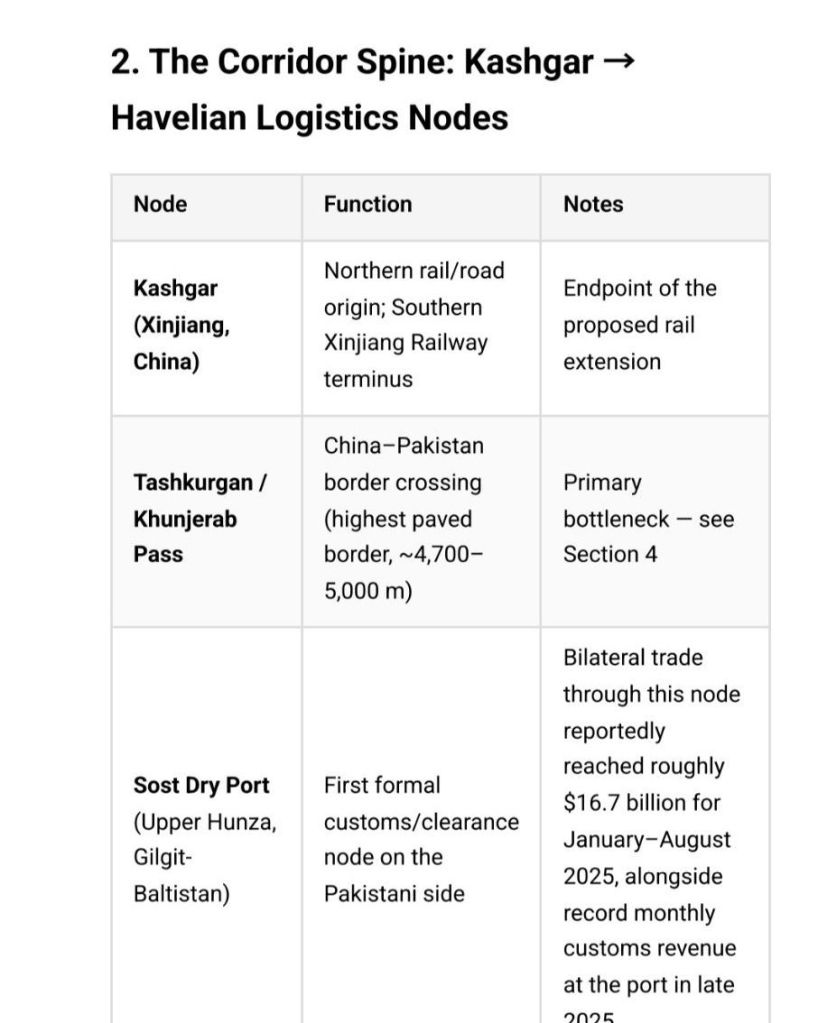
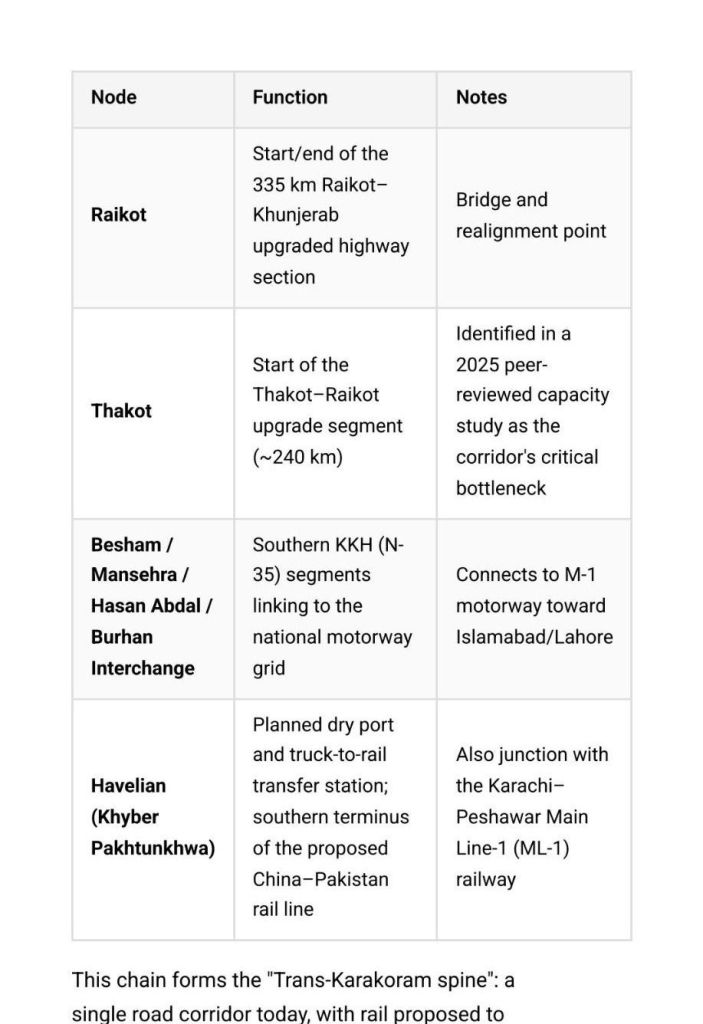
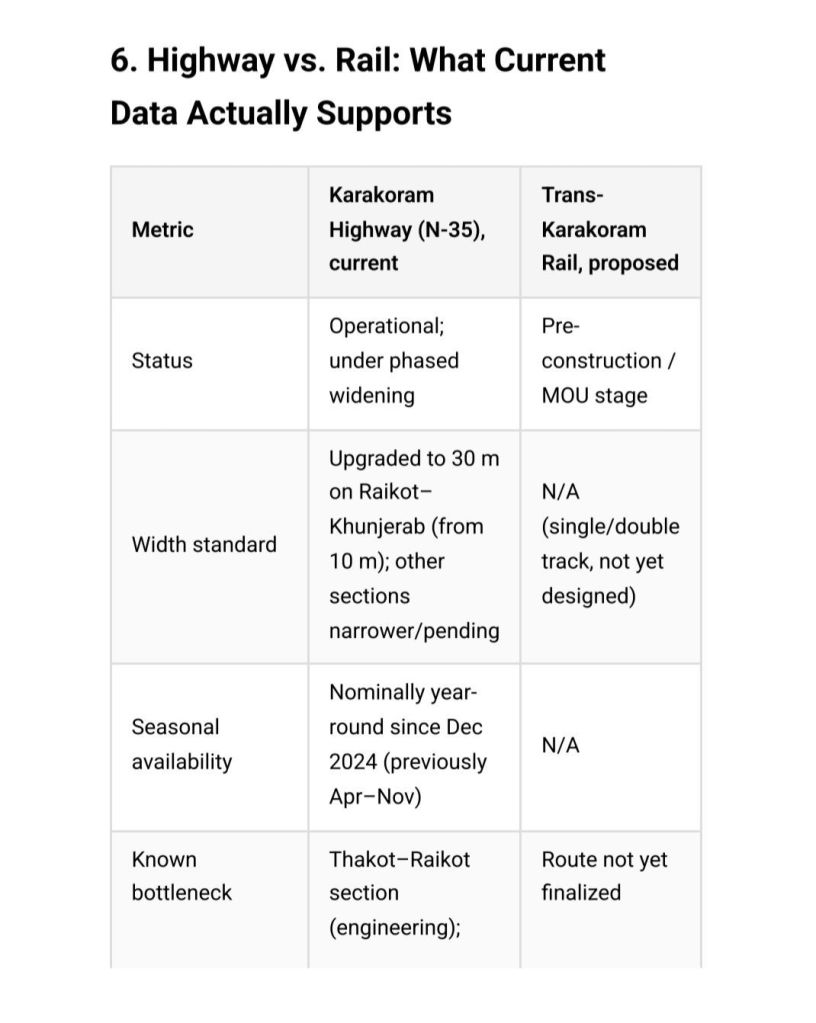
3. Highway Capacity: The 10 m → 30 m Widening Program
The Raikot–Khunjerab Section (335 km) was upgraded under a **$327.74 million China Eximbank loan** (total project cost ~$491–500 million), completed in November 2013. This project widened the roadway from 10 meters to 30 meters, added 32 new bridges (27 rehabilitated), and was designed to keep the route passable year-round and suitable for heavy, long-body freight vehicles.
Further upgrades are ongoing or planned:
Thakot–Raikot section (~240 km): MOU-stage realignment and upgrade, discussed during 2023 high-level visits, cost estimated in the billions of rupees.
Hasan Abdal–Mansehra section: NHA is reviewing dualization/rehabilitation of the existing carriageway to relieve congestion and slow-moving freight trailers.
Attabad Lake realignment section: Chinese-financed realignment, expected multi-year timeline.
Net effect: the KKH’s Pakistani alignment (N-35, 887 km) is being converted piecemeal from a narrow, seasonally vulnerable mountain road into a wider, hardened freight corridor — but full end-to-end dualization is not yet complete.
4. Bottleneck Analysis: Khunjerab Pass and the Thakot–Raikot Chokepoint
Altitude and seasonal closure (historical bottleneck):
– Khunjerab Pass sits at roughly 4,700–5,000 m, the highest paved international border crossing in the world.
– Under the 1985/2013 border protocols, the pass was traditionally open only April–November, closing December–March due to snow and low-oxygen conditions — a structural constraint on annual freight capacity.
– Following an October 2023 announcement at the Belt and Road Forum, China and Pakistan agreed to convert Khunjerab to **year-round operation; this took effect starting December 1, 2024. However, implementation has been uneven — the pass has also seen ad hoc closures tied to trader disputes over customs procedures (e.g., a multi-month suspension in 2025 over new scanning fees at Sost, resolved that October).
– Practical effect: even after the year-round policy, the corridor remains vulnerable to (a) residual heavy snowfall requiring active clearance, and (b) customs/administrative friction at Sost.
Engineering bottleneck (current capacity constraint):
A 2025 peer-reviewed capacity study (Adeel et al., *Scientific Journal of Silesian University of Technology – Transport*, 2025) modeling the Burhan–Khunjerab route specifically for a 2035 horizon found:
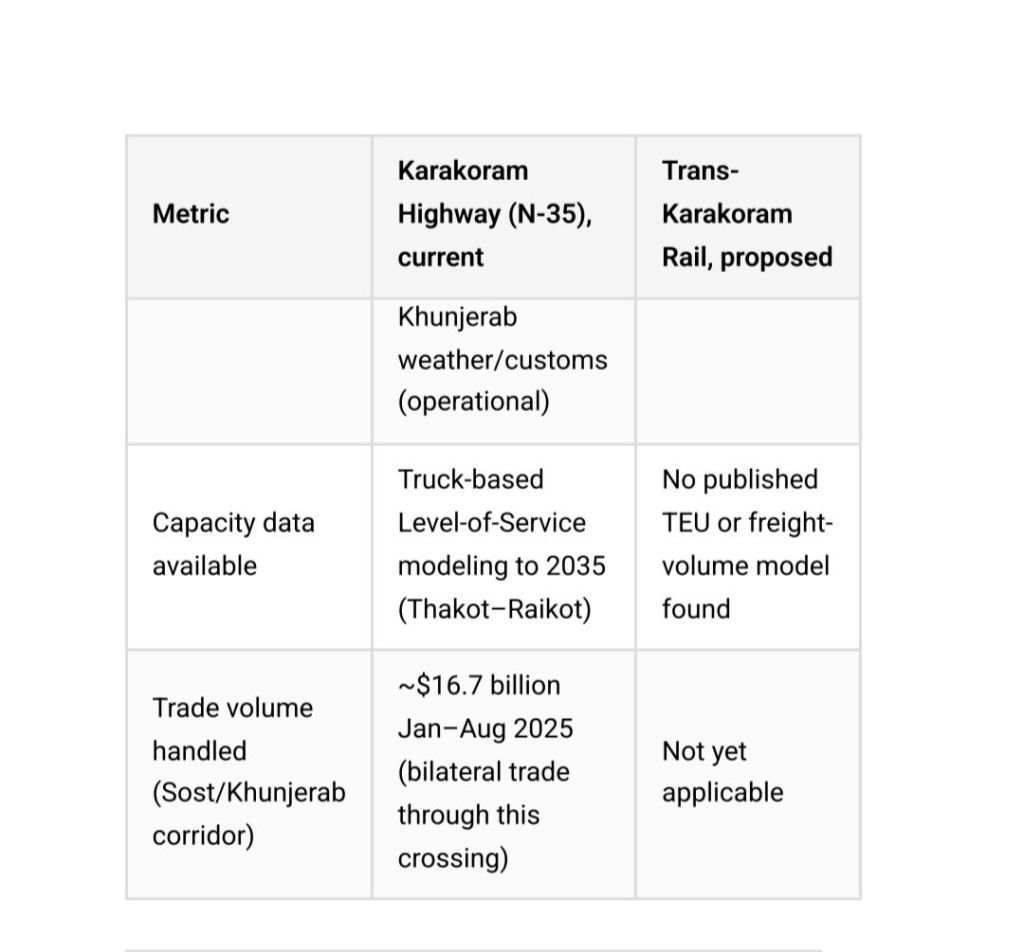
– The Thakot–Raikot section — not Khunjerab itself — is the critical bottleneck, with a modeled additional capacity of roughly 9,519 trucks/day at Level of Service “C” before saturation.
– Under trade-growth assumptions, the corridor is projected to carry about 7.93% of China’s total trade value** and 6.39% of trade tonnage by 2035 if current capacity-expansion plans proceed.
– Statistical relationships derived: each $1 million annual increase in Pakistan’s trade correlates with ~1.3 million ton-km of additional road freight; each 1-million-ton increase in trade volume adds ~1,684 million ton-km of freight movement.
Takeaway: Khunjerab’s altitude/weather profile is the *headline* bottleneck in public narratives, but the *binding engineering constraint* identified in recent modeling sits further south, at Thakot–Raikot — the still-unupgraded middle section of the highway.
No freight currently moves by rail across the Khunjerab/Kashgar frontier — this is a proposed, not operational, corridor.
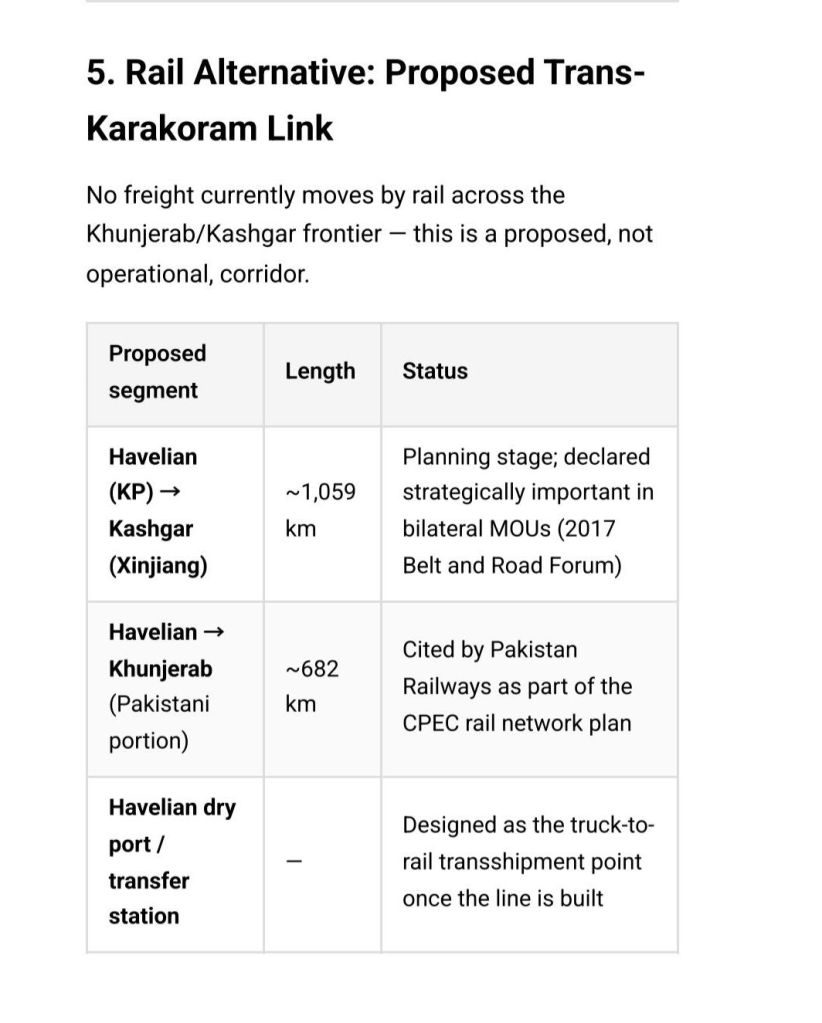
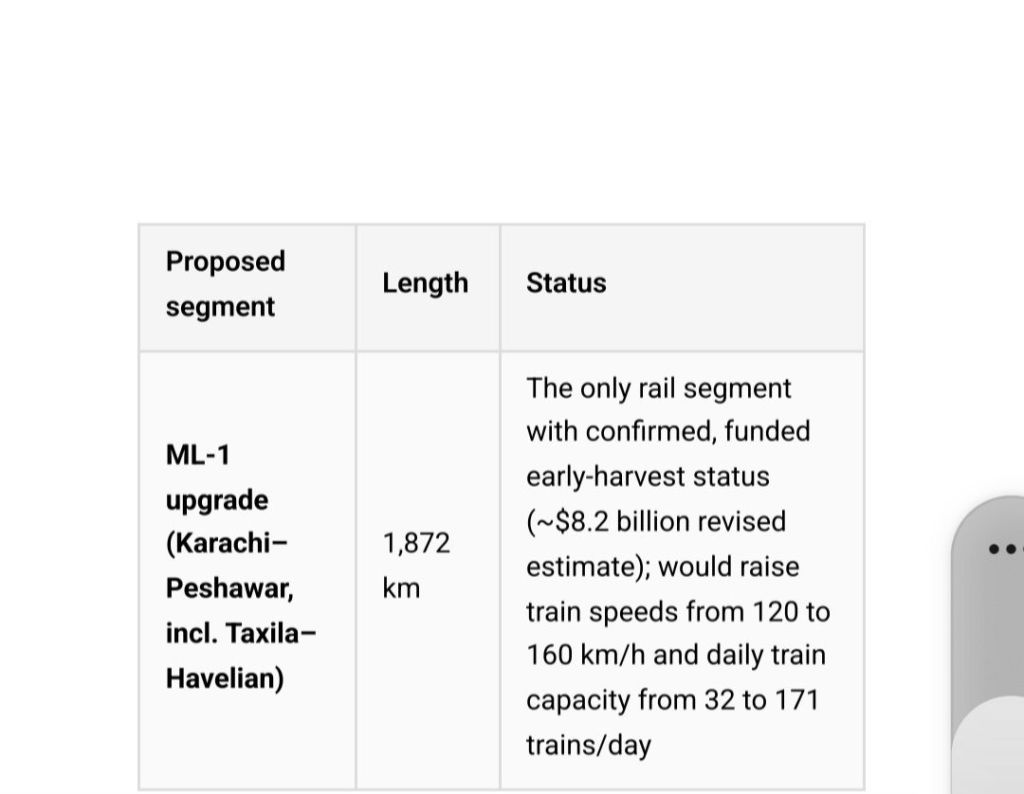
On TEU capacity: No official, engineering-grade TEU throughout projection specifically for the Kashgar–Havelian rail line has been published in government or peer-reviewed sources found in this research. Public statements to date describe the line only in route-length and strategic terms, not container-volume terms — the project remains pre-feasibility/MOU stage rather than at the design stage where TEU modeling would normally be produced. Any TEU figure attributed to this rail link in third-party commentary should be treated as speculative rather than an official target; I’d flag any such number to you rather than present it as sourced. If you need a comparative estimate, an alternative is to benchmark against ML-1’s confirmed capacity uplift (32→171 trains/day) and the trade-tonnage growth rates in Section 4 as a proxy for potential rail demand — I can build that model if useful.
7. Government Targets Toward 2030
– CPEC’s overarching route — 3,218 km of roads, railways, fiber-optic lines and pipelines linking Gwadar to Kashgar** — carries an official completion horizon of **2030**, per Pakistani government statements dating to the corridor’s 2015 launch.
– China’s cumulative investment/contribution under CPEC has been projected by Pakistan’s Planning Commission Centre of Excellence to exceed $100 billion by 2030** (up from an initial $46 billion, revised to $62 billion as of 2018 estimates).
– No single, current, official document was found in this research that sets a specific **TEU or tonnage target for 2030** on the Karakoram Highway or the rail corridor specifically; targets that do exist are expressed in dollar-value trade terms and megawatt/kilometer infrastructure terms rather than container throughput.
8. Caveats
– Figures on cost, length, and dates come from a mix of government statements, wire reporting, and one peer-reviewed engineering study; some (e.g., project costs, MOU-stage segment lengths) have shifted between sources over the corridor’s 15-year history and should be treated as approximate.
– The absence of a published TEU projection for the rail link is itself a finding — it indicates the project has not reached the design stage where such projections are normally produced, not that the figure exists but was simply unavailable to this search.
The Strategic Nexus of the New Silk Road
CPEC Logistics Capacity: Karakoram Highway vs. the Proposed Trans-Karakoram Rail Link
Under Siege: The Security Crisis Threatening CPEC and Gwadar Port
Balochistan the poorest province of Pakistan
The “All-Chinese” Swap: Fact-Checking the Labor Myths in Overseas Lithium Mining
The Strategic Nexus of the New Silk Road
By Marivel Guzman | Akashma News
Geopolitics, Logistics Capacity, and Debt Sustainability in the China-Pakistan Economic Corridor
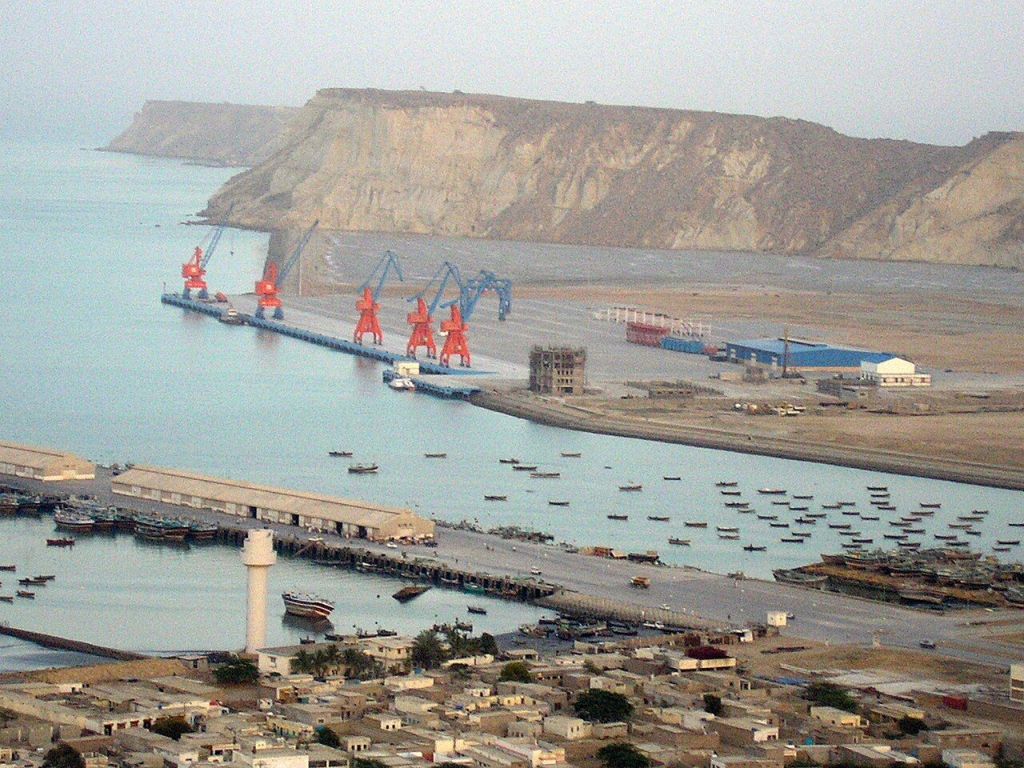
Source: Wikimedia Commons — by J. Patrick Fischer
Gwadar Port handled more shipping containers in April alone than it did in all of 2025. Chinese frigates ran joint drills with the Pakistan Navy off Karachi this spring. Islamabad and Beijing describe a corridor bound for $100 billion in investment by 2030. On paper, the China-Pakistan Economic Corridor looks like it’s accelerating.
Look closer at the road and the ledger, and a different picture emerges — one where the physical infrastructure is still half-built, the most-cited bottleneck isn’t actually the binding one, a parallel rail line exists mostly as a memorandum of understanding, and Beijing’s patience with Pakistan’s debts is visibly running thin.
A Highway Still Being Rebuilt
The entire strategic case for CPEC rests on the Karakoram Highway, the 1,300-kilometer road linking Kashgar in western China to Pakistan’s Arabian Sea coast. It’s a remarkable piece of engineering, but it is not a finished one.
The one section that’s genuinely done — 335 kilometers between Raikot and Khunjerab — was widened from 10 meters to 30 under a $327 million Chinese loan completed back in 2013. That upgrade made the route passable to heavy freight trucks year-round. But the sections north and south of it are a patchwork: the Thakot–Raikot stretch has been stuck at memorandum-of-understanding stage since 2023, and a planned dualization further south, between Hasan Abdal and Mansehra, is still sitting in feasibility review.
That gap matters more than it might sound. A 2025 engineering study modeling freight capacity along this corridor out to 2035 found that the highway’s real chokepoint isn’t the famous, high-altitude Khunjerab Pass — it’s the unfinished Thakot–Raikot section in the middle. The same study estimated that stretch could absorb roughly 9,500 additional trucks a day before hitting saturation, and projected the corridor eventually carrying close to 8 percent of China’s total trade value if the remaining upgrades actually get built on schedule.
Khunjerab’s Bottleneck Changed Shape
Khunjerab Pass, at nearly 5,000 meters, is the highest paved border crossing on Earth, and for decades it was closed every winter — snow and thin air made it impassable from December to March. In late 2023, Beijing and Islamabad agreed to keep it open year-round, and that took effect in December 2024.
It hasn’t gone entirely smoothly. The pass has also been shut down for reasons that have nothing to do with weather — a months-long standoff in 2025 over new customs fees at Sost Dry Port froze cross-border trade until traders and officials worked it out that October. The takeaway: Khunjerab’s bottleneck used to be purely physical. Now it’s just as often bureaucratic.
The Rail Line That Exists Mostly on Paper
For years, CPEC planning documents have floated a rail line running roughly 1,000 kilometers from Havelian, in northern Pakistan, to Kashgar — with Havelian itself becoming a truck-to-train transfer hub. It would be transformative if built. It is nowhere close to being built.
The one rail project that actually has money behind it, the Karachi–Peshawar Main Line-1 upgrade, tells its own story about how CPEC financing has changed. Beijing originally pledged to fund the whole thing — $6.67 billion — back in 2016. Nearly a decade later, that money still hadn’t materialized, and by mid-2026 the project had reportedly been pulled out of the CPEC framework altogether and handed to a multilateral group led by the Asian Development Bank.
No government agency has published a real cargo-volume target for the Kashgar–Havelian rail link. That’s not an oversight — it’s a sign the project hasn’t reached the stage where those numbers would even exist yet.
Gwadar’s Moment, Courtesy of the Strait of Hormuz
None of this infrastructure strain has stopped Gwadar from having a genuinely good year. Instability around the Strait of Hormuz pushed global shippers to look for alternatives, and Gwadar — sitting just 400 kilometers from the strait, with a deep-water harbor most regional ports can’t match — was one of the few places positioned to catch the overflow. The port processed around 11,000 containers in April, more than its entire 2025 total.
The port’s appeal isn’t just commercial. Routing Middle Eastern crude through Gwadar and overland to Kashgar cuts a 12,000-kilometer sea voyage through the tightly patrolled Malacca Strait down to roughly 3,000 kilometers — a serious hedge for Beijing against any future blockade. And the corridor is explicitly dual-use: the Pakistan Navy and China’s PLA Navy ran their fourth joint “Sea Guardians” exercise this spring, with a Chinese guided-missile frigate joining Pakistani Tughril-class ships for anti-submarine and air-defense drills in the Arabian Sea.
Underpinning all of it is a fact rarely stated so plainly: both countries are nuclear powers, and that shared deterrent effectively folds any attack on CPEC infrastructure into each nation’s broader security calculus.
The Debt Problem Beijing Can No Longer Ignore
Here’s where the corridor’s momentum runs into a wall. Chinese power companies operating under CPEC were owed roughly 423 billion Pakistani rupees — about $1.5 billion — in unpaid dues as of the end of the last fiscal year, against a total power-sector debt load of 1.675 trillion rupees. China has refused to waive the associated late fees.
That’s separate from Pakistan’s regular sovereign debt payments to China — in July alone, the State Bank of Pakistan repaid $1.4 billion on a Chinese commercial loan, a different obligation entirely, expected to be refinanced by Chinese banks shortly after. The two debts get conflated a lot in commentary; they shouldn’t be, but both point in the same direction: Pakistan’s fiscal relationship with Beijing is under real strain.
The clearest evidence of how much that strain has changed Chinese behavior is the ML-1 railway’s financing shift, described above. A project China once insisted on funding alone has now been pushed onto multilateral lenders. That’s not how a confident creditor behaves.
Some critics call this “debt-trap diplomacy,” pointing to Sri Lanka’s Hambantota Port as the cautionary tale. Others push back, noting that a large share of CPEC’s projects are structured as equity investment rather than sovereign debt, and argue Pakistan’s deeper problem is years of fiscal mismanagement and weak exports that predate CPEC entirely. Both arguments have real evidence behind them — this is a genuine dispute, not a settled question.
Pakistan’s Other Balancing Act
None of this happens in a vacuum separate from Pakistan’s relationship with the West. For decades, Pakistani territory has served as the transit route for NATO supply lines into landlocked Central Asia, moving through the Torkham crossing near the Khyber Pass and the Chaman crossing in Balochistan. That role gives Islamabad leverage it hasn’t given up: it can deepen its partnership with Beijing while still positioning itself as indispensable to Western military logistics.
The Bottom Line
CPEC’s boosters and its critics are, in a sense, both right. The strategic architecture is real — the nuclear backstop, the naval cooperation, the genuine hedge against a Malacca Strait chokepoint. But so is the gap between that ambition and what’s actually built: an unfinished highway whose real weak point isn’t the one everyone talks about, a rail corridor that’s still just a plan, and a debt load that’s making Beijing noticeably more cautious about writing the next check. Whether the corridor delivers on its 2030 targets will depend less on geopolitics than on whether Pakistan and China can close that gap — and right now, the ledger is closing faster than the road.
—
Under Siege: The Security Crisis Threatening CPEC and Gwadar Port
This research-base-report follows The Strategic Nexus of the New Silk Road, which examined CPEC and Gwadar as critical links in China’s broader Belt and Road strategy. The present article turns to the growing security crisis in Balochistan and asks whether insurgent attacks, infrastructure sabotage and mounting security costs could undermine the very corridor designed to connect western China with the Arabian Sea.
A Supplementary Technical Analysis to “The Strategic Nexus of the New Silk Road
Related logistics report: CPEC Logistics Capacity: Karakoram Highway vs. the Proposed Trans-Karakoram Rail Link examines the physical infrastructure behind the corridor—highway widening, freight capacity, the Khunjerab Pass, the Thakot–Raikot bottleneck and the proposed rail connection between Pakistan and China. It complements this geopolitical analysis by asking a practical question: how much trade can CPEC actually move, and where are its most important logistical constraints?
Sources: Pakistan National Highway Authority project records; Adeel et al., “Multi-Dimensional Freight and Trade Capacity Analysis,” Scientific Journal of Silesian University of Technology (2025); The Diplomat; ProPakistani; Asia Times; The Express Tribune; The News (Pakistan); Asian Lite International; Journal of Contemporary Asia.*
Can Comment Crew, Anonymous and Luzsec endarger Capitalism?
Posted on February 20, 2013 by Akashma Online News
The New York Times released yesterday a special report on ‘Comment Crew’, a group of hackers from China. The U.S. government knew about them since 2005. But Obama Administration is keeping its mouth shut regarding ‘Comment Crew’. According to The New York Times, Comment Crew was tracked down to a white tall building in Shanghai, China.
On the outskirts of Shanghai, in a run-down neighborhood dominated by a 12-story white office tower, sits a People’s Liberation Army base for China’s growing corps of cyber warriors.
The building off Datong Road is the headquarters of P.L.A. Unit 61398. A growing body of digital forensic evidence -confirmed by U.S. intelligence officials who say they have tapped into the activity of the unit for years – leaves little doubt that an overwhelming percentage of attacks on U.S. corporations, organizations and government agencies originate in and around the white tower. The New York Times
Hackivists around the world as they are widely known, are a group of hackers that serve social interest for the general public. The corporate world, and the governments see them as cyber criminals, crimes that can landed them in jail for 100 years if the governments wanted to, or 5 years or less if they take a plea. There had been all types of arrests on the hacker community, but there are many types of hackers and common criminals as well.
David Thomas known as El Mariachi was a common criminal and not a hackivist. His activities and crimes can not even be considered to be the work of a hacker, this type of crime does not involve hacking into computers. They have a gang working together, people that work in banks, or in places where there is a database to be extracted, but not by means of hacking. See Hakcers Wars
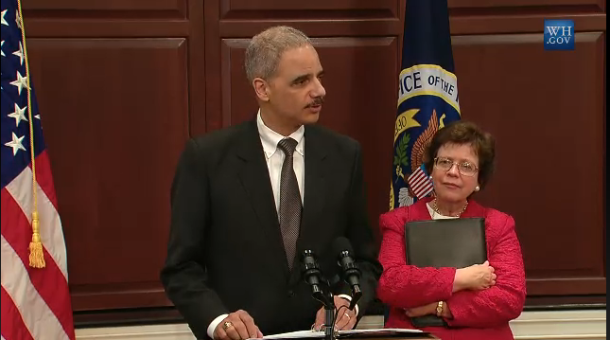
Attorney General Eric Holder promises the Justice Department will play a “pivotal role” in thwarting efforts by WikiLeaks or any other organization to extract data illegally from U.S. companies.
(Credit: White House)
Madiant Security Firm reports(SPT&SPT1) speak of serious threat coming from China, “they have the evidence”, Madiant said. Why then the U.S. government insist on looking the other way. In the latest White House public release, Obama Administrations blames Wikileaks, Anonymous, and Luzsec as a threat to the U.S. and its American corporations.
White House warns of dangers posed by WikiLeaks, LulzSec, other ‘hacktivists’
New Obama administration strategy says organizations such as WikiLeaks and hacking group LulzSec may conduct “economic espionage against U.S. companies. Attorney General Eric Holder at press conference, February 20
The recent published 74 pages report of Mandiant security firm amount of information is impressive, they give an scope of the type of activities ‘Comment Crew’ is interested in: APT1 Exposing One of China’s Cyber Espionage Units. (APT-Advanced Persistent Threat) Mandiant_APT1_Report
On 2004 Mandiant started tracking the groups APT, that according to this security firm amount to 20 or so of these groups. In 2010 Mandiant published the first report on these Chinese groups, APT Report.
“The Chinese government may authorize this activity, but there’s no way to determine the extent of its involvement. Now, three years later, we have the evidence required to change our assessment” .Mandian said
This issues needs to be taken very seriously and not just like another paper published. There are serious consequences and ramifications to this report.
There is no news that all the governments have an army of cyber warriors, but the interesting point on this report is the deep of the insertion of ‘Comment Crew’ into the U.S. government databases. Remember this group is in China, where more of the illegal cyber activity occurs apart from Indonesia where there are more than 65,000 known hackers.
The war on words started last year when U.S. Rep. Mike Rogers accused China of cyber espionage. There are serious consequences when you speaking publicly acting as a representative of the U.S. government. Specially is your adversary is China, known to buy U.S. debt and owning trillions of dollars of it.
China’s economic espionage has reached an intolerable level and I believe that the United States and our allies in Europe and Asia have an obligation to confront Beijing and demand that they put a stop to this piracy. Beijing is waging a massive trade war on us all, and we should band together to pressure them to stop. Combined, the United States and our allies in Europe and Asia have significant diplomatic and economic leverage over China, and we should use this to our advantage to put an end to this scourge. — U.S. Rep. Mike Rogers, October, 2011
Chinese Defense Minister on January, 2013 responded to such charges, saying that it is unprofessional and groundless to accused the Chinese Military of launching cyber attacks without conclusive evidence.
Why will China want to steal American Corporate secrets? Isn’t the U.S. government sent our corporations and its secrets to China a decade ago? The American Corporations become greedy and exchanged security for cheaper operational costs. They moved to China.
Made in China
100 % of Microsoft Hardware – Read the Microsoft Hardware – The China Connection
SMT and DIP PCB Assembly, Mother Boards and circuits.
Modems, speakers, microphones, cameras, video cameras
PCB Assembling Network Board
Networking PCBA
CISCO and Linksys Routers, Modems, Network adapters Where Linksys products are make?
When we think communication, we think Internet. Most of our communication gadgets come from China. How hard will be to install mini dropping devices inside every product that China produce?.

Beijing, China—November 14, 2006: IBM Chairman, President and CEO Samuel J. Palmisano (left) and Dr. Zhou Ji (right), Minister of the Ministry of Education, People’s Republic of China, at the launch of a major initiative to bring IBM’s global information technology services expertise and capabilities to China in support of the country’s increased focus on developing its services industry. Sam Palmisano before a sign “What makes us special? IBM China” magnifying-glass Sunil Mittal being recognised by Samuel J. Palmisano and President APJ Abdul Kalam India President APJ Abdul Kalam, Samuel J. Palmisano and IBMers lighting the lamp magnifying-glass Samuel J. Palmisano shaking hands with IBMers magnifying-glass
2006-2010: Remaking IBM into a globally integrated enterprise
IBM was clear on its strategy; making it a reality took a lot of work. The transformation took place in phases that often overlapped. From 2006 to 2008, IBM expanded its presence in Asia, Latin America and Eastern Europe, and today nearly half of its employees are in emerging markets. The company set up a network of global delivery centers in India, China, Brazil and other countries. By standardizing processes and outputs across its large, diverse client base, IBM could deliver quality services to its IT and business process outsourcing clients consistently, with the right skills, in the right place—wherever that would be. Projects could be staffed more quickly, delivering greater value to clients sooner.
Sharing resources
The model of shared services caught on. Global procurement was centralized in China.
Beijing, China—November 14, 2006: IBM Chairman, President and CEO Samuel J. Palmisano (left) and Dr. Zhou Ji (right), Minister of the Ministry of Education, People’s Republic of China, at the launch of a major initiative to bring IBM’s global information technology services expertise and capabilities to China in support of the country’s increased focus on developing its services industry.
Dell will consider transferring its factories to central and western China if wages in coastal areas continue to rise. However, the company supports higher wages for workers in coastal areas, said Amit Midha, the president of Dell in Greater China and South Asia, on June 21, 2010
Several electronic manufacturers including Foxconn have previously decided to move factories to inland regions. In 2009, Taiwan Hon Hai Group, the parent company of Foxconn, established a joint venture for producing laptop computers with Hewlett-Packard in Chongqing.
Taiwan Quanta Computer, another major laptop contract manufacturer, also established factories in Chongqing in early 2010.
Cyber espionage and cyber warfare has everything to do with China, theoretically speaking. If People Liberation Army controls every aspect of the life in China, including people jobs, habitat, and food. Chances are, that China government is taking advantage of the greed of American Corporations. Pay back time for the years of abusing the people of China. The government of China allowed for a whole decade to use their people as slaves workers for American companies.
While this phenomenon of jobs transfer was going to China, American Corporate world was enjoying a steady raise in their profits, and China as Imperial power, become stronger, controlling the price of the dollar, monopoly of products made in China, buying American debt, accelerated production of weapons of all calipers and strategically straightening its power in the world.
For China the ‘One Child Policy” paid off. On the backs of their citizens the Chinese Imperial Power Become a World Power.
Read on this issue Negligence at home while giving away our power in the name of greed and slavery: The mentality that everything could be made in China grew to a devastating proportions for United States.
We the United States of North America sent our manufacturers to China, even some of the Military gadgets were to be made in China, critical technology for the Defense Department was even ‘Made In China’.
China Attacker stabbed 22 children
Posted on December 21, 2012 by Akashma Online News
Source Asia Pacific News
A nurse attends to a girl after she was stabbed during a knife attack on December 14 at a primary school in Guangshan county, China’s Henan province. (AFP)
BEIJING: Chinese police have released surveillance video footage of a knife-wielding attacker who stabbed 22 students at a primary school last week, after the assault was given limited prominence in national media.
The grainy video shows a male attacker pursuing a group of children through a school gate and slashing one child with a knife, causing her to fall to the ground.
Panicked children then stream out of the school gates to escape the attacker, identified by local police as 36-year-old Min Yongjun, before adults enter equipped with straw brooms, chasing out Min.
No guards are visible close to the school’s gate.
No-one was killed but 22 children were injured in the attack at a school in the central Chinese province of Henan on Friday, the same day that 20 children were shot dead at a primary school in Newtown, Connecticut in the US.
Despite the severity and scale of the US attack Chinese social media users complained that the Henan incident should have been given more coverage in the country.
“The headlines are still dominated by the American attack, I haven’t seen reports about the attack in Henan which happened on the same day,” wrote one user of Sina Weibo — a website similar to Twitter.
“Aren’t Chinese children’s lives also important? It’s a tragedy.”
According to instructions obtained by the China Digital Times website the government’s central propaganda department told Chinese media to downplay the Henan attack.
It quoted officials as telling media not to put the news on the front page or lure readers to it, and not to produce reports or comment on it other than those provided by Xinhua, the state-run news agency.
Local authorities said that Min had been “influenced by rumours of the end of the world”, which some in China believe is due to occur on Friday, in line with supposed Mayan prophecies.
Six local officials including the school principal were removed from their positions, according to reports.
Published on Dec 20, 2012
Chenpeng, China – Friday 21 December 2012
Police in China have released footage of last week’s knife attack on a primary school — a frenzied assault that left 22 children injured that was carried out by a man described by police as influenced by “rumours that the world would end”.
The grainy surveillance camera footage was taken from just inside the grounds of the school in the central Chinese province of Henan where the attacker, Min Yongjun, 36, struck last Friday.
6 local officials have been fired after the incident, but new CCTV footage suggests that many staff at the school acted heroically, running after the attacker and perhaps preventing more violence.
His attack was carried out the same day that a gunman in the United States killed 26 children and teachers at a primary school in Newtown
“Horror as school knife attack revealed on CCTV ”
“Moment crazed Doomsday knifeman Min Yongjun who stabbed 23 children attacks schoolgirl with machete”
On the same day, tragedies descended upon both a Chinese and an American elementary schools. Chinese news media, like their American counterparts, blanketed their front pages and prime-time news programs with coverage of the Connecticut shooting on December 16, while playing down or even clamming up in the face of the stabbings in China’s Henan province. Such drastically different attitudes that the Chinese press adopted toward the two school rampages have prompted Chinese netizens to express their utter disappointment with and madness at their country’s fourth estate. “Sadness: Chinese media only cry for American kids…”, they opined on the Internet.
Front pages of major Chinese metropolitan newspapers on December 16. “America is heart-broken”, “America is crying”…Many headlines read.
On the morning of December 14, Min Yingjun, 36, broke into a 84-year-old man’s home and slashed him with a knife found at in the old man’s kitchen before he burst into an elementary school nearby and used the same knife to stab 22 children. He was finally subdued by school teachers, villagers and policemen arriving on the scene. The old man and seven children were seriously injured and put under intensive care. Other children were hospitalized. Most children were left behind by parents who are migrant workers in other cities and cared for by grandparents. The scene was so bloody and so horrific that many grandparents fainted.
Almost all Chinese mainstream media, including state broadcaster China Central Television, South Metropolis Daily, Beijing Youth and major metropolitan papers in the country, gave extensive coverage to the shooting in the United States while grudging words on the mass stabbing in Henan. Xinyang Daily, a newspaper circulating in the city of Xinyang, which administers Guangshan County, where the mass stabbing took place, even kept singing praises of the local government while remaining silent on the subject on the next day. “Guangshan Strives to Provide Education that Satisfies the People” was the headline of a story on its front page published on December 17.
“CCTV of China school knife attack”
Neglecting Home while giving away the Wealth and the Power, All In The Name Of Profits and Slavery
Posted by Marivel Guzman
Is China the Next Superpower-The Sleeping Dragon
We will celebrate Labor Day in China
Slavery in The Corporate World-In the Name of Profits
 When corporate America thought that saving few dollars on salaries will make them stronger in the world market, they miscalculated the downfall of their power. Power vested on them when they controlled the world with Mr Dollar.
It is not the same to play with toys make in china for 3 cents a piece and to play with toys made in the US for 3 dollars. The 3 cents toys will brake because the quality is not included in the price, the salary might be included because slave hands are used to make those toys. ‘All in the name of profits’.
The mentality that everything could be made in China grew to a devastating proportions for United States, We the United States of North America sent our manufacturers to China, even some of the Military gadgets were to be made in China, critical technology for the Defense Department was even ‘Made In China’
Where were the strategists of the government in the last 20 years, China was in an accelerated race buying our government bonds owing with this a piece of our economy and weakling up our World Power. Wait! Did we knew that we will be using slave labor? Didn’t we abolished slavery almost 100 years ago, that’s what our History says, don’t we commemorate Abraham Lincoln with big fanfare? We are hypocrites, some even go to Church every Sunday, they repent of their sins weekly but in the in the week they shop in “Wall Mart” the worse slave trader and Domestic Economy Killer. Maybe there is something you should know
“Even if China’s population multiplies many times, she is fully capable of finding a solution; the solution is production,” Mao Zedong proclaimed in 1949. “Of all things in the world, people are the most precious.” The communist government condemned birth control and banned imports of contraceptives.
 China One Child’s Policy
Well that statement was slogan after a few years, when the One Child Policy become effective after on and off periods, read the article in its entirely, there is information that you won’t find, but if you read between the lines you can understand the negative consequences of that policy, you will not read about the millions and millions or “Illegal Chinese Man and Woman” that born out of state permit, their parents did not have money to pay the exorbitant fines that they were required to pay for having braking the “Law”, but we ask ourselves in United States of North America we have strong groups that are against abortion, don’t we? but in China abortions are mandatory when you are found pregnant and you have already your “ONE Child”. This story is not about abortion, or Chinese laws but about Profits made with slave Chinese Labor, Yeah! if you as a parent broke the law and you did not pay the fine to the government for having more than one child, which is most common case because usually the couples that get pregnant out of the policy are the poorest in the Chinese Society, these babies are born without birth certificate, and without birth certificate you simply do not exist, that makes you Illegal Chinese in China, you can not go to school because you do not exist, and when you reach working age which is by the way very early age for these Illegal Chinese they become part of the slave trade in China that abuse their status, and we the Corporations of the world not only the Corporate America some other First and Second World Countries are taking “advantage” of these slaves. All in the name of profits. These Illegal Chinese of China are under paid if they get any pay at all, they are used for the most dangerous jobs and they can not complain after all they do not exist.
 There are horrible stories about These slaves that tired to being Illegal in their countries they venture to the outside world only to fall in a more grotesque form of slavery, Sweat Shops They leave China in containers filled with fish or whatever material is good to cover the contraband, those stories you don’t see in the news, you has to go out of your way to find the story. The sharks, the human traffickers don’t touch their heart when they empty the containers with the inert bodies of these humans that want a better life. They leave the Mother Land with the promise to get them jobs in America, the traffickers charged them tens of thousands of dollars that are like a dead debt, they are kept in inhumane conditions, mostly without pay until they pay back the “FEE”. Sure there are laws against these practices but they are overlooked, All in the name of Profits.
Our Capitalist Societies are ready to receive the carcasses of the survivals, there will always be an employer that will “Risk” to pay the fines for accepting slave labor, at the end profits is always bigger than the fines.
 The disproportionate rationale that living in a Capitalist Society driven by consumerism has to produce profits No Matter what, to keep the status Quo of being strong society because we are Capitalist, because we abuse our labor, after all the base of Capitalism rest on the sweet of the worker, right? So making more profits is an extension and maybe a solidification of our Capital System, well has proven to be wrong. We wanted to make 3 cents toys instead of 3 dollars toys. Why the economist, the analysts of our system did not oversaw that while we will be saving in manufacturing cost we will be killing our system of consumption.
 We end up feeding two monsters; the Slave Trade and Creating a huge unemployment rate that will eventually will lead us to a social unrest like the one we just saw developed in the middle east just in the last few months. Maybe we won’t see the crowds marching with sticks and flags demanding jobs, no in North America we have other ways to demand justice, in here we Riot, we Strike, we Boycott and the most importantly in North America “We Consume” we could paralyze our Cities if we use “OUR BUYING POWER”, ‘WE STOP DRIVING ONE DAY”, “WE DON’T BUY GAS ONE DAY” and we will Shape North America back in Check…
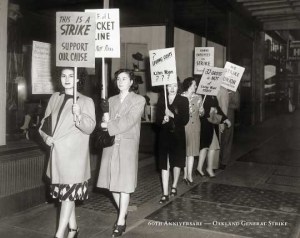 The Corporations opened the gates of the factories and disbanded millions of workers as if they were a herd of animals to go graze in the grass without worrying that they needed to make money to buy the 3 cents toys. Eating grass (welfare system) was not going to give them extra pennies to buy Chinese toys. Isn’t it common sense, that to maintain a capitalist society you need to support the base of it, which is the worker class, I mean! common Harvard graduates, Bankers didn’t you oversaw your wrong doings. You took the bread from the table and took the baking oven, what were you expecting to starve to death the workers! and …..replace them with slaves? I don’t think that you were thinking that you will be crating a sub-society of sub-humans that were going to be fighting to survive, and I did not think that you wanted to take the Economy Power from the US and give it to CHINA? Was that part of the plant? Don’t you know Globalist Bankers, Thieves and Associates that we live in an organism “society” that evolve, we move with the times, with the changes, we are not robots that you take the battery and we stay to rust,
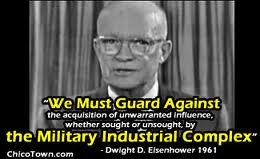 No! No! we ALL are humans and if “YOU” even thought that creating this “CHAOS” of world you still will have the control using the War Complex Machine as a backing tool, making the “PEOPLE” believe that we don’t matter, that we are SLAVES only to follow the whip of your control. Can the tanks force us to Drive?, Can the United States Army can come to our homes to force us to go buy Gas or unnecessary food?
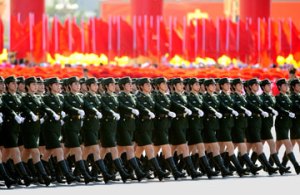 United States of North America Vs China. Can their armies be competing for world control?
China’s demonstration of military might and authoritarian muscle on October 1st, its national day, was one recent example of how its judgment can go awry. The parade of thousands of goose-stepping troops through central Beijing, along with military hardware intended mainly to intimidate America and its quasi-ally Taiwan, was a throwback to the imagery of cold-war days. It did not help that dissidents were rounded up and the public kept away from the event
Such scenes touch raw nerves in America, where intellectual and political opinion has long been bitterly divided over how to assess China’s rise. Left-wing Democrats, alarmed by China’s human-rights abuses, find themselves in league with right-wing Republicans who see China as a new Soviet Union, to be distrusted and contained. The October 1st extravaganza also worried a third, more centrist, camp: those who see the Communist Party’s resort to nationalism as a sign of its weakness and of China’s vulnerability to upheaval that could have damaging global consequences. Sleeping Dragon/China
Can the War Complex Machine subsist without workers? Will the World Powers subsist without “Believers” think about it
A Nation without “We the People” Has No Power.
Can unemployment brake the economy of a nation?, You bet It can. But the Will of the People Can Straighten the worse case of Corruption, abuse, intolerance, negligence, ignorance, and Deaf Leaders. Be the Owner of your Destiny, Take Control Back to your hands, The Power to the People is coming back. Be a dissenter voice, and add your voice to the already growing grassroots movements. We Can Do It.
Peace To All
Wake Up America


